There’s No Such Thing as Hypnosis — There Is Only PURE SUGGESTION in Hypnotherapy
How Belief, Expectation, Emotion, Psychological Influence and the Power of Permission Create Therapeutic Change as Hypnosis Exists Only in The Mind of the Believer
An exploration of the philosophy and psychological principles underpinning Jonathan Royle’s Complete Mind Therapy (CMT), drawing upon his professional experience as a Clinical Hypnotherapist since 1989, his published work, and scientific research.
Introduction: What if everything we think we know about hypnosis is wrong?
What if hypnosis, as most people understand it, does not actually exist?
What if the apparently mysterious power of hypnosis is nothing more — and nothing less — than the extraordinary power of PURE SUGGESTION, operating through belief, expectancy, emotion, imagination, social influence and established psychological principles?
And what if the elaborate rituals of hypnosis, from the hypnotic induction to the deepening techniques, trance suggestions and awakening procedures, are not essential ingredients of therapeutic change, but psychologically convincing ways of giving people permission to achieve changes they may already have been capable of making?
This is the central argument I wish to explore.
Having studied and practised hypnotherapy since 1989, I have increasingly come to view hypnosis not as a mysterious force or special power possessed by the hypnotist, but as a framework through which suggestion, expectation, emotional influence and psychological processes can be brought together to help people change.
My position can be expressed in one deliberately provocative statement:
There’s No Such Thing as Hypnosis, There Is Only PURE SUGGESTION.
This does not mean that the experiences people describe as hypnotic are imaginary, that hypnotic suggestions cannot produce measurable effects, or that hypnotherapy cannot help people.
Rather, I am questioning whether those effects require a unique hypnotic state, or whether they can be explained through psychological mechanisms that also operate outside formal hypnosis.
That distinction is important. Research has documented genuine responses to hypnotic suggestion, but whether hypnosis requires a distinctive altered state remains debated.
Likewise, evidence that expectation and placebo mechanisms contribute to treatment does not establish that they account for every hypnotic effect.
My argument is that the practical power of hypnosis may lie less in the supposed state itself and more in what the individual is led to believe, expect, imagine and feel — and ultimately what they give themselves permission to do.
1. The forgotten origins of hypnosis: Baron Félix d’Hénin de Cuvillers
Before exploring the psychological principles involved, we should address an important historical misconception.
Many books, courses and websites credit Scottish surgeon James Braid with inventing the terminology of hypnotism, often placing its origins in the 1840s.
However, the historical record reveals an earlier pioneer: Étienne Félix d’Hénin de Cuvillers (1755–1841).
Cuvillers was a French researcher associated with animal magnetism who rejected the idea that a mysterious magnetic fluid was responsible for mesmeric phenomena. Instead, he emphasised mental and psychological processes.
Crucially, he introduced a system of terminology using the hypn- prefix before Braid’s work became widely known.
A historical paper titled Origins of the Term Hypnotism Prior to Braid, published in the American Journal of Clinical Hypnosis, identifies an 1821 publication in which Cuvillers employed this terminology.
Another paper, Etienne Félix d’Hénin de Cuvillers: A Founder of Hypnosis, confirms that the original development of this vocabulary has frequently been incorrectly attributed to Braid.
Thus, the historical distinction is not merely a matter of personal opinion. There is published academic evidence supporting Cuvillers’ priority in introducing this family of terms.
Braid nevertheless played an important role in subsequently developing and popularising hypnotism.
The original connection with sleep
The Greek word hypnos means sleep.
Historically, hypnosis was associated with sleep-like conditions, and the terminology reflected attempts to describe states that appeared different from ordinary waking consciousness.
This brings us to two particularly interesting transitional experiences:
Hypnagogia: The transitional period between wakefulness and falling asleep.
Hypnopompia: The transitional period between sleep and waking.
These transitions may involve unusual imagery, changes in sensory awareness, altered perceptions and dreamlike experiences.
In modern neuroscience, Theta activity is frequently associated with drowsiness and certain sleep transitions, while Delta activity is strongly associated with deep non-REM sleep.
This raises an interesting possibility: some experiences historically interpreted as hypnotic trance may overlap phenomenologically with normal sleep-transition experiences.
However, Theta activity is not unique to hypnosis, and Delta activity is not a reliable definition of hypnotic depth. Hypnopompic experiences are also not exclusively transitions directly from delta sleep. Nor is there sufficient evidence to conclude that Cuvillers’ original terminology precisely described the brainwave categories established by later neuroscience.
The more important point is that what modern practitioners call hypnosis is not necessarily what early researchers meant by sleep-like hypnotic phenomena.
Today, many people experience what practitioners call hypnosis while remaining awake, conscious, responsive and fully aware of their surroundings.
This is consistent with my argument that hypnosis, as commonly practised, is better understood through suggestion and psychological responsiveness than through literal sleep.
2. The hypnotic ritual: why apparently falling asleep can strengthen belief
Here I want to share an observation from my own clinical experience.
During hypnotherapy sessions, I have often found it particularly useful when a client becomes so profoundly relaxed towards the end of treatment that they appear to enter genuine sleep, complete with audible snoring that I encourage such to happen.
On occasion, I have needed to clap my hands loudly to awaken them.
From my perspective, this can become an extraordinarily powerful placebo trigger and belief convincer.
Consider the client’s interpretation.
They entered a hypnotherapy session expecting something special to happen. They listened to the suggestions, experienced the induction, relaxed deeply and subsequently discovered that they had apparently fallen asleep.
They may now conclude:
I really was hypnotised. I must have entered a very deep trance. This therapist clearly knows what they are doing. The treatment must have worked.
In other words, the experience can provide compelling subjective confirmation of what they already hoped and expected to happen.
The therapeutic significance may lie not in the sleep itself but in the meaning the client attaches to the experience.
The client believes something important has occurred, and that belief can increase their confidence in the changes they wish to make.
This is a particularly interesting example of how an experience becomes a symbol of therapeutic success.
It is important, however, to distinguish the client’s interpretation from physiological evidence. Snoring does not establish delta-wave sleep, deep hypnosis or successful treatment. Nor is there evidence that deliberately making clients sleep, or startling them awake, improves therapeutic outcomes. Any such practice must respect client comfort, consent and safety.
Nevertheless, the broader psychological question remains fascinating:
Could the belief that one has undergone a powerful intervention become part of the mechanism through which change occurs?
The research on placebo, expectancy and therapeutic ritual suggests that it certainly could.
3. The placebo effect: hypnosis as a psychologically meaningful ritual
The placebo effect is frequently misunderstood.
Many people imagine that a placebo is simply a fake treatment that tricks somebody into believing they are getting better.
But placebo research reveals something considerably more sophisticated.
Placebo effects can involve expectation, previous learning, conditioning, therapeutic relationships, emotional responses and the personal meaning attached to treatment.
The surrounding context matters.
The environment matters.
The practitioner’s manner matters.
The explanations given to the client matter.
And, critically, what the client expects to experience can matter.
Irving Kirsch: hypnosis and placebo share important mechanisms
Psychologist Irving Kirsch has made particularly important contributions to this field.
In his 1985 paper, Response Expectancy as a Determinant of Experience and Behaviour, Kirsch explored how expectations can influence subjective experience, behaviour and physiological responses.
His later paper, Hypnosis and Placebos: Response Expectancy as a Mediator of Suggestion Effects, explicitly argued that hypnosis and placebo effects share response expectancy as an important mechanism.
Kirsch proposed that both can be understood within the broader psychological phenomenon of suggestion.
This is remarkably close to the argument I am making.
When a person expects an intervention to work, that expectation can contribute to changes in how they feel, perceive and respond.
The therapist’s role may therefore be less about placing someone into a mysterious state and more about establishing conditions in which beneficial suggestions become credible, emotionally meaningful and personally acceptable.
Hypnosis as a nondeceptive placebo
A particularly relevant paper is:
Clinical Hypnosis as a Nondeceptive Placebo: Empirically Derived Techniques.
This paper discusses how hypnotic procedures can alter response expectancies and how those changes may enhance psychotherapy.
It provides direct scholarly support for understanding hypnosis, at least in part, as an expectancy-based intervention.
Another useful study is Ted Kaptchuk’s examination of healing rituals, which explores how the symbolic and interpersonal features of treatment contribute to placebo responses.
Placebo Studies and Ritual Theory — Kaptchuk (2011).
These findings are consistent with my view that the ritual of hypnosis can serve as a psychologically powerful catalyst for change.
But there is an important scientific distinction: research supports the claim that placebo and expectancy mechanisms contribute to hypnosis. It does not establish that hypnotherapy works entirely or even predominantly through placebo in every application.
That stronger claim remains a hypothesis requiring direct testing.
4. Why the therapist can give clients permission to change without shame or guilt
This is one of the most important aspects of my Complete Mind Therapy philosophy.
Imagine someone who has smoked for twenty years.
They have attempted to stop several times, only to start again.
Eventually, they visit a hypnotherapist.
Following their treatment, they successfully stop smoking.
They can now tell their family, friends and colleagues:
I tried stopping many times before, but I kept relapsing. Then I heard about this hypnotherapist, went for a session, and suddenly found it much easier to stop.
That explanation provides something psychologically valuable.
It offers a socially acceptable reason why they succeeded now when they had previously struggled.
Compare that with the alternative.
Suppose they simply woke up one morning and decided to stop smoking without any formal intervention.
Someone might respond:
If it was that easy, why didn’t you stop years ago, you fool?
That question could provoke embarrassment, regret, guilt or shame.
They might begin wondering whether they had wasted years of their life, money and health unnecessarily.
And, in some circumstances, those negative emotions could undermine their confidence or motivation.
They might even relapse, consciously or unconsciously, in a way that reinforces the belief that stopping was never easy.
This is a psychological interpretation rather than an established universal pattern, but it illustrates an important possibility.
The therapist can provide a credible explanation for change that protects the client’s self-image.
The client no longer has to interpret previous failures as evidence of weakness, foolishness or personal inadequacy.
Instead, they can say:
I needed the right help, the right time and the right approach.
That explanation allows them to move forward without continually condemning themselves for the past.
The therapist as a socially acceptable catalyst
Consider the symbols surrounding the professional therapist.
There may be framed qualifications and certificates on the wall, extensive professional experience, case studies, testimonials, an impressive website and a carefully structured consultation.
All of these can influence how the client perceives the practitioner.
They may conclude that they are receiving a credible and professionally delivered intervention.
The treatment itself then becomes a milestone.
A before-and-after moment.
A symbolic turning point.
In my experience, that turning point can help the client leave behind feelings of self-blame, shame, guilt and regret.
The key, however, is not to tell clients that they should have changed sooner.
Addiction, trauma, psychological difficulties and entrenched behaviours can involve genuine biological, social and psychological barriers.
The most constructive message is that the client deserves credit for the change, while the therapist provides support, structure, encouragement and an opportunity to move forward.
This preserves the valuable permission-to-change principle without creating further blame.
5. The psychological principles that make suggestion powerful
My Complete Mind Therapy approach brings together a number of psychological principles that are often studied separately.
In practice, they can interact, reinforce one another and contribute to the client’s overall experience of treatment.
The Pygmalion Effect — also known as the Rosenthal Effect
The Pygmalion Effect refers to the way one person’s expectations can influence another person’s performance or behaviour.
The classic example comes from education, where researchers investigated whether teachers’ expectations could affect their pupils’ subsequent performance.
The principle is commonly described as an interpersonal expectancy effect.
In hypnotherapy, I apply this concept to the relationship between therapist and client.
If the therapist genuinely believes the client is capable of making meaningful changes, that conviction may be communicated through their words, tone, facial expressions, manner and behaviour.
The client may then become more confident in their own ability to succeed.
A therapist who communicates calm confidence is likely to create a very different psychological atmosphere from one who appears uncertain, pessimistic or dismissive.
The Pygmalion Effect therefore provides a useful way of understanding how the therapist’s expectations may influence the client’s expectations.
Research support: Rosenthal’s work on interpersonal expectancy effects demonstrates that expectations can influence behaviour through social interaction, although the magnitude and generalisability of the original classroom findings remain contested.
Interpersonal Expectancy Effects: The First 345 Studies.
The Galatea Effect — when the client’s own expectations become powerful
Where the Pygmalion Effect concerns the influence of another person’s expectations, the Galatea Effect concerns the individual’s expectations of themselves.
In practical terms, the client begins to believe:
I can do this.
I am capable of changing.
I am the sort of person who can succeed.
This is closely related to psychologist Albert Bandura’s concept of self-efficacy.
Self-efficacy refers to a person’s belief in their capacity to organise and carry out the actions necessary to achieve a particular outcome.
A client who expects to succeed may be more willing to attempt change, persist when difficulties arise and interpret temporary setbacks as manageable rather than catastrophic.
For example, someone attempting to stop smoking may move from thinking:
I always fail when I try to stop.
To:
I am becoming someone who no longer needs cigarettes, and I can deal with cravings.
That change in self-expectation may influence their subsequent behaviour.
Research support: Bandura’s 1977 work provides an important theoretical and empirical foundation for the relationship between perceived self-efficacy and behavioural change.
Self-Efficacy: Toward a Unifying Theory of Behavioral Change.
The Hawthorne Effect — attention, accountability and follow-up
The Hawthorne Effect is commonly used to describe changes in people’s behaviour that may occur because they know they are being observed or are receiving special attention.
Its origins lie in workplace research conducted at Western Electric’s Hawthorne Works.
The precise interpretation of those historical experiments remains debated, but they helped draw attention to the influence of observation, social relationships and expectations on human behaviour.
In my approach, the relevant practical principle is continued attention and accountability.
For example, after a hypnotherapy session, the therapist might contact the client to ask how they are progressing.
They might invite the client into a supportive social media group where they can report successes, discuss difficulties and receive encouragement.
They might arrange a follow-up conversation or ask the client to maintain a record of their progress.
The client now knows that somebody is interested in how they are doing.
That can help maintain motivation and commitment.
Strictly speaking, supportive follow-up and accountability are not identical to the Hawthorne Effect, but they draw upon related ideas about attention, social influence and behavioural responsiveness.
Research context: The Hawthorne, Pygmalion, Placebo and Other Effects of Expectation.
The Halo Effect — the influence of professional credibility
The Halo Effect is a cognitive bias in which a favourable impression of one characteristic influences how we judge other characteristics.
If somebody appears highly competent, authoritative, successful or trustworthy, we may assume that they are equally competent in other areas.
In hypnotherapy, the therapist’s professional presentation can influence how the client interprets the treatment.
Consider the potential impact of professional qualifications displayed on the wall, a polished consultation room, a confident manner, years of experience, credible case studies and authentic testimonials.
Together, these can create a favourable impression of the practitioner.
The client may be more inclined to believe that the treatment will be helpful.
This overlaps with what is sometimes informally called the white coat effect of professional authority, although the clinical white-coat phenomenon is also used in a different sense to describe changes in blood pressure during medical appointments.
The relevant principle here is that perceived professional credibility can shape expectations.
It is important that qualifications, testimonials and claims of success are accurate.
The therapeutic value of professional credibility should come from genuine competence and trust, not fabricated authority.
Research support: Edward Thorndike’s 1920 work is a foundational examination of the Halo Effect.
A Constant Error in Psychological Ratings — Thorndike (1920).
The Totem or Lucky Charm Effect — symbolic anchors for change
Another interesting component of my approach involves giving the client a physical object that becomes associated with their treatment.
For example, the therapist might provide a USB memory stick containing an MP3 recording of the session, or a small object that the client associates with confidence, calmness or personal achievement.
For a more spiritually or New Age-minded client, this could be a crystal that they personally associate with positive energy.
The psychological value does not require the object to possess supernatural properties.
Rather, it can become a symbolic reminder of the client’s intention, commitment and positive expectations.
Each time they see or handle the object, they may remember the session and the decisions they made.
The object can become a cue for recalling a desired emotional state.
It might remind them:
I have made a commitment to myself.
I am capable of changing.
I can return to that feeling of confidence whenever I choose.
This is consistent with principles of associative learning, cueing and symbolic meaning.
The specific claim that a USB stick, crystal or lucky charm reliably improves hypnotherapy outcomes has not been established through robust controlled trials.
It remains a practical hypothesis, rather than a proven universal therapeutic mechanism.
However, research into healing rituals supports the broader idea that objects and procedures can acquire psychological significance through their context and meaning.
Émile Coué and the power of repetition and autosuggestion
French psychologist and pharmacist Émile Coué helped popularise the systematic use of autosuggestion.
His famous affirmation was:
Every day, in every way, I am getting better and better.
The significance of Coué’s approach is that suggestion does not have to come from a hypnotist.
People can suggest things to themselves.
They can repeat ideas that reinforce confidence, encourage constructive behaviour and help establish new patterns of thinking.
Within my Complete Mind Therapy approach, I may recommend that clients listen to a backup MP3 recording every day for the next 28 days following their session, whether the original treatment took place in person or via Zoom.
The purpose is to reinforce the therapeutic messages, revisit the positive emotional experiences and encourage the client to practise the changes they want to make.
Repetition may help familiarise the client with the ideas and keep their goals prominent in everyday life.
Coué’s historical method also emphasised repeated affirmations at several points throughout the day.
However, the claim that repetition automatically bypasses a neurological critical faculty and deposits suggestions directly into the unconscious is not an established scientific mechanism.
Likewise, 28 days can be a useful practical programme, but it is not a scientifically proven universal period for permanently changing beliefs or habits.
Research on self-affirmation interventions has found small but meaningful average benefits for some health-related attitudes, intentions and behaviours. These studies do not establish that all repeated positive affirmations work in the same way.
The Impact of Self-Affirmation on Health-Behavior Change: A Meta-Analysis.
The Placebo Effect — positive expectation becoming part of the treatment
The placebo effect brings together several of the principles already discussed.
The client believes that something helpful is happening.
They expect positive changes.
They trust the therapist.
They attach meaning to the ritual.
They interpret their experiences through the framework provided during the session.
These factors may influence their emotional responses, symptom experiences and subsequent behaviour.
In my model, the placebo response is not something to dismiss as fake or worthless.
It represents one way in which beliefs and treatment context can influence real human experience.
The Nocebo Effect — when negative suggestion works against the client
The opposite side of this process is the nocebo effect.
Negative expectations can contribute to unpleasant experiences, heightened symptom awareness or reduced confidence in treatment.
Imagine a therapist telling a client:
Your problem is extremely deeply rooted. Your subconscious is fighting against you. This is going to be very difficult.
Such statements may unintentionally reinforce the client’s fears.
Contrast this with:
You have experienced difficulties before, but that does not determine what you are capable of achieving next. We can work together to develop a more useful response.
The second approach encourages hope without guaranteeing success.
Research supports the importance of clinician communication, expectations and treatment context in placebo and nocebo responses.
Implications of Placebo and Nocebo Effects for Clinical Practice: Expert Consensus.
The lesson is simple: words matter, expectations matter, and the emotional meaning attached to treatment matters.
6. The Seven Positive Pillars: the emotional foundations of Complete Mind Therapy
In my previously published July 2015 paper, The Key’s to Hypnotic Success, I introduced a model that remains central to my therapeutic philosophy.
https://medcraveonline.com/IJCAM/the-keyrsquos-to-hypnotic-success.html
My argument begins with the environment in which we live.
We are all influenced by our upbringing, experiences, relationships, circumstances and the people around us.
As I explained in that paper, we are products of our environment, but we can be given tools and opportunities to develop beyond its limitations.
At the centre of my model are seven fundamental emotional needs.
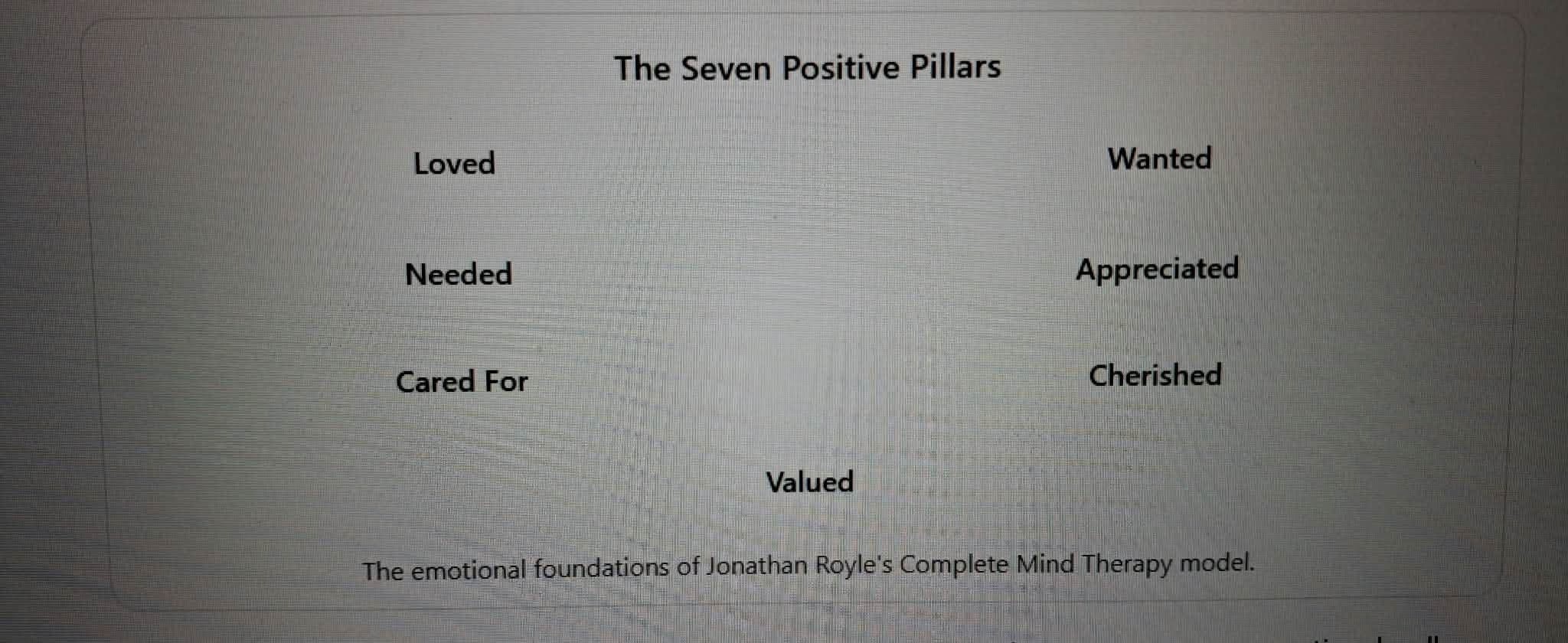
My experience has led me to believe that these feelings are enormously important to our emotional well-being.
We all want to feel that we matter.
We want to feel accepted.
We want to know that our existence has value and that we have a meaningful place in the world.
When one or more of these emotional needs are neglected or disrupted, I believe the consequences can extend far beyond the immediate situation.
A person who repeatedly feels unwanted may begin questioning their own value.
Someone who feels unappreciated may gradually lose confidence.
A person who has experienced rejection, abandonment or humiliation may develop negative beliefs about themselves and their ability to cope.
Over time, such experiences can influence their self-image, behaviour and relationships.
The Four Foundations of personal confidence and control
My model proposes that disruptions in the Seven Positive Pillars can negatively influence four closely connected personal attributes:
Self-Confidence: The feeling that we can successfully face challenges and handle situations.
Self-Esteem: Our general evaluation of ourselves and our personal value.
Self-Image: The mental picture we hold of who we are, what we are like and what we are capable of becoming.
Self-Control, or Willpower: Our perceived and actual capacity to regulate impulses, emotions and behaviour in pursuit of longer-term goals.
Although these concepts overlap, they are not identical.
Someone may have considerable confidence in their professional abilities while experiencing low self-esteem in their personal relationships.
Another person may have a generally positive self-image but struggle with impulse control under stress.
Recognising these distinctions is important when designing suggestions and visualisations.
My central proposition is that strengthening these four areas can help create wider improvements in emotional well-being.
The next level: Self-Respect, Self-Worth, Self-Love and Positive Selfishness
When a person’s confidence, self-esteem, self-image and self-control improve, I believe this can positively influence four further qualities.
Self-Respect involves treating oneself with dignity and maintaining healthy personal boundaries.
Self-Worth concerns the recognition that one’s value as a human being does not depend entirely on external approval or achievement.
Self-Love involves compassion, acceptance and care towards oneself.
Positive Selfishness, as I use the term, means recognising that looking after one’s own legitimate needs is not inherently selfish in the negative sense.
It means allowing oneself to rest, establish boundaries, seek support, pursue happiness and make decisions that support personal well-being without unnecessarily harming others.
These qualities can reinforce one another.
When people feel worthy of care, they may become more willing to look after themselves.
When they respect themselves, they may find it easier to establish healthy boundaries.
When they experience greater self-acceptance, they may be less dependent upon destructive forms of external validation.
The ultimate level: Sense of Self and Self-Identity
In my model, these emotional changes can eventually influence something even more fundamental:
The individual’s sense of self and personal identity.
A person may initially identify themselves through their difficulties:
I am a smoker.
I am a failure.
I have no willpower.
I am an anxious person.
I am someone who always gives up.
Therapeutic suggestion can help them explore a different identity.
I am becoming a healthier person.
I can learn from setbacks.
I am capable of making decisions.
I can become more confident.
My past does not have to define my future.
This process involves more than simply repeating encouraging words.
It can involve creating new experiences, practising new behaviours and developing evidence that supports a more constructive self-concept.
There is a historical parallel with Sigmund Freud’s concepts of the Id and Ego, although these should not be confused with the modern distinction between conscious and unconscious processing.
In classical psychoanalytic theory, the Id represents instinctual drives, while the Ego mediates between those drives, external reality and other psychological demands.
The Id is therefore not simply another word for personal identity or the unconscious mind.
Nevertheless, Freud’s work provides an additional historical perspective on how different psychological processes may influence our sense of self.
The complete CMT model
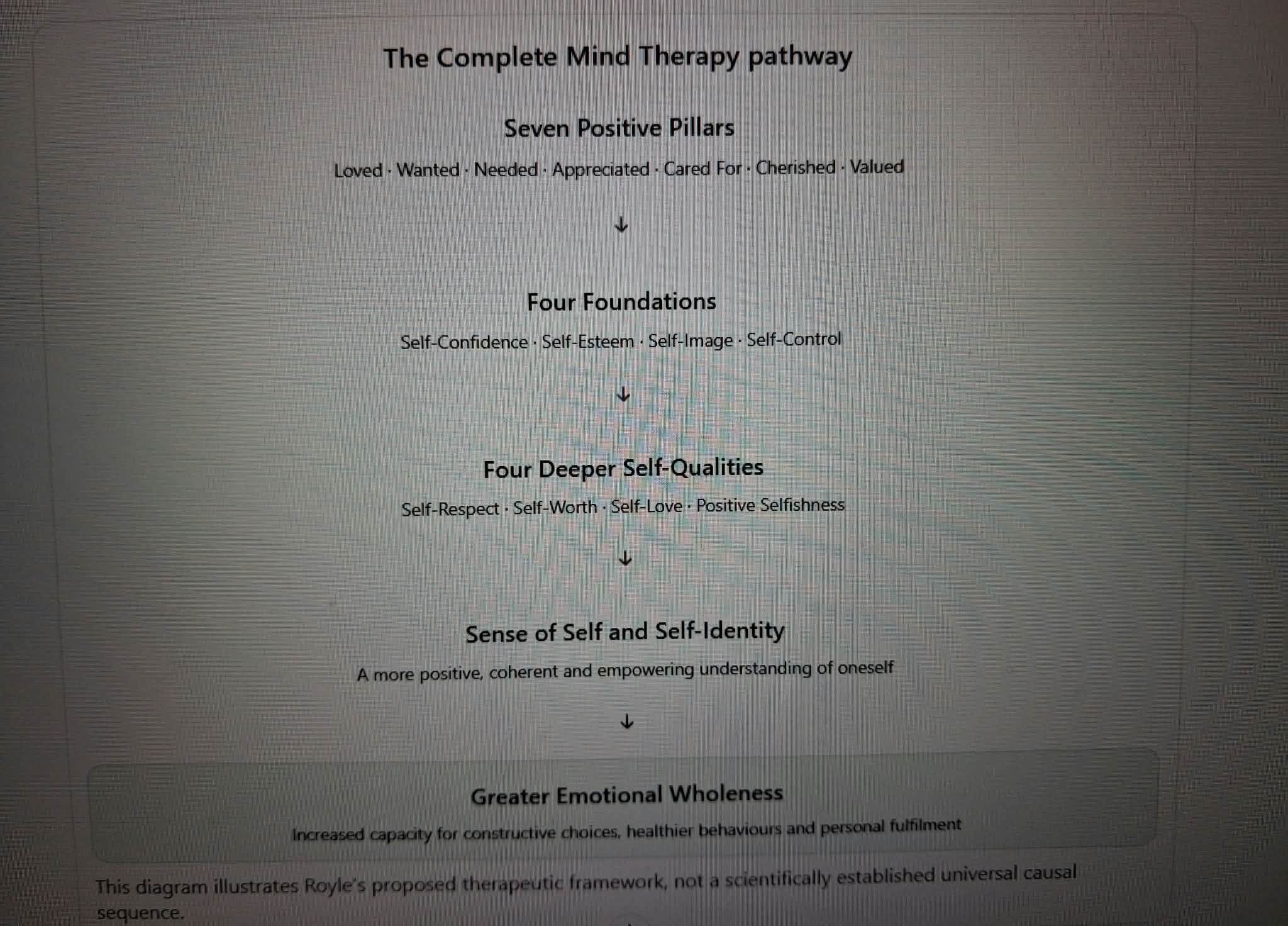
These relationships form the foundation of the approach I call Complete Mind Therapy.
The precise Seven Pillars and their proposed sequence of effects constitute my therapeutic model. Although related ideas are supported by research into self-efficacy, attachment, self-concept and psychological well-being, the complete model itself would require direct controlled evaluation to establish its effectiveness and causal claims.
7. The feeling of something missing: why people try to fill an emotional void
One of the most common experiences I have encountered is that people feel something is missing from their lives.
They may describe an emptiness, an emotional hole, a lack of purpose or a feeling that they are somehow incomplete.
Sometimes they cannot identify exactly what is wrong.
They simply know that something does not feel right.
My interpretation is that, in many cases, this experience relates to perceived deficits in the emotional needs represented by the Seven Positive Pillars.
People may then seek activities or substances that temporarily change how they feel.
Some turn to smoking.
Others use alcohol or drugs.
Some become excessively dependent on romantic relationships, external approval or social recognition.
Others may seek fulfilment through religion, exercise, work, achievement or membership of a particular social group.
These activities are not inherently equivalent, and many can be healthy and meaningful. Religion, exercise and community participation can be genuine sources of resilience and well-being for some people.
The question is whether an activity is supporting a person’s life or functioning primarily as an escape from emotional distress.
The role of belonging
In my 2015 paper, I discussed how young people who feel disconnected or unsupported may become involved with destructive peer groups because those groups provide a sense of belonging.
Even a harmful group may offer attention, recognition, acceptance or identity.
This does not excuse criminal or destructive behaviour, but it may help us understand one factor that contributes to it.
The same principle may operate in less extreme circumstances.
Someone may remain in an unhealthy relationship because they fear losing the only source of affection they believe they have.
Another person may use substances to temporarily escape loneliness or emotional pain.
Someone else may become excessively dependent on praise because their sense of personal value depends on external approval.
My therapeutic objective is to help people develop healthier ways of meeting their emotional needs, rather than relying upon behaviours that may ultimately make their lives more difficult.
Importantly, addictions, self-harm, violence, homelessness and other serious difficulties have multiple interacting causes. They cannot scientifically be attributed in every case to deficiencies in the Seven Pillars, and they may require specialist medical, psychological or social support.
8. From pain to pleasure, from feeling trapped to feeling free
Another important feature of Complete Mind Therapy is the idea of helping clients move from an undesirable emotional position towards a more constructive one.
In my original article, I explored several examples of opposing emotional experiences.
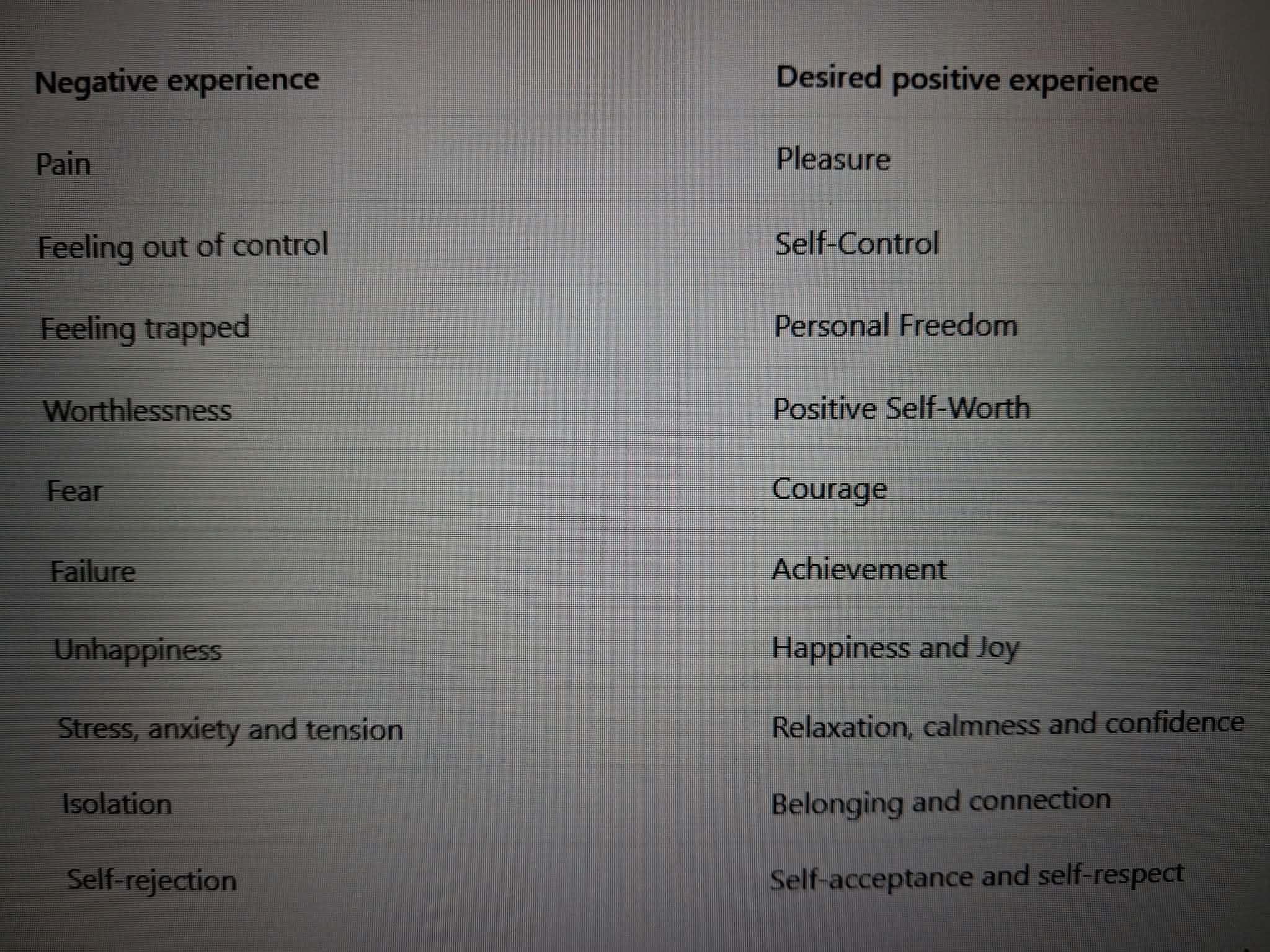
The therapist’s role is to help the client move towards the more constructive end of these scales.
I sometimes describe this as helping people change things to the opposite.
For example, if someone repeatedly imagines themselves failing, we may help them rehearse images of successfully coping.
If they experience themselves as trapped, we may explore feelings of choice and freedom.
If they perceive themselves as powerless, we may help them recall occasions when they demonstrated competence and self-control.
This is where suggestions, metaphors, emotional language and visualisations can become particularly useful.
However, the aim is not to suppress or deny difficult emotions. Fear, sadness, anger and grief can have legitimate functions. Effective therapy helps people understand and respond to those feelings rather than simply labelling them as negative.
9. Maxwell Maltz, Psycho-Cybernetics and the psychology of self-image
An important influence on my thinking has been the work of Maxwell Maltz.
His book Psycho-Cybernetics explores the relationship between self-image, mental rehearsal, emotional responses and achievement.
Maltz argued that how people perceive themselves can influence what they attempt, expect and achieve.
This is closely aligned with my emphasis on strengthening self-image and personal identity.
Maltz also popularised two memorable acronyms.
FAILURE
F — Frustration
A — Aggressiveness
I — Insecurity
L — Loneliness
U — Uncertainty
R — Resentment
E — Emptiness
SUCCESS
S — Sense of Direction
U — Understanding
C — Courage
C — Calmness
E — Esteem
S — Self-Confidence
S — Self-Acceptance
These provide memorable descriptions of emotional and psychological patterns that may help or hinder personal progress.
They are teaching frameworks rather than scientifically validated diagnostic categories.
Nevertheless, they offer useful language for helping clients examine how they currently feel and how they would prefer to feel.
A related scientific foundation comes from Bandura’s self-efficacy research, which demonstrates the importance of perceived personal capability in initiating and sustaining behavioural change.
10. Visualisation, symbolism and the subconscious mind
I have found that imagery can be a particularly useful part of therapeutic suggestion.
Rather than merely telling someone to feel more confident, we can invite them to imagine what confidence would look, sound and feel like.
We can ask them to picture themselves successfully handling situations that previously caused difficulty.
We can use metaphors to represent unwanted habits and desired changes.
For example, a client might imagine leaving an old burden behind, stepping through a doorway into a different future, or watching an exaggerated cartoon representation of an unwanted habit lose its influence.
In my experience, bizarre, comical, ridiculous or abstract images can more often than not be more easily memorable.
Their novelty may help the client engage with the exercise and remember it afterwards.
The scientific evidence does not establish that bizarre imagery is universally more effective than realistic imagery in hypnotherapy. Its usefulness will depend on the person, the task and the context.
But the underlying idea is straightforward.
The mind can respond emotionally to things we imagine, even when we know those things are not literally happening.
Imagery can therefore become a way of rehearsing different emotional responses and possible future behaviours.
When combined with suggestion, repetition and meaningful personal goals, it can become part of a broader therapeutic strategy.
11. Why stage hypnosis also illustrates the power of suggestion
The same psychological principles can be considered in relation to stage hypnosis.
In a stage show, participants are often surrounded by an audience, excitement, attention and anticipation.
They may be selected because they are enthusiastic, responsive and willing to participate.
The hypnotist establishes a clear framework in which unusual behaviour is expected and socially permitted.
For some participants, the experience offers an opportunity to become the centre of attention, feel appreciated, entertain others and enjoy a sense of belonging.
This connects directly with my Seven Positive Pillars.
Participants may feel wanted, needed, valued and appreciated.
They may experience permission to behave in ways they would normally inhibit.
The expectations of the audience, the performer and the participants can all contribute to what happens.
This does not mean every participant is deliberately pretending. Hypnotic responses can be subjectively genuine, and some people experience suggested actions as unusually automatic or involuntary.
My point is that social context, expectations, willingness, attention and suggestion can all help explain stage-hypnosis phenomena without requiring us to invoke mysterious powers.
The ethical responsibility of the stage hypnotist remains paramount: informed consent, dignity, physical safety and freedom from humiliation must take priority over entertainment.
12. Does hypnotherapy work largely because of placebo? What does the research actually show?
This is perhaps the most important scientific question arising from my argument.
If hypnosis is fundamentally about suggestion, belief and expectation, should we regard hypnotherapy as a sophisticated form of placebo-based psychological intervention?
There is meaningful research supporting aspects of this interpretation.
However, there is also evidence that hypnotic responsiveness involves processes not adequately explained by expectancy alone.
To understand the distinction, we should examine several important findings.
Research supporting the suggestion and placebo explanation
1. Kirsch — Hypnosis and Placebos: Response Expectancy as a Mediator of Suggestion Effects
Kirsch argued that hypnosis and placebo procedures can share a mechanism involving response expectancy, and that both belong to the broader phenomenon of suggestion.
Direct theoretical support for the central PURE SUGGESTION argument.
2. Kirsch — Clinical Hypnosis as a Nondeceptive Placebo
This work describes how hypnotic inductions may alter response expectancies and how these changes can be used therapeutically.
Supports viewing hypnosis as an expectancy-enhancing intervention without requiring deception.
3. Enhancing Placebo Effects: Insights From Social Psychology
This paper examines how social psychological processes, client perceptions and expectations may influence placebo responses, including in hypnotic contexts.
Supports the relevance of therapeutic communication and social influence.
4. Kaptchuk — Placebo Studies and Ritual Theory
Kaptchuk explores how healing rituals, cultural meaning and perceived authority may contribute to therapeutic responses.
Supports the proposition that treatment rituals can have psychological significance.
These papers provide a substantial foundation for arguing that expectation, suggestion, ritual and contextual factors contribute to the effects of hypnosis.
They do not, however, quantify what percentage of hypnotherapy’s benefits is attributable to placebo across all conditions.
Research that complicates the placebo-only explanation
A 2020 literature review examined 19 studies investigating the relationship between expectations and hypnotic susceptibility.
It found that the overall correlation between expectations and hypnotic susceptibility was very small, although some methods of measuring expectation produced stronger associations.
This suggests that expecting to be hypnotised does not, by itself, fully explain individual differences in hypnotic responsiveness.
The Relationship Between Expectation and Hypnotic Susceptibility: A Literature Review.
Another paper, Hypnosis: Placebo or Nonplacebo?, considered evidence that hypnotizability is associated with outcomes for some conditions, including pain and anxiety, but not necessarily for addiction or habit disorders.
That distinction is important because it suggests that the mechanisms involved may differ depending on the problem being treated.
Hypnosis: Placebo or Nonplacebo?.
Does adding hypnosis to therapy improve results?
A 1995 meta-analysis by Kirsch, Montgomery and Sapirstein examined studies comparing cognitive behavioural therapy with the same treatment supplemented by hypnosis.
It reported an advantage for treatments incorporating hypnosis.
A more recent 2021 meta-analysis by Ramondo and colleagues examined a larger body of evidence and found statistically significant, generally small-to-medium advantages for hypnosis-enhanced cognitive behavioural therapy, with variations across conditions and follow-up periods.
2021 META-ANALYSIS
48
Post-treatment comparisons
1,928
Participants at post-treatment
The study reported a small-to-medium average advantage for hypnosis-enhanced CBT at post-treatment, with effects differing by condition.
Ramondo et al. (2021) — Updated Meta-Analysis
This supports the conclusion that adding hypnosis can sometimes improve therapeutic outcomes.
It does not establish whether the additional benefit comes from expectancy, attention, imagery, specific suggestion effects or a combination of mechanisms.
What about smoking cessation?
Smoking cessation is particularly relevant to my earlier example.
A 2019 Cochrane systematic review concluded that there was insufficient evidence to establish hypnotherapy as a specific treatment for smoking cessation, and no clear evidence that it was more effective than other approaches.
If an advantage exists, the review suggested it is likely to be small.
Cochrane Review — Hypnotherapy for Smoking Cessation.
This does not mean individual clients cannot successfully stop smoking following hypnotherapy.
It means we cannot confidently attribute their success to a unique hypnotic mechanism, or assume hypnotherapy is superior to established smoking-cessation interventions.
What about Theta brainwaves and the hypnotic state?
Neuroscience has identified changes in brain activity associated with hypnosis and hypnotic suggestion.
A 2022 systematic review found evidence of functional brain changes during hypnosis, although results varied across studies.
Conversely, a 2021 EEG study found no evidence of increased theta power as a marker of the hypnotic state in its small sample of highly hypnotizable participants.
These findings reinforce the need to distinguish hypnotic responsiveness from any one brainwave frequency.
Functional Changes in Brain Activity Using Hypnosis: A Systematic Review
No Evidence for Theta Power as a Marker of Hypnotic State.
My interpretation: These findings leave considerable room for an expectancy- and suggestion-centred understanding of hypnosis, while also showing why the claim that hypnosis is only placebo should remain a theoretical position rather than a settled scientific conclusion.
13. Complete Mind Therapy: combining the principles into one approach
All these ideas come together in the approach I developed and call Complete Mind Therapy (CMT).
The central objective is not simply to eliminate a symptom.
It is to address the emotional experiences, beliefs, expectations and self-perceptions that may contribute to the client’s difficulties.
Whatever the presenting issue, my approach begins by exploring the person’s emotional foundations.
Are they feeling loved?
Wanted?
Needed?
Appreciated?
Cared for?
Cherished?
Valued?
Do they feel confident, worthy and capable?
Do they have a positive image of themselves?
Do they believe they can exercise control over their decisions and behaviour?
Do they respect themselves and recognise their own value?
Are they comfortable with their sense of identity?
I then use suggestions, language patterns, visualisations, metaphors and other therapeutic techniques to help strengthen those areas.
In practical terms, CMT can bring together the therapist’s positive expectations, the client’s developing self-belief, the credibility of the therapeutic relationship, the symbolic importance of the treatment ritual, supportive follow-up, meaningful reminders and repeated positive suggestions.
A typical programme might involve an initial consultation, a personalised session delivered face-to-face or via Zoom, appropriate imagery and suggestion exercises, and a follow-up recording to use over the next 28 days.
The aim is to provide a psychologically supportive context in which the client can begin experiencing themselves differently.
I believe this can help people move towards greater self-confidence, self-esteem, self-image, self-control, self-respect, self-worth, self-love and a healthier sense of identity.
My broader clinical philosophy is that people often have more resources and capabilities within them than they currently recognise.
Our role is to help them discover and use those resources.
Why the therapeutic relationship matters
One of the strongest findings in psychotherapy research is that the quality of the therapeutic alliance is associated with treatment outcomes.
A 2018 meta-analysis covering 295 independent studies and more than 30,000 patients found a significant positive association between therapeutic alliance and outcome.
This supports the importance of a relationship in which the client feels understood, respected and supported.
The Alliance in Adult Psychotherapy: A Meta-Analytic Synthesis.
In many respects, this research resonates with my emphasis on helping clients feel loved, wanted, needed, appreciated, cared for, cherished and valued.
It does not prove the specific Seven Pillars model, but it supports the broader importance of positive interpersonal experiences within therapy.
Teaching Complete Mind Therapy
These principles form part of my Elite Hypnotherapy, Stage Hypnotism & NLP Hypnosis Bootcamp, in which I teach my approach to suggestion, hypnotic phenomena, therapeutic communication and Complete Mind Therapy.
NOTE = You can get 50% off the usual investment into Lifetime membership of the Bootcamp by using the code WIZARD at checkout https://www.magicalguru.com/elite-hypnotherapy-nlp-hypnosis-stage-hypnotism-bootcamp/
My intention is to encourage practitioners to look beyond the surface rituals of hypnosis and understand the psychological processes that may contribute to their results.
The effectiveness of CMT as a complete branded treatment programme has been established by the experience of both myself over several decades and also the experience of my many students around the world who also use this approach with their clients on a daily basis with great success.
14. The most important realisation: the client is the person making the change
Ultimately, this brings us back to the central principle of my philosophy.
The therapist does not possess a magical power.
The therapist does not insert a mysterious force into the client’s mind.
The therapist does not literally take control of another person’s thoughts.
Instead, the therapist helps create an environment in which the client can experience hope, confidence, acceptance and the possibility of change.
The ritual of hypnosis may become a powerful symbol.
The suggestions may help the client imagine a different future.
The therapist’s confidence may reinforce the client’s confidence.
The follow-up process may help maintain commitment.
The positive emotional experience may help the client feel more capable.
But ultimately, the client is the person who must live the change.
They make the decisions.
They practise the new behaviours.
They develop the new habits.
They confront difficulties.
They learn from setbacks.
And they gradually establish a different relationship with themselves.
Sometimes people genuinely need substantial professional help, medication, social support or other treatment to make those changes possible. Recognising the client’s agency does not mean denying those needs.
Rather, it means avoiding the suggestion that all the power belongs to the therapist.
One of the most valuable things we can give a client is the understanding that they have an active role in their own progress.
Conclusion: There’s No Such Thing as Hypnosis — There Is Only PURE SUGGESTION
After studying and practising hypnotherapy since 1989, I have become increasingly convinced that much of what we call hypnosis can be understood through the power of suggestion and the psychological context in which it operates.
The Pygmalion Effect can help us understand the influence of the therapist’s expectations.
The Galatea Effect and self-efficacy help explain the importance of the client’s own belief in their abilities.
The Hawthorne Effect draws attention to the possible influence of observation, attention and accountability.
The Halo Effect illustrates how perceived professional credibility can shape expectations.
The Totem Effect shows that Symbolic objects and lucky charms can become reminders of personal intentions.
Émile Coué’s autosuggestion highlights the potential of repeated positive messages.
Placebo and nocebo research demonstrate that expectations and treatment context can influence real experiences.
And the Seven Positive Pillars of Complete Mind Therapy provide my framework for understanding the emotional needs that I believe are central to personal change.
When these principles are combined with meaningful suggestions, visualisations, therapeutic communication and a supportive relationship, they can create a powerful context for transformation.
My position is not that hypnotic experiences are unreal.
It is that we should question whether a special hypnotic state is necessary to explain them.
Perhaps what matters most is not whether someone has been hypnotised, but whether they have been helped to believe that change is possible, feel capable of achieving it and take the actions necessary to make it happen.
Perhaps the greatest achievement of the therapist is not to convince clients that they possess some extraordinary hypnotic power.
Perhaps it is to help clients discover their own capabilities while providing a safe, supportive and psychologically meaningful reason to leave behind self-blame, shame, guilt and regret.
And perhaps the most useful question we can ask is not:
How deeply hypnotised was the client?
But:
What did the client come to believe, what did they begin to feel, and what did they subsequently do differently?
Because, ultimately, the power of meaningful therapeutic change belongs to the person experiencing it.
That is the philosophy behind my Complete Mind Therapy approach.
And that is why I maintain:
There’s No Such Thing as Hypnosis — There Is Only PURE SUGGESTION.
References and further reading
Original publication and historical research
1. Royle, J. (2015). The key’s to hypnotic success. International Journal of Complementary & Alternative Medicine, 1(4), 113–115. DOI: 10.15406/ijcam.2015.01.00024. Read Jonathan Royle’s original published paper on MedCrave. This is the foundational publication for the Seven Positive Pillars and Complete Mind Therapy philosophy discussed here.
2. Origins of the Term Hypnotism Prior to Braid. (1984). American Journal of Clinical Hypnosis. Journal article.
3. Etienne Félix d’Hénin de Cuvillers: A Founder of Hypnosis. PubMed record.
Hypnosis, placebo and expectancy
4. Kirsch, I. (1985). Response Expectancy as a Determinant of Experience and Behavior. American Psychologist, 40(11), 1189–1202. Research paper.
5. Kirsch, I. Hypnosis and Placebos: Response Expectancy as a Mediator of Suggestion Effects. Research paper.
6. Kirsch, I. Clinical Hypnosis as a Nondeceptive Placebo: Empirically Derived Techniques. PubMed record.
7. Hypnosis: Placebo or Nonplacebo? PubMed record.
8. Enhancing Placebo Effects: Insights From Social Psychology. Full research paper.
9. Kaptchuk, T. J. (2011). Placebo Studies and Ritual Theory: A Comparative Analysis of Navajo, Acupuncture and Biomedical Healing. Full research paper.
10. Implications of Placebo and Nocebo Effects for Clinical Practice: Expert Consensus. Full research paper.
Hypnotherapy effectiveness and brain research
11. Kirsch, I., Montgomery, G., & Sapirstein, G. (1995). Hypnosis as an Adjunct to Cognitive-Behavioral Psychotherapy: A Meta-Analysis. Research paper.
12. Ramondo, N., Gignac, G. E., Pestell, C. F., & Byrne, S. M. (2021). Clinical Hypnosis as an Adjunct to Cognitive Behavior Therapy: An Updated Meta-Analysis. Research paper.
13. Barnes, J., et al. (2019). Hypnotherapy for Smoking Cessation. Cochrane Database of Systematic Reviews. Systematic review.
14. The Relationship Between Expectation and Hypnotic Susceptibility: A Literature Review. Research review.
15. Functional Changes in Brain Activity Using Hypnosis: A Systematic Review. Full research paper.
16. No Evidence for Theta Power as a Marker of Hypnotic State in Highly Hypnotizable Subjects. Full research paper.
Psychological principles, self-belief and therapeutic relationships
17. Bandura, A. (1977). Self-Efficacy: Toward a Unifying Theory of Behavioral Change. Research paper.
18. Rosenthal and colleagues. Interpersonal Expectancy Effects: The First 345 Studies. Research review.
19. Thorndike, E. L. (1920). A Constant Error in Psychological Ratings. Original paper.
20. The Impact of Self-Affirmation on Health-Behavior Change: A Meta-Analysis. Research paper.
21. The Alliance in Adult Psychotherapy: A Meta-Analytic Synthesis. Research paper.
Books recommended in Jonathan Royle’s original publication
The following books were recommended in my 2015 paper as additional perspectives on hypnosis, suggestion, psychology and therapeutic influence:
Psycho-Cybernetics — Maxwell Maltz.
They Call It Hypnosis — Robert A. Baker.
If This Be Magic: The Forgotten Power of Hypnosis — Guy Lyon Playfair.
Monsters and Magical Sticks: There’s No Such Thing as Hypnosis — Steven Heller.
Bad Medicine: Misconceptions and Misuses Revealed — Christopher Wanjek.
Trick or Treatment? — Edzard Ernst and Simon Singh.
Influence: The Psychology of Persuasion — Robert B. Cialdini.
These books represent differing perspectives and should not all be interpreted as endorsing the same theory of hypnosis.
Author attribution: Jonathan Royle — creator of Complete Mind Therapy (CMT) and Mind Emotion Liberation Techniques (MELT); hypnotherapy, stage hypnotism, NLP and psychological persuasion trainer.
This article presents the author’s professional philosophy and interpretation of published research. The proposed Complete Mind Therapy framework and its specific mechanisms require independent scientific evaluation. Hypnotherapy should not be represented as a guaranteed cure or as a replacement for appropriate medical or mental-health treatment.
My approach of “Complete Mind Therapy” is fully taught within the “Elite Hypnotherapy, Stage Hypnosis & NLP Hypnotism” Bootcamp members area.
NOTE = You can get 50% off Lifetime Membership to the Bootcamp where you will also gain access to another 30+ Professional Qualifications along with business building & profit producing tools galore by entering the discount voucher code of WIZARD when using the checkout to secure your membership here
https://www.magicalguru.com/elite-hypnotherapy-nlp-hypnosis-stage-hypnotism-bootcamp/
The Power of Hypno-Tricks and Relaxation in Hypnotherapy

The Power of Hypno-Tricks and Relaxation in Hypnotherapy

My approach of “Complete Mind Therapy” is fully taught within the “Elite Hypnotherapy, Stage Hypnosis & NLP Hypnotism” Bootcamp members area.
NOTE = You can get 50% off Lifetime Membership to the Bootcamp where you will also gain access to another 30+ Professional Qualifications along with business building & profit producing tools galore by entering the discount voucher code of WIZARD when using the checkout to secure your membership here
https://www.magicalguru.com/elite-hypnotherapy-nlp-hypnosis-stage-hypnotism-bootcamp/
EXPOSED: Why Real World Experience & Success combined with Practical Skills and Results Matter Far More Than Hypnotherapy Certificates & Accreditations by Glorified Boys Clubs

After years of hearing & seeing comments from people who frankly should have known better trying to criticise my Hypnosis Courses because they were not and are not accredited by The General Hypnotherapy Standards Council (GHSC) or the General Hypnotherapy Register

EXPOSED: What Did The Late Stage Hypnotists & Hypnotherapists Ormond McGill, Gil Boyne, Tom Silver & Peter Casson all Admit to Jonathan Royle?

EXPOSED: What Did The Late Stage Hypnotists & Hypnotherapists Ormond McGill, Tom Silver, Gil Boyne & Peter Casson all Admit to Jonathan Royle?
My approach of “Complete Mind Therapy” is fully taught within the “Elite Hypnotherapy, Stage Hypnosis & NLP Hypnotism” Bootcamp members area.
NOTE = You can get 50% off Lifetime Membership to the Bootcamp where you will also gain access to another 30+ Professional Qualifications along with business building & profit producing tools galore by entering the discount voucher code of WIZARD when using the checkout to secure your membership here
https://www.magicalguru.com/elite-hypnotherapy-nlp-hypnosis-stage-hypnotism-bootcamp/