The Art and Science of Hypnotic Induction
From traditional relaxation to rapid and instant hypnosis: understanding the mechanisms, methods and creative combinations of hypnotic induction
An advanced educational article for hypnotherapists, stage hypnotists and serious students of hypnosis.
Introduction: Is there a common formula behind all hypnotic inductions?
Hypnosis has been practised, demonstrated, debated and refined for centuries. From the magnetic passes of Franz Anton Mesmer to the eye-fixation techniques of James Braid, the progressive relaxation methods associated with Edmund Jacobson, the permissive language of Milton Erickson and the dramatic instant inductions employed by modern stage hypnotists, practitioners have developed a remarkable variety of approaches to producing hypnotic responses.
Yet despite their apparent differences, many induction techniques share underlying psychological principles.
Drawing upon decades of professional clinical and stage hypnosis experience, one particularly useful practical framework identifies three fundamental components:
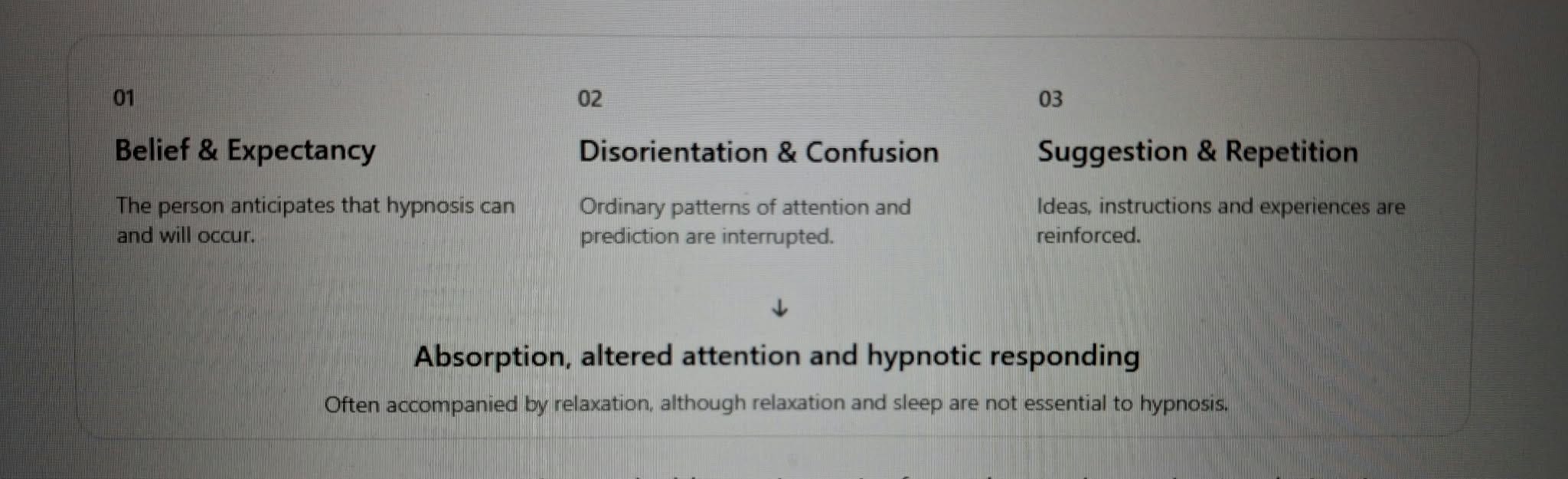
This three-component model provides a valuable starting point for understanding induction design. It should, however, be regarded as a practitioner’s conceptual framework rather than a scientifically established formula applicable to every induction.
Some effective hypnotic procedures involve little confusion, minimal repetition and no obvious relaxation. Likewise, hypnotic responding does not necessarily require a person to surrender executive functioning or lose the ability to make decisions.
The more productive question is therefore not simply which technique works? but:
What does each technique do to the person’s expectations, attention, bodily experience, interpretation and responsiveness to suggestion?
1. Belief and expectancy: preparing the mind for hypnosis
Before an induction begins, the person may already be responding psychologically to the idea of being hypnotised.
The hypnotist’s reputation, apparent confidence, language, professional setting, demonstrations and the subject’s previous experiences can all influence expectations.
Consider two contrasting introductions.
A hesitant hypnotist says:
“I’m not really sure whether this will work, but perhaps you might feel something if we try.”
A confident hypnotist says:
“In a moment, I’ll guide you through a simple experience. There’s nothing difficult you need to do. Just follow the instructions and notice what happens.”
The second introduction offers clarity, reassurance and positive expectancy without promising an outcome or implying that the subject must comply.
The expectancy loop
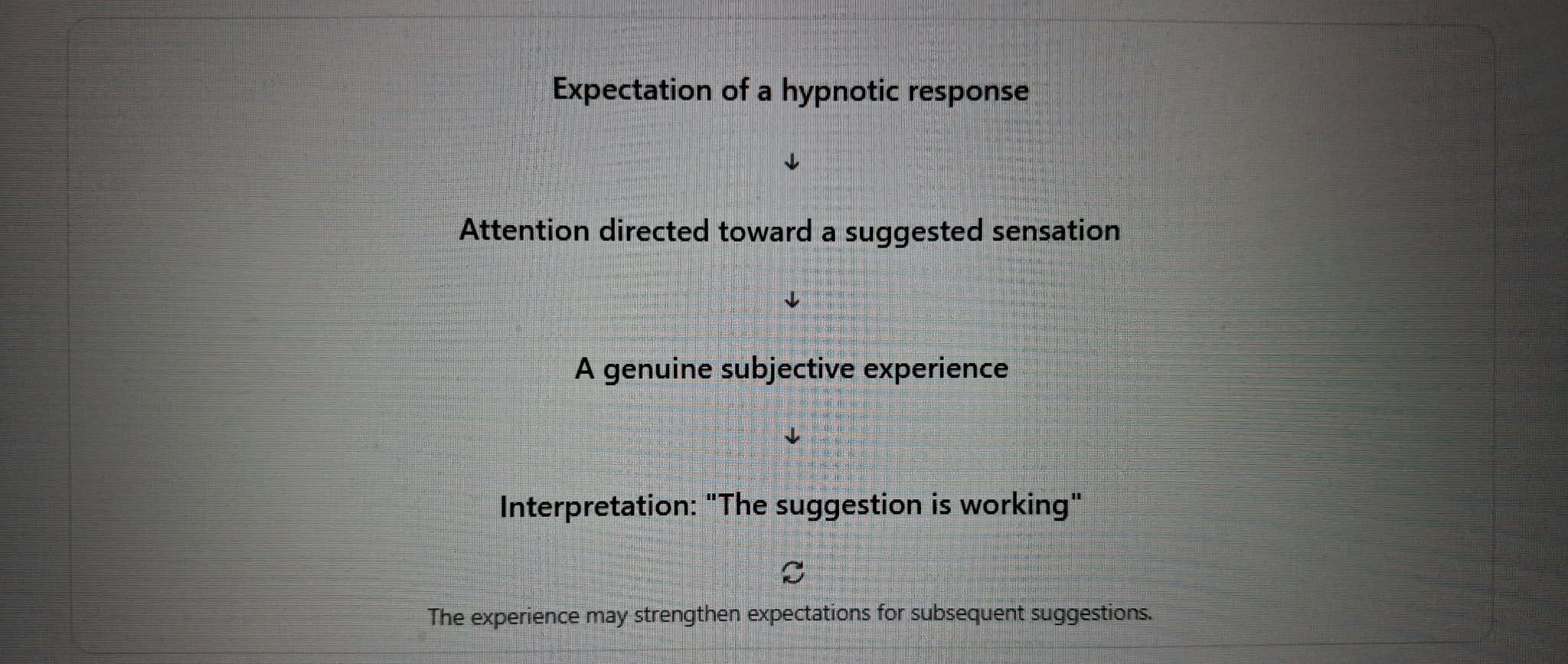
This is particularly relevant to rapid inductions, where an apparently small response may have considerable psychological significance.
For example, a subject who experiences their fingers moving together during an ideomotor demonstration may become more receptive to subsequent suggestions.
The sensation is real, but the explanation for it need not be supernatural or evidence that the hypnotist has acquired control over the person’s mind.
The person’s own expectations, attention and motor processes contribute to the result.
2. Disorientation, confusion and the interruption of ordinary expectations
Confusion inductions exploit the fact that people continuously attempt to interpret incoming information and predict what will happen next.
A hypnotist may deliberately interrupt an established pattern of interaction, introduce an unexpected instruction or combine apparently contradictory suggestions.
The individual briefly has to reconsider what is happening.
At that moment, a simple, understandable instruction may become particularly salient.
The handshake interruption
A conventional handshake is a highly familiar social routine. One person extends a hand, the other responds, the hands meet and the greeting concludes.
A pattern-interruption induction changes this sequence.
For example, in a pre-agreed demonstration, the hypnotist may interrupt the movement and direct attention toward the subject’s own hand:
“Notice your hand for a moment. Look at the tiny movements in your fingers. As you notice them, allow your attention to become completely absorbed in the experience.”
The subject’s familiar behavioural sequence has been interrupted, and attention has been redirected.
The essential mechanism is not necessarily confusion alone. It may involve surprise, heightened attention, expectancy and the subject’s willingness to engage.

The confusion technique
Ericksonian confusion approaches may employ unusual wording, ambiguous phrases, changing frames of reference or overlapping instructions.
For instance:
“You may begin to notice the feeling before you decide what the feeling means, or perhaps the decision becomes easier once you stop trying to decide.”
This language can encourage a person to shift away from habitual analytical processing.
However, excessive confusion can also produce irritation, anxiety or disengagement. Confusion is a tool, not an essential ingredient of hypnosis.
A skilled hypnotist must recognise when the subject is becoming absorbed and when the technique is simply becoming uncomfortable.
3. Suggestion and repetition: developing a self-reinforcing experience
Suggestion is central to hypnosis.
It may be direct, indirect, permissive, metaphorical, sensory, emotional or behavioural.
Repetition can reinforce an experience by repeatedly drawing attention to it.
For example:
“Notice your breathing becoming comfortable. With each breath, allow your shoulders to soften. And as your shoulders soften, notice how easily your attention can settle.”
The language repeatedly links attention, breathing and relaxation.
A rapid induction may compress this process into a few seconds, while a traditional induction may develop it over several minutes.
Repetition is not always necessary, and excessive repetition can become distracting. Its effectiveness depends on timing, credibility, individual responsiveness and the subject’s engagement.
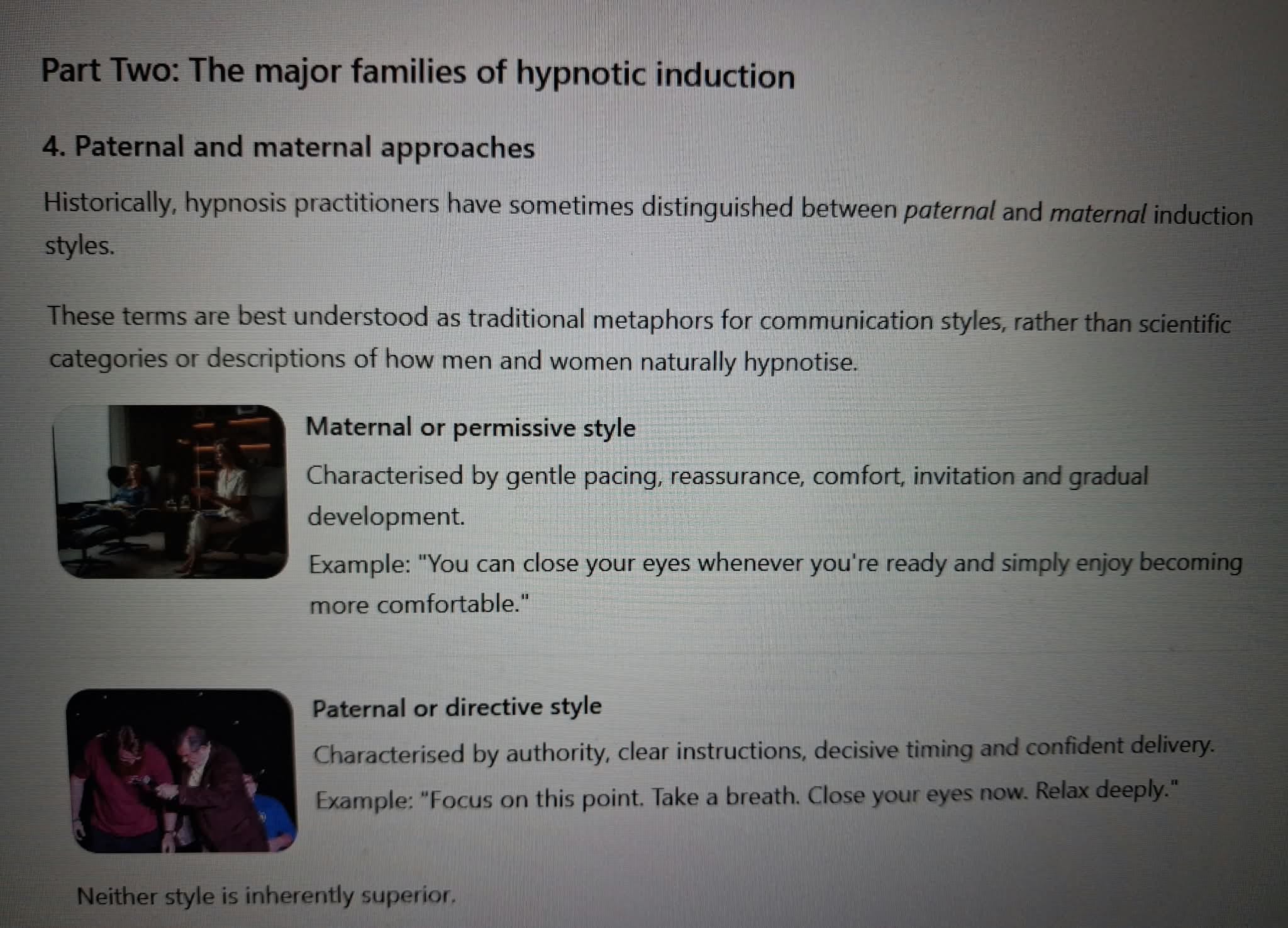
A directive approach may appeal to a subject who wants clear leadership, while a permissive approach may suit someone who prefers autonomy and gradual engagement.
Importantly, a rapid induction need not be authoritarian, and a slow induction need not be permissive.
A highly effective practitioner can change styles within the same induction.
5. Progressive muscular relaxation
Associated with physician Edmund Jacobson, progressive muscular relaxation originally involved systematically tensing and releasing muscle groups to develop awareness of muscular tension.
Hypnotists subsequently adapted relaxation-based methods into induction procedures.
A typical sequence involves directing attention through the body, allowing different muscle groups to release tension.
For example:
“Notice the muscles around your eyes. Allow them to become comfortable. Now let that comfort spread through your face, neck and shoulders.”
Some versions incorporate actual muscle contraction followed by release, while others rely on imagery and suggestion alone.
Principal mechanisms: bodily awareness, sustained attention, reduced muscular tension and expectation.
Advantages: predictable pacing, accessibility and usefulness in relaxation-oriented clinical work.
Limitations: relatively slow and not universally suitable, particularly for individuals who find body-focused attention uncomfortable.
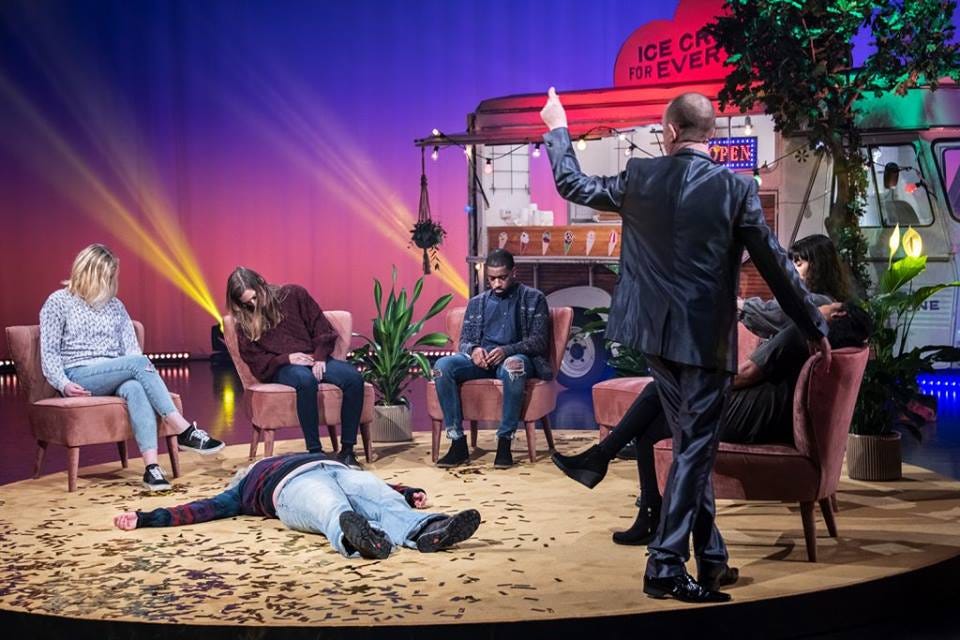
6. Eye fixation and eye closure
Eye-fixation inductions have a long history in hypnosis, notably in the work of James Braid.
The subject focuses on a fixed point while the hypnotist directs attention toward visual fatigue, blinking or the desire to close the eyes.
Example:
“Keep your attention on that point. Notice how your eyes naturally blink. When you feel ready, allow them to close and continue focusing inward.”
The technique can combine visual concentration, expectancy and a natural physiological response.
Eye closure is not proof of trance. Nevertheless, it can serve as a useful transition from external attention to internal experience.
7. The Elman-style induction
The induction commonly associated with Dave Elman is notable for combining several procedures into a relatively brief sequence.
Typical components include:
Eye closure and relaxation suggestions.
Eye-relaxation testing.
Physical relaxation deepening.
Mental relaxation, sometimes involving counting or imagery.
Further suggestion and response testing.
The process illustrates how several modest responses can be arranged into a sequence that progressively strengthens expectancy.
A person who experiences successful eye relaxation may become more confident about experiencing mental relaxation.
The induction therefore uses successive experiences to reinforce the meaning of hypnosis.
An important distinction is that apparent inability to open the eyes may reflect voluntary cooperation, suggestion, ideomotor responding or a combination of factors. It is not definitive proof that conscious control has been bypassed.
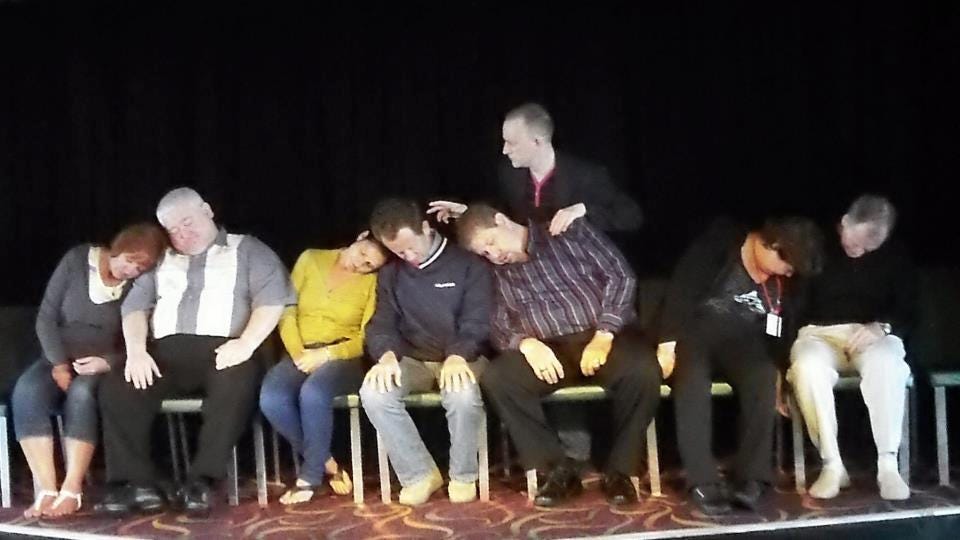
8. Fractionation
Fractionation involves alternating between different states or instructions, commonly opening and closing the eyes while suggesting increasing absorption.
For example:
“Open your eyes and notice the room. Now close them again and return to that comfortable inward focus. Each time, notice how quickly you can settle.”
The repeated transitions can make the procedure increasingly familiar.
Fractionation is particularly interesting because it combines repetition, expectation, contrast and conditioning.
It can also be incorporated into longer relaxation inductions or brief rapid inductions.
9. Counting, descending and staircase inductions
Counting provides structure and a predictable sequence.
A hypnotist may count backward from ten while suggesting progressive absorption, or invite the subject to imagine descending a staircase.
Example:
“With each number, imagine taking another comfortable step toward a quieter, more focused state.”
The effectiveness is not dependent upon an actual neurological descent through numbered levels.
Rather, the numbers organise attention and create a framework for expectation.
10. Imagery and guided visualisation
Imagery-based inductions use imagined scenes, movements or sensations to promote absorption.
Examples include floating on water, walking through a peaceful garden, descending in a lift or imagining warmth spreading through the body.
These techniques can be adapted to the person’s preferred sensory language.
Someone who does not visualise easily may respond better to imagined sounds, movement, temperature or tactile sensations.

11. Ericksonian and conversational hypnosis
Conversational approaches attempt to integrate hypnotic suggestions into ordinary dialogue.
They may use metaphor, storytelling, indirect suggestion, permissive language, utilisation of the subject’s spontaneous responses and carefully timed pauses.
For example:
“You don’t need to make relaxation happen. Sometimes people discover that simply noticing how they feel is enough for something to begin changing.”
Ericksonian utilisation is particularly valuable: rather than treating an unexpected response as a failure, the practitioner incorporates it.
If the subject reports feeling alert rather than sleepy, the hypnotist might say:
“That alertness can be useful. Allow yourself to become even more interested in what you notice.”
This illustrates an important principle: hypnosis need not resemble sleep.
12. Ideomotor inductions
Ideomotor phenomena involve movements influenced by thoughts, expectations and suggestions, sometimes experienced as occurring without deliberate effort.
Examples include finger movement, hand levitation, arm lowering and magnetic-hands exercises.
A hand-levitation induction might invite the subject to imagine that a helium balloon is gently lifting their wrist.
Small spontaneous or expectation-influenced movements may then become part of the induction.
These techniques are particularly useful because they provide visible or felt responses that can reinforce expectancy.
13. Rapid inductions
Rapid inductions aim to establish hypnotic responding within a short period, often seconds to a few minutes.
They frequently combine:
Clear preparation and expectancy.
Concentrated attention.
A simple physical or mental task.
An unexpected transition or pattern interruption.
A decisive suggestion.
Immediate reinforcement or deepening.
A rapid induction might begin with a magnetic-fingers exercise, move into eye fixation and then use a brief eye-closure instruction.
Its effectiveness depends not merely on speed but on how well the sequence fits the individual.
14. Instant inductions
Instant inductions are commonly associated with a single decisive instruction, often delivered at the culmination of an attention-focusing or pattern-interruption sequence.
The familiar command “Sleep!” is a classic example.
But the word itself has no established special power.
In stage hypnosis, it functions as a learned cue, particularly when volunteers have already been prepared through explanation, demonstrations, expectancy and earlier hypnotic experiences.
The apparent instant response may therefore be the final visible moment of a process that began much earlier.
An instant induction should never rely on an unconsented surprise, painful manoeuvre, unsafe loss of balance or a physical action that could injure the participant.
Part Three: Sensory overload, physiological demonstrations and the critical faculty
15. Sensory overload: when too much is happening at once
One of the most interesting practical hypotheses about rapid hypnosis is that multiple simultaneous demands can make a single, simple suggestion feel comparatively easy to follow.
Imagine a subject who is simultaneously asked to focus visually, listen carefully, maintain a particular hand position and monitor an unusual sensation.
Their attention is divided among several tasks.
If the hypnotist then introduces a simple instruction such as “Close your eyes and relax,” the instruction may offer an appealing reduction in complexity.
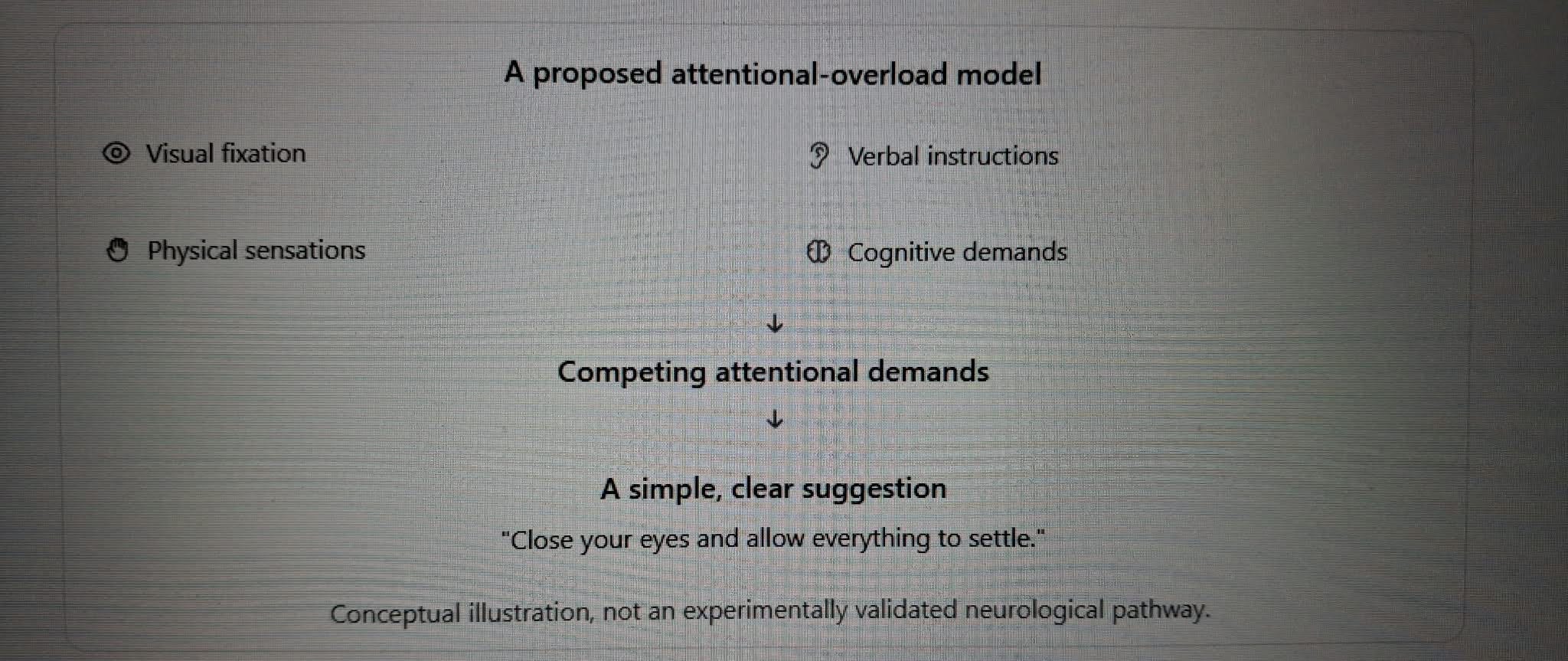
This model is consistent with the broader idea that attention is limited and that task demands compete for cognitive resources.
However, the claim that sensory overload necessarily creates hypnosis, or that it causes the mind to surrender control to the hypnotist, goes beyond the available evidence.
Overload can also produce resistance, stress, confusion or withdrawal.
The crucial distinction is between engaging attention and overwhelming the participant.
In responsible practice, any simultaneous physical and verbal elements should be explained, consensual, proportionate and stopped if discomfort develops.
16. Physiological body tricks: turning genuine sensations into hypnotic expectancy
A particularly valuable teaching concept is the use of naturally occurring bodily phenomena as part of hypnotic demonstrations.
These effects can produce sensations that seem surprising to the subject but have ordinary physiological explanations.
Consider the following examples.
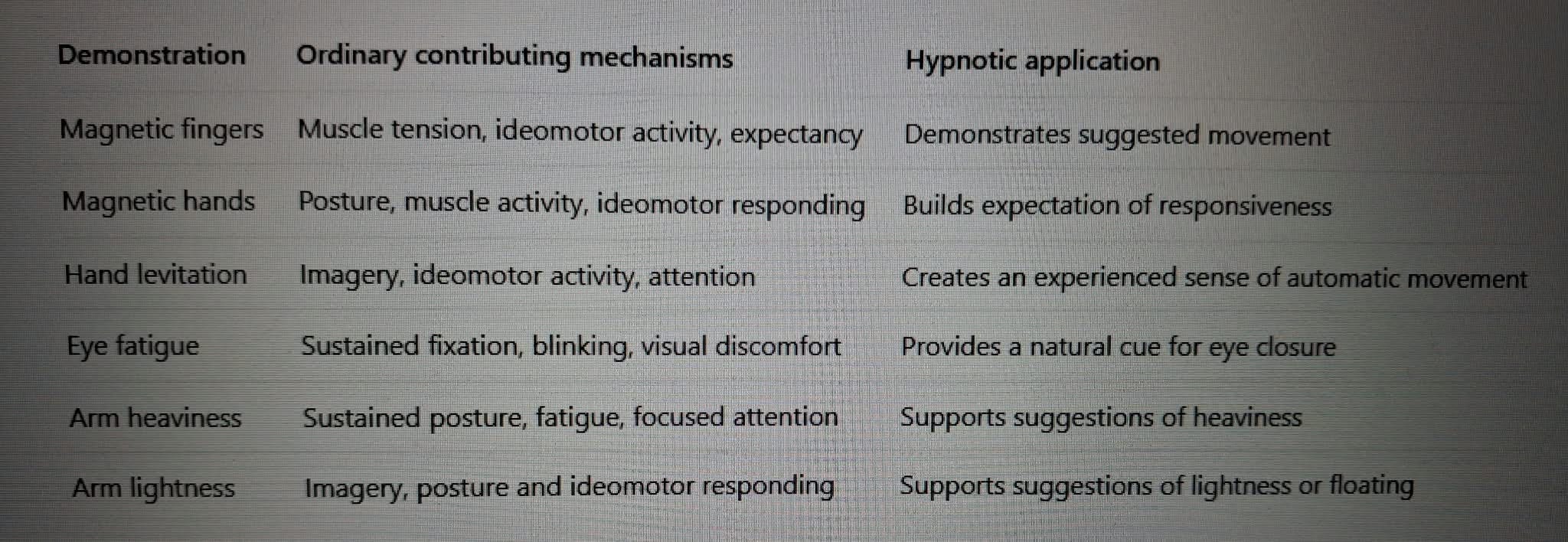
The interesting point is not merely that these demonstrations work.
It is how the participant interprets them.
Suppose a subject is invited to imagine magnets drawing their fingers together.
As the fingers move, the subject may think:
I imagined something, and my body actually responded.
That experience may strengthen the belief that further hypnotic suggestions will also produce genuine responses.
The attribution effect
A hypnotist may correctly predict an ordinary bodily sensation and then connect it with a hypnotic suggestion.
The person may attribute the experience primarily to the suggestion rather than recognising the combination of ordinary physiology, expectation and focused attention.
This can become a powerful expectancy-building event.
It is useful, however, to distinguish genuine experiential change from misleading claims of supernatural power or absolute mental control.
A practitioner can preserve the fascination of the demonstration while accurately explaining that the person’s own mind and body are producing the experience.
17. Does hypnosis bypass the critical faculty?
Traditional hypnosis teaching often refers to bypassing the critical faculty.
In that framework, the critical faculty is described as the mental process that evaluates, questions and compares suggestions against existing beliefs.
Some practitioners describe successful induction as temporarily allowing this faculty to take a tea break.
The metaphor is memorable and can be useful in teaching, but it should not be confused with a demonstrated neurological mechanism.
Modern hypnosis research does not establish that the executive functions of the brain simply switch off or that hypnotised individuals automatically obey every command.
Hypnosis can involve changes in attention, subjective agency, perception and the experience of effort. Some experimental studies have also reported altered activity or connectivity in brain networks involved in attention, self-monitoring and executive control.
But those findings do not justify equating hypnosis with the removal of judgment, autonomy or consent.
A better working model is that the subject becomes increasingly willing or able to experience certain suggestions as automatic, natural or effortless.
The distinction is important:
An action that feels automatic is not necessarily an action over which the person has lost all control.

Part Four: Other important approaches to hypnosis
18. Nonverbal and minimal-verbal induction
Some practitioners employ gaze, gesture, rhythm, posture and carefully timed silence.
These elements can direct attention and establish expectations, particularly when the participant already understands the intended process.
However, claims that nonverbal techniques alone reliably produce trance through an invisible transfer of energy are not scientifically established.
19. Kinaesthetic and touch-assisted induction
Touch-assisted methods may involve agreed hand contact, gentle positional cues or awareness of physical movement.
These methods combine tactile information with verbal suggestion.
They require explicit consent, appropriate professional boundaries and particular attention to physical safety.
The participant should never be destabilised or physically manipulated unexpectedly.
20. Breathing and rhythm-based induction
Breathing can provide a natural, repetitive focus.
The hypnotist may invite the subject to notice their breathing without forcing a particular rate.
Rhythm can also be established through the hypnotist’s speech, pauses or counting.
The subject’s natural respiratory rhythm becomes an attentional anchor rather than a process that must be controlled.
21. Active-alert hypnosis
Not every induction involves sitting still, closing the eyes or becoming deeply relaxed.
Active-alert approaches can involve movement, exercise or increased alertness while suggestions are delivered.
These approaches challenge the common assumption that hypnosis and physical relaxation are inseparable.
The relevant feature is hypnotic engagement and responsiveness, not simply sleepiness.
22. Self-hypnosis
Self-hypnosis involves the individual guiding their own attention and suggestions.
A simple procedure may combine a chosen focus, a repeated phrase, imagery and an agreed ending cue.
It illustrates that the subject is not merely a passive recipient of the hypnotist’s influence.
Indeed, even in practitioner-led hypnosis, the participant’s own psychological processes remain central.
23. Hypnotic conditioning and reinduction
When a person has previously experienced hypnosis, a familiar word, gesture or procedure may serve as a cue for returning to that experience.
A practitioner may establish a reinduction cue during a session with the person’s agreement.
Later, the cue may help them regain the same focused state more quickly.
This can involve associative learning, expectancy, familiarity and practice.
Such cues are not universal control switches. Their effects depend on context, continued cooperation and individual responsiveness.
24. Group and stage hypnosis
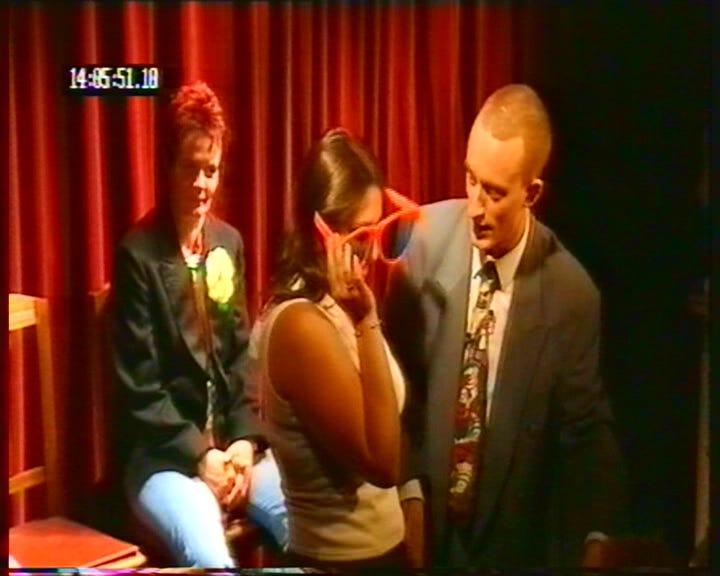
Stage hypnosis introduces several additional variables that may be less prominent in individual clinical work.
These include audience expectations, volunteer selection, social context, performance motivation, the hypnotist’s stage persona and the volunteer’s interpretation of what is expected.
A volunteer may also become more responsive through repeated demonstrations and successful participation.
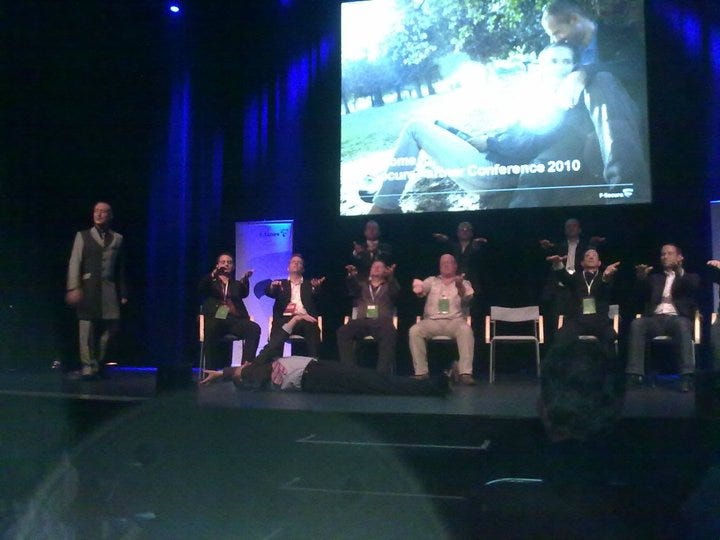
This helps explain why a dramatic instant induction on stage may appear to take only one second, even though the social and psychological preparation has occupied several minutes.
Stage responsiveness should not automatically be equated with clinical hypnotic responsiveness, and neither should be mistaken for evidence that a participant is incapable of refusing suggestions.
Part Five: Combining methods to design original inductions
25. The modular approach to induction design
A useful way to teach advanced induction construction is to treat techniques as interchangeable modules, each with a specific purpose.
Rather than memorising a script, the student learns to ask what psychological function is required at each stage.
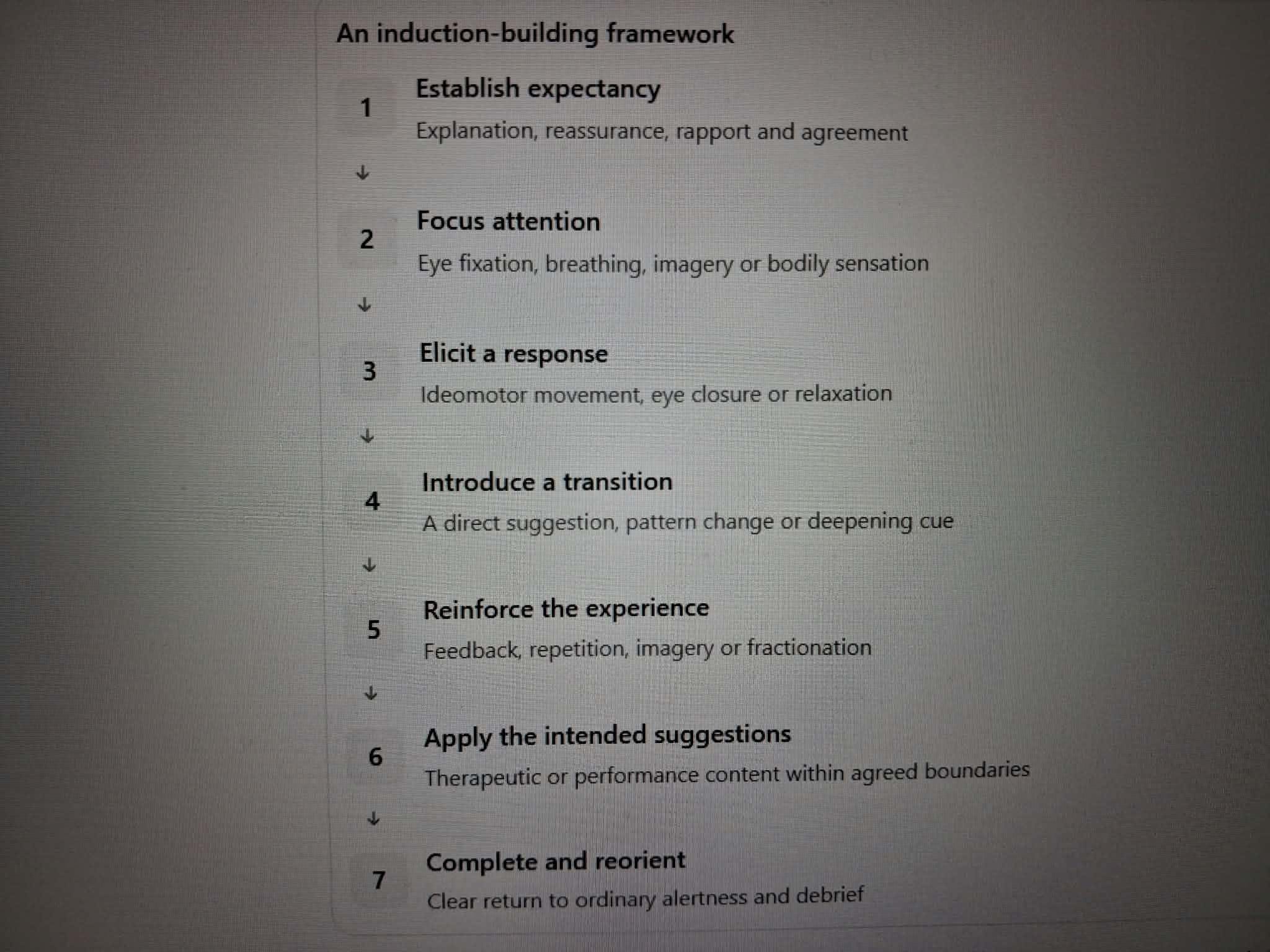
The student can now select techniques according to the needs of the participant and the setting.
26. Example: a gentle clinical induction
Style: Permissive, relaxation-oriented and imagery-based.
The practitioner begins with an explanation of hypnosis, invites the subject to focus on breathing and introduces progressive relaxation.
As attention settles, the subject is encouraged to imagine a comfortable environment.
Counting or gentle fractionation may be used to reinforce absorption.
The induction proceeds at the person’s preferred pace.
This combines expectancy, attention, relaxation, imagery and repetition without requiring confusion or surprise.
27. Example: a rapid ideomotor induction
Style: Brief, engaging and moderately directive.
The subject first agrees to a simple magnetic-fingers demonstration.
The hypnotist invites them to notice any movement without trying to force it.
If a response occurs, the practitioner acknowledges it and invites the subject to become curious about further sensations.
The subject is then asked to close their eyes and direct attention inward.
A brief sequence of comfortable breathing, imagery and suggestions develops the experience.
This combines expectancy, ideomotor responding, focused attention and direct suggestion.
It does not require an abrupt physical manoeuvre or the assumption that the person has surrendered control.

28. Example: a rapid confusion-and-clarity induction
Style: Conversational, mildly disorienting and then reassuring.
After obtaining agreement, the practitioner introduces an unusual attention exercise.
For example, the subject may be invited to notice the difference between deliberately listening to a sound and allowing the sound to enter awareness naturally.
The hypnotist briefly alternates the instructions before introducing a simple transition:
“And now there’s nothing more to work out. Just close your eyes and notice how naturally your attention can settle.”
The important contrast is between cognitive effort and an uncomplicated instruction.
This combines mild confusion, attentional shifting, expectancy and suggestion.
29. Example: a blended paternal–maternal induction
A practitioner might begin with a confident, directive instruction:
“Sit comfortably, place your feet on the floor and focus your attention on one spot.”
The practitioner then changes to a gentler style:
“As you continue looking, you may notice that your eyes would enjoy a rest. Whenever you’re ready, allow them to close.”
Once the eyes close, the hypnotist uses a clear, decisive transition:
“Good. Now let your attention turn inward.”
Finally, permissive imagery and progressive relaxation develop the experience.
This example demonstrates that directive and permissive styles are not mutually exclusive.
They can be blended according to the individual’s responses.

Part Six: What makes an induction effective?
30. The importance of observation and flexibility
A skilled hypnotist observes the subject rather than simply reciting instructions.
Relevant observations may include breathing patterns, eye movements, posture, facial expression, responsiveness, verbal feedback and indications of comfort or discomfort.
These observations help guide pacing.
However, none of these signs alone establishes that hypnosis has occurred.
A person may appear deeply relaxed without responding to hypnotic suggestions, while another may remain alert and conversational yet show pronounced hypnotic responses.
The hypnotist should therefore remain interested in the person’s actual experience rather than relying solely on stereotypical signs of trance.
31. Matching the induction to the individual
Different people may prefer different methods.
A highly analytical person may enjoy a structured explanation or an ideomotor experiment.
An imaginative person may respond readily to metaphor and guided imagery.
Someone seeking relaxation may prefer gradual pacing.
A confident stage volunteer may enjoy a brief, dramatic and highly structured induction.
These are practical possibilities, not fixed personality categories. Hypnotic responsiveness cannot be reliably predicted from such preferences alone.
The practitioner should be prepared to adapt.
32. Safety, consent and professional judgment
Rapid and instant hypnosis require particular care because they can create expectations of abrupt physical or psychological changes.
Good practice includes explaining the procedure, obtaining informed consent, respecting personal boundaries and ensuring that participants are physically supported where appropriate.
It also means avoiding surprise contact, forced joint movements, painful demonstrations, neck manipulation, deliberate falls and any technique that creates unnecessary distress.
Clinical work additionally requires appropriate assessment, professional scope of practice and attention to possible psychological or medical contraindications.
Hypnosis should not be represented as a means of overriding consent, compelling truthful disclosure or guaranteeing obedience.
Part Seven: A proposed unified model of hypnotic induction
The three principles of belief and expectancy, disorientation and confusion, and suggestion and repetition offer a useful starting point.
But a broader model may better accommodate the diversity of traditional, modern, clinical and stage approaches.
I would propose the following seven elements as an educational framework.
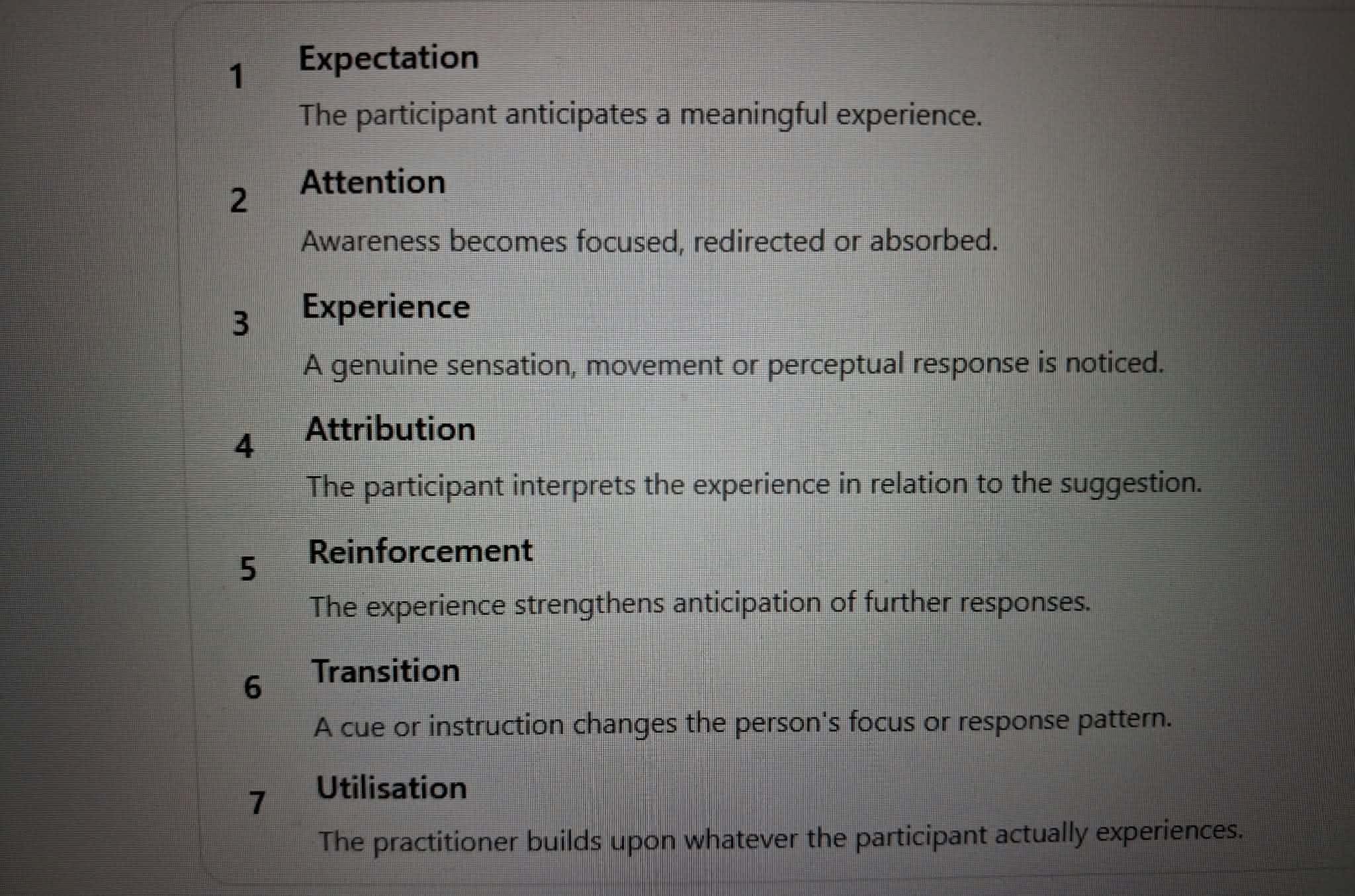
This expanded model has several advantages.
It explains why physiological demonstrations may strengthen hypnotic expectancy. It accommodates slow relaxation, conversational hypnosis and rapid induction. It recognises that confusion is one possible tool rather than an absolute requirement.
Most importantly, it places the participant’s actual experience at the centre of the process.
It remains a conceptual model, not a proven universal explanation of hypnosis.
Conclusion: The hypnotist as a designer of experiences
The true skill of a hypnotist may lie less in memorising dozens of inductions and more in understanding what each component contributes.
An eye-fixation technique can direct attention.
A physiological demonstration can produce an unexpected but genuine sensation.
A well-timed suggestion can give that sensation meaning.
Repetition can reinforce expectation.
Confusion or pattern interruption can alter the normal flow of attention.
Relaxation can provide comfort and an accessible route into absorption.
And confident, appropriate communication can help the participant feel secure enough to engage with the process.
The skilled hypnotist can therefore combine elements from many traditions, choosing those that fit the individual, the circumstances and the purpose.
A clinical practitioner may use a gentle, permissive induction that develops over several minutes. A stage hypnotist may use an engaging ideomotor demonstration followed by a brief, decisive cue. Another practitioner may blend directive and permissive language throughout the same procedure.
These are different routes toward related experiences, rather than fundamentally separate forms of hypnosis.
The most important distinction is that hypnotic responsiveness should not be confused with unquestioning obedience.
The subject’s expectations, imagination, attention, motivation, interpretation and voluntary participation remain integral to the process.
Perhaps the most useful principle for the advanced student is this:
Do not merely learn how to perform an induction. Learn why each element is included, what response it is intended to encourage, how to recognise that response and how to adapt when something different occurs.
That is the difference between someone who knows a collection of hypnotic scripts and someone who understands the art of constructing hypnotic experiences.
Further reading and research foundations
For a more academically grounded expansion of this article, the following authors and works provide useful starting points:
James Braid — Neurypnology (1843), particularly the historical development of fixation-based hypnotism.
Edmund Jacobson — Progressive Relaxation (1929), concerning systematic muscular relaxation.
Dave Elman — Hypnotherapy (1964), describing influential practical induction methods.
Milton H. Erickson and Ernest L. Rossi — Hypnotherapy: An Exploratory Casebook (1979), covering utilisation and indirect approaches.
Theodore X. Barber — Hypnosis: A Scientific Approach (1969), examining suggestion, motivation and hypnotic phenomena.
Nicholas P. Spanos — research on sociocognitive explanations of hypnotic behaviour.
Irving Kirsch — research on response expectancy and suggestion.
David A. Oakley and Peter W. Halligan — research and theoretical work concerning hypnosis, suggestion and cognitive neuroscience.
Michael R. Nash and Amanda J. Barnier, editors — The Oxford Handbook of Hypnosis (2008), offering a broad academic treatment of hypnosis theory, research and practice.
These references represent differing perspectives and should not be interpreted as endorsing every mechanism proposed in the article.
Use discount voucher code TRANCER at checkout to get 80 Percent off usual price
https://jonathanroyle.sellfy.store/p/shh3/
Use discount voucher code TRANCER at checkout to get 80 Percent off usual price
https://jonathanroyle.sellfy.store/p/sbg6/
Use discount voucher code TRANCER at checkout to get 80 Percent off usual price
https://jonathanroyle.sellfy.store/p/hciz/
Use discount voucher code TRANCER at checkout to get 80 Percent off usual price
https://jonathanroyle.sellfy.store/p/fkpp/
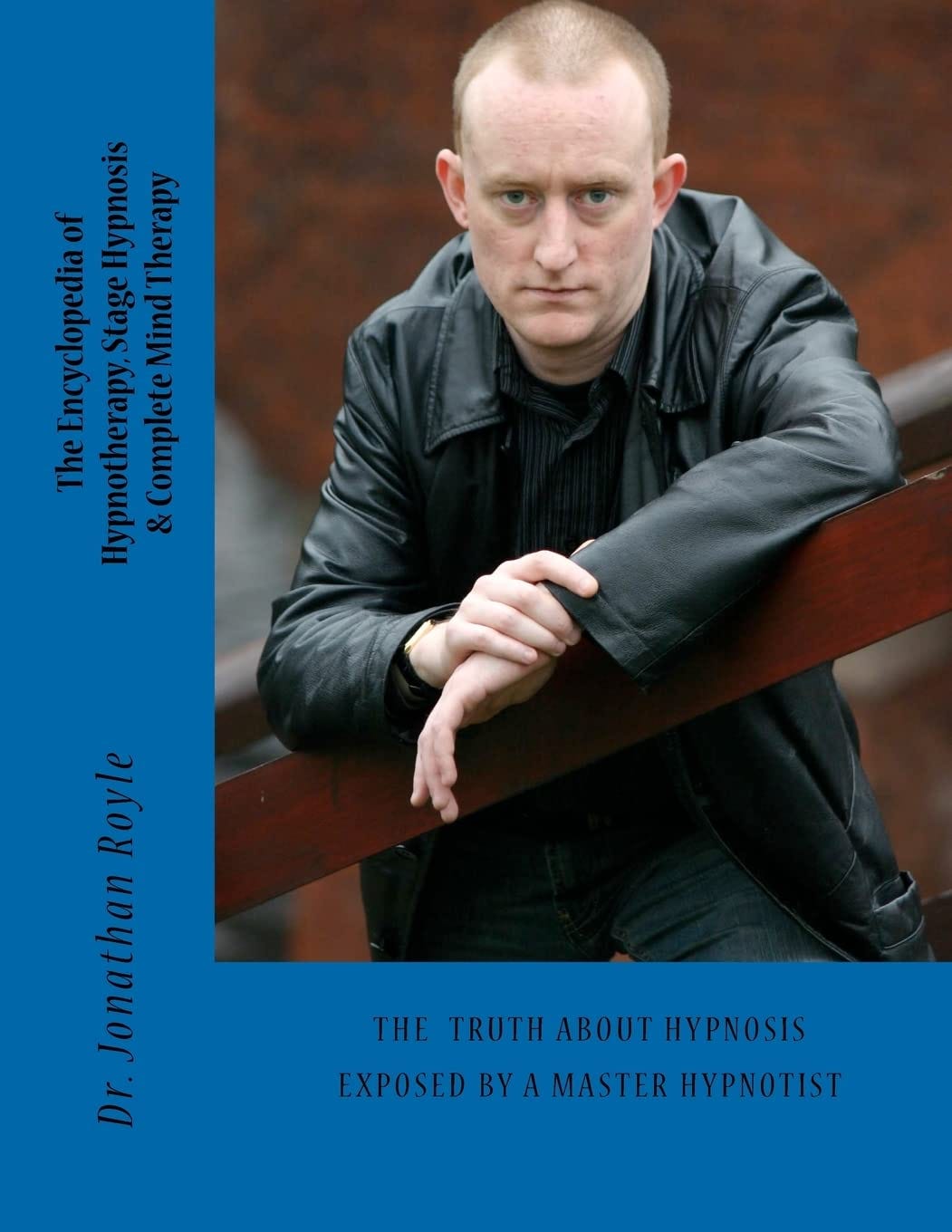
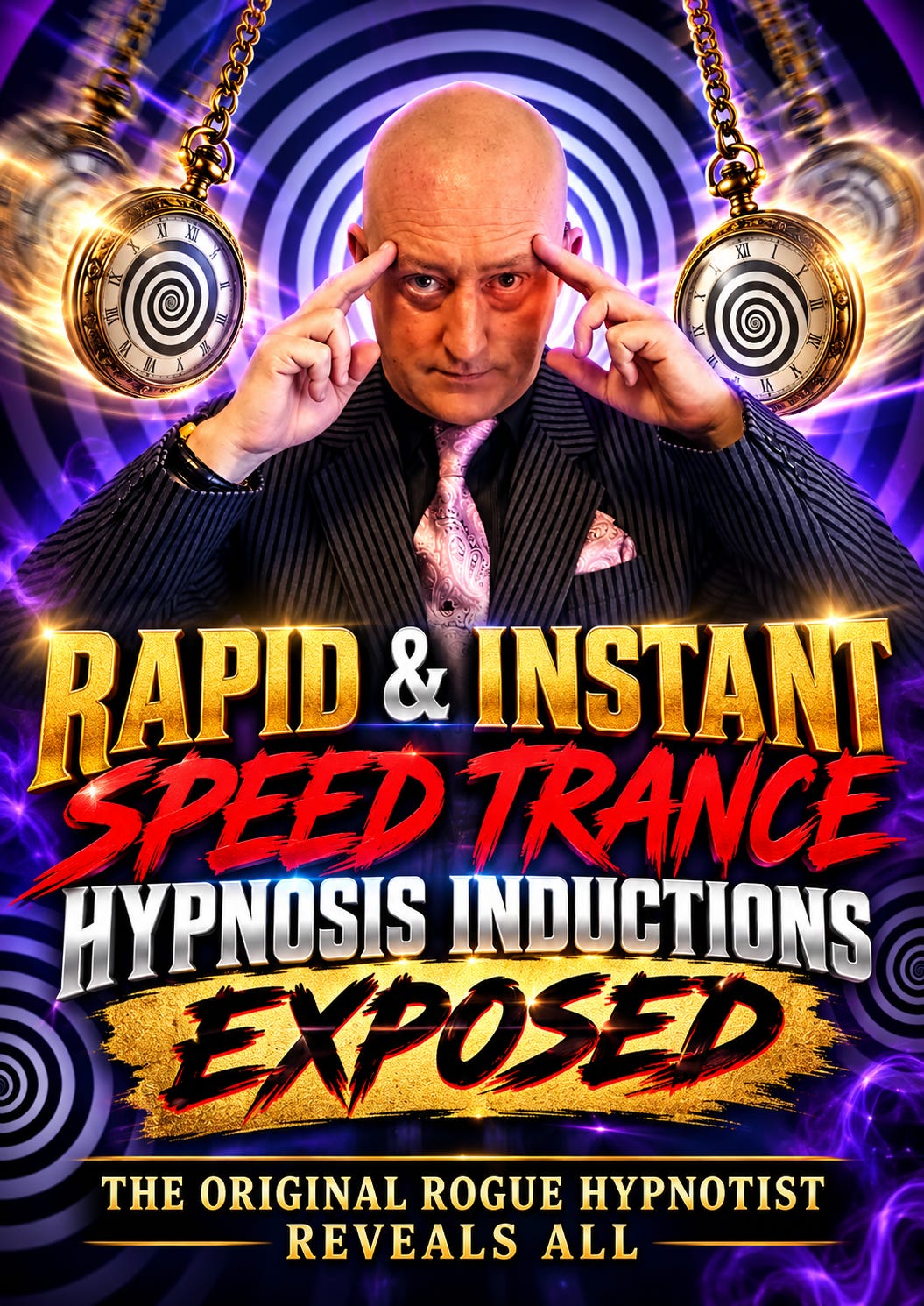
Many dozens of different Slow, Rapid & Even Instantaneous Speed Trance Style Hypnotic Inductions are taught within the pages of my book as per the above image
https://www.amazon.co.uk/Encyclopedia-Hypnotherapy-Hypnosis-Complete-Therapy/dp/1481911244/
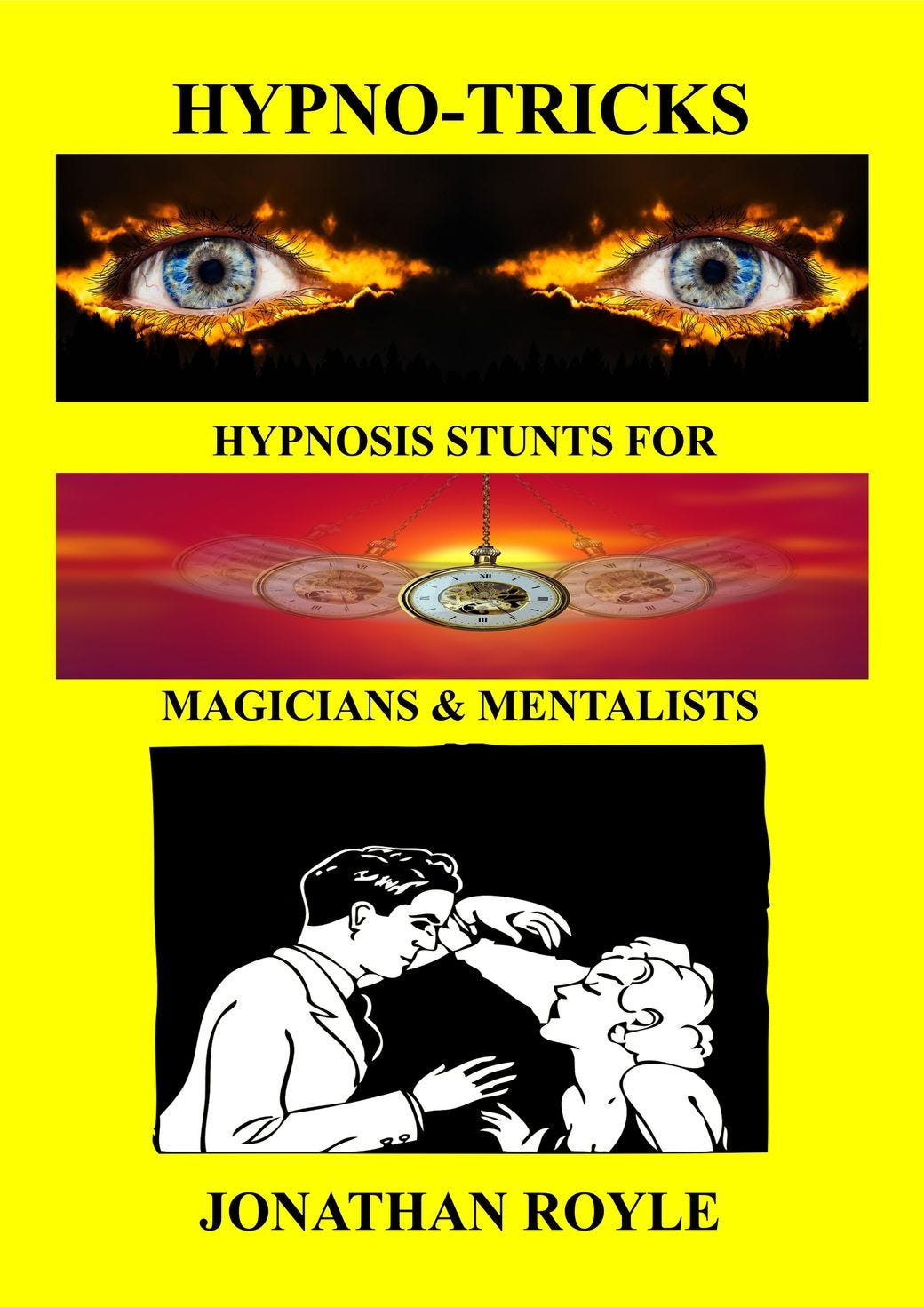
My ultimate book on “Hypno-Tricks” that make Rapid & Instant Inductions far more powerful and reliable is available here:
https://www.amazon.co.uk/HYPNO-TRICKS-Hypnosis-Stunts-Magicians-Mentalists/dp/B0BN21JHF1/
There's No Such Thing as Hypnosis — There Is Only PURE SUGGESTION in Hypnotherapy

There’s No Such Thing as Hypnosis — There Is Only PURE SUGGESTION in Hypnotherapy
The Power of Hypno-Tricks and Relaxation in Hypnotherapy

The Power of Hypno-Tricks and Relaxation in Hypnotherapy
MENTAL KARAOKE = There's No Such Thing as Stage Hypnosis — It's All PURE SUGGESTION!

Belief, Expectation, Compliance, Social Psychology and the Psychology of Having Your 15 Minutes of Fame
All of the True Inside Secrets of Rapid Speed Trance Style Hypnotic Inductions for Clinical Hypnotherapy & also Comedy Stage Hypnotism & Street Hypnosis are taught within the “Elite Hypnotherapy, Stage Hypnosis & NLP Hypnotism” Bootcamp members area.
NOTE = You can get 50% off Lifetime Membership to the Bootcamp where you will also gain access to another 30+ Professional Qualifications along with business building & profit producing tools galore by entering the discount voucher code of WIZARD when using the checkout to secure your membership here
https://www.magicalguru.com/elite-hypnotherapy-nlp-hypnosis-stage-hypnotism-bootcamp/
EXPOSED: Why Real World Experience & Success combined with Practical Skills and Results Matter Far More Than Hypnotherapy Certificates & Accreditations by Glorified Boys Clubs

After years of hearing & seeing comments from people who frankly should have known better trying to criticise my Hypnosis Courses because they were not and are not accredited by The General Hypnotherapy Standards Council (GHSC) or the General Hypnotherapy Register
EXPOSED: What Did The Late Stage Hypnotists & Hypnotherapists Ormond McGill, Gil Boyne, Tom Silver & Peter Casson all Admit to Jonathan Royle?

EXPOSED: What Did The Late Stage Hypnotists & Hypnotherapists Ormond McGill, Tom Silver, Gil Boyne & Peter Casson all Admit to Jonathan Royle?

All of the True Inside Secrets of Rapid Speed Trance Style Hypnotic Inductions for Clinical Hypnotherapy & also Comedy Stage Hypnotism & Street Hypnosis are taught within the “Elite Hypnotherapy, Stage Hypnosis & NLP Hypnotism” Bootcamp members area.
NOTE = You can get 50% off Lifetime Membership to the Bootcamp where you will also gain access to another 30+ Professional Qualifications along with business building & profit producing tools galore by entering the discount voucher code of WIZARD when using the checkout to secure your membership here
https://www.magicalguru.com/elite-hypnotherapy-nlp-hypnosis-stage-hypnotism-bootcamp/
JAMES BRAID EXPOSED = HE DID NOT COIN THE TERMS HYPNOTISM or HYPNOSIS

Unfortunately the vast majority of sources still incorrectly give the false impression that James Braid coined the terms “Hypnosis” and/or “Hypnotism”
EFT - Emotional Freedom Technique and TFT - Thought Field Therapy: Do Meridian Tapping Techniques Work, or Are They Just Elaborate Placebo Rituals?

EFT and Thought Field Therapy: Do Meridian Tapping Techniques Work, or Are They Elaborate Placebo Rituals?
Are EMDR = Eye Movement Desensitization and Reprocessing and the Speakmans VCDT = Visual Coding Displacement Therapy Essentially Just Elaborate Placebo Rituals?

Are EMDR and the Speakmans’ Visual Coding Displacement Therapy Essentially Elaborate Placebo Rituals?
All of the True Inside Secrets of Rapid Speed Trance Style Hypnotic Inductions for Clinical Hypnotherapy & also Comedy Stage Hypnotism & Street Hypnosis are taught within the “Elite Hypnotherapy, Stage Hypnosis & NLP Hypnotism” Bootcamp members area.
NOTE = You can get 50% off Lifetime Membership to the Bootcamp where you will also gain access to another 30+ Professional Qualifications along with business building & profit producing tools galore by entering the discount voucher code of WIZARD when using the checkout to secure your membership here
https://www.magicalguru.com/elite-hypnotherapy-nlp-hypnosis-stage-hypnotism-bootcamp/
THE BIG DEBATE: Are Regression to Cause Hypnosis, Analytical Hypnotherapy & Hypnotic Parts Therapy Techniques Outdated & Potentially Dangerous or are they the Gold Standard for Hypnotherapists?

Firstly I should mention that in 2019 I took a wonderful course with my friend and colleague John Richardson as per https://www.feelbetterfast.co.uk/n.a.h.a.h.-training-courses.html

STAGE HYPNOTISM - PARTY TRICK OR DEADLY MIND GAME?

In late 1993 after taking part in a Comedy Stage Hypnosis Show presented by Andrew Vincent (who by day was a Post Man and by night a Hypnotist) at The Roebuck Public House in Leyland near Preston some hours later Sharon Tabarn died and as a result her mother Margaret Harper set up CASH = Campaign Against Stage Hypnotists.
All of the True Inside Secrets of Rapid Speed Trance Style Hypnotic Inductions for Clinical Hypnotherapy & also Comedy Stage Hypnotism & Street Hypnosis are taught within the “Elite Hypnotherapy, Stage Hypnosis & NLP Hypnotism” Bootcamp members area.
NOTE = You can get 50% off Lifetime Membership to the Bootcamp where you will also gain access to another 30+ Professional Qualifications along with business building & profit producing tools galore by entering the discount voucher code of WIZARD when using the checkout to secure your membership here
https://www.magicalguru.com/elite-hypnotherapy-nlp-hypnosis-stage-hypnotism-bootcamp/
RESUME FOR MIND MAGICIAN ALEX SMITH aka CELEBRITY HYPNOTIST JONATHAN ROYLE – UPDATED 22nd APRIL 2026

RESUME FOR MIND MAGICIAN ALEX SMITH aka CELEBRITY HYPNOTIST JONATHAN ROYLE – UPDATED 22nd APRIL 2026
CONFESSIONS OF THE WORLD'S MOST CONTROVERSIAL COMEDY STAGE HYPNOTIST

SOME HIGHLIGHTS OF MY COMEDY STAGE HYPNOSIS SHOWS
MK-ULTRA EXPOSED = Royle Hypnotist Reveals How People Can Be Hypnotized & Brainwashed to become Assassin's, How Child Sexual Abuse & Trauma Based Mind Control is used to Control People & Events

MK-Ultra: Origins, Objectives, and Lasting Controversy
All of the True Inside Secrets of Rapid Speed Trance Style Hypnotic Inductions for Clinical Hypnotherapy & also Comedy Stage Hypnotism & Street Hypnosis are taught within the “Elite Hypnotherapy, Stage Hypnosis & NLP Hypnotism” Bootcamp members area.
NOTE = You can get 50% off Lifetime Membership to the Bootcamp where you will also gain access to another 30+ Professional Qualifications along with business building & profit producing tools galore by entering the discount voucher code of WIZARD when using the checkout to secure your membership here
https://www.magicalguru.com/elite-hypnotherapy-nlp-hypnosis-stage-hypnotism-bootcamp/