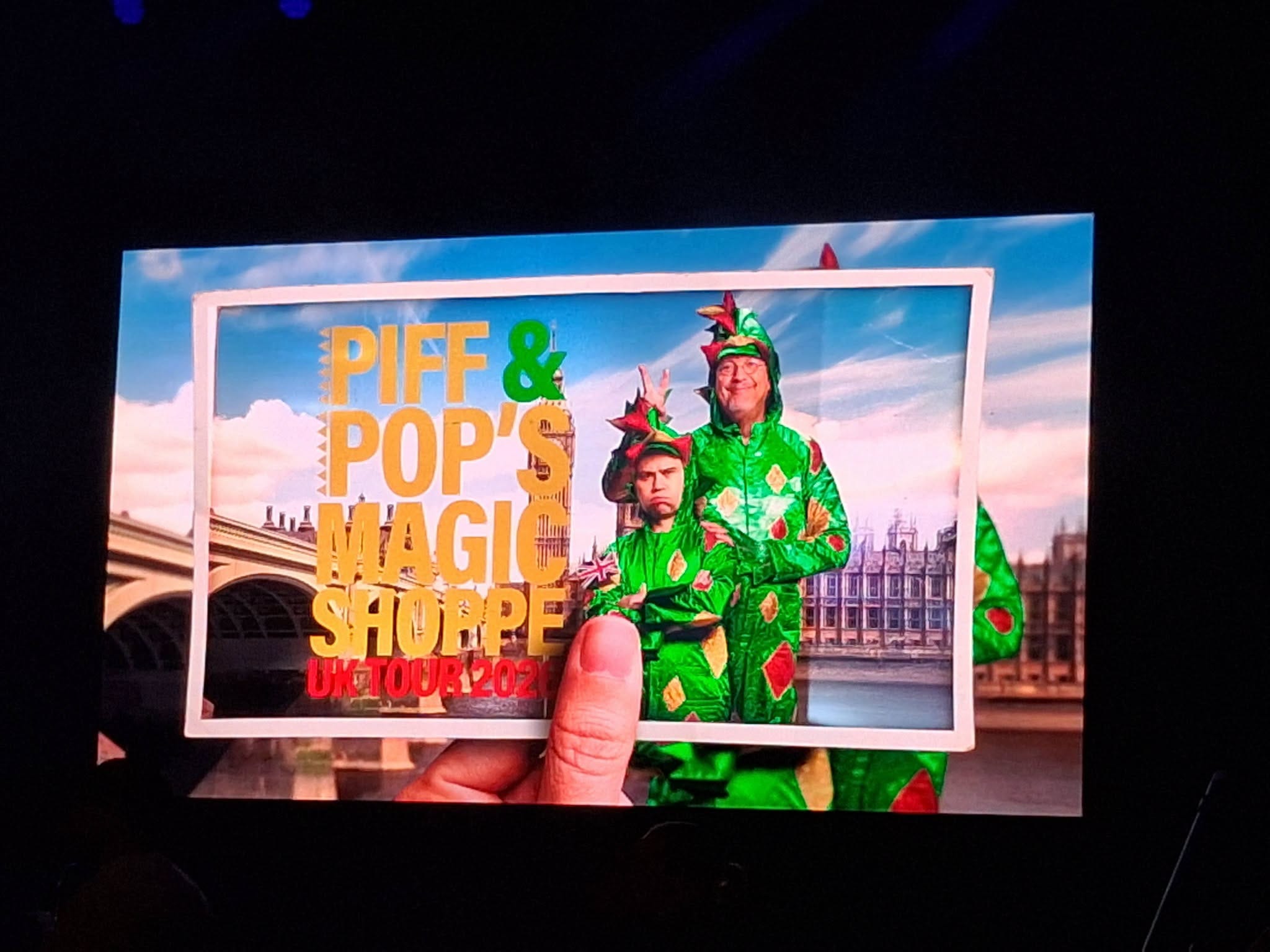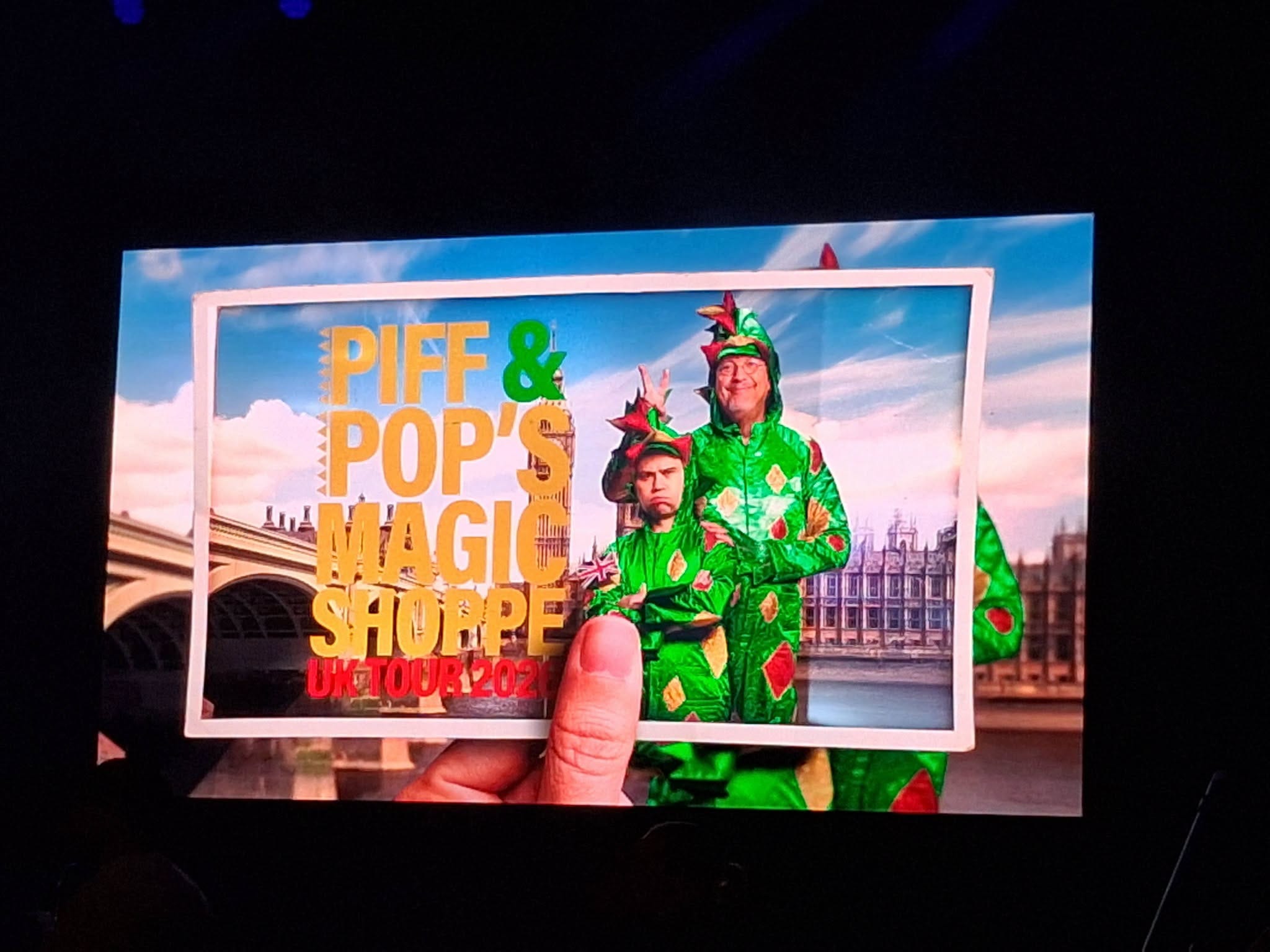
Piff & Pop’s Magic Shoppe
Manchester Opera House – Thursday 17th September 2026
A review from the perspective of a magician and lifelong admirer of Penn & Teller who is also a big fan of Piff the Magic Dragon
Reviewed by – JONATHAN ROYLE – www.magicalguru.co.uk

Please note: this is a personal review and represents the views of the writer alone. Although I am the Public Relations and Entertainments Officer for Manchester’s Order of the Magi — England’s third-oldest magic club — these opinions are entirely my own and should not be taken as representing the club or its members. I have no doubt that fellow members who attended the show may agree with some of my observations while disagreeing with others.
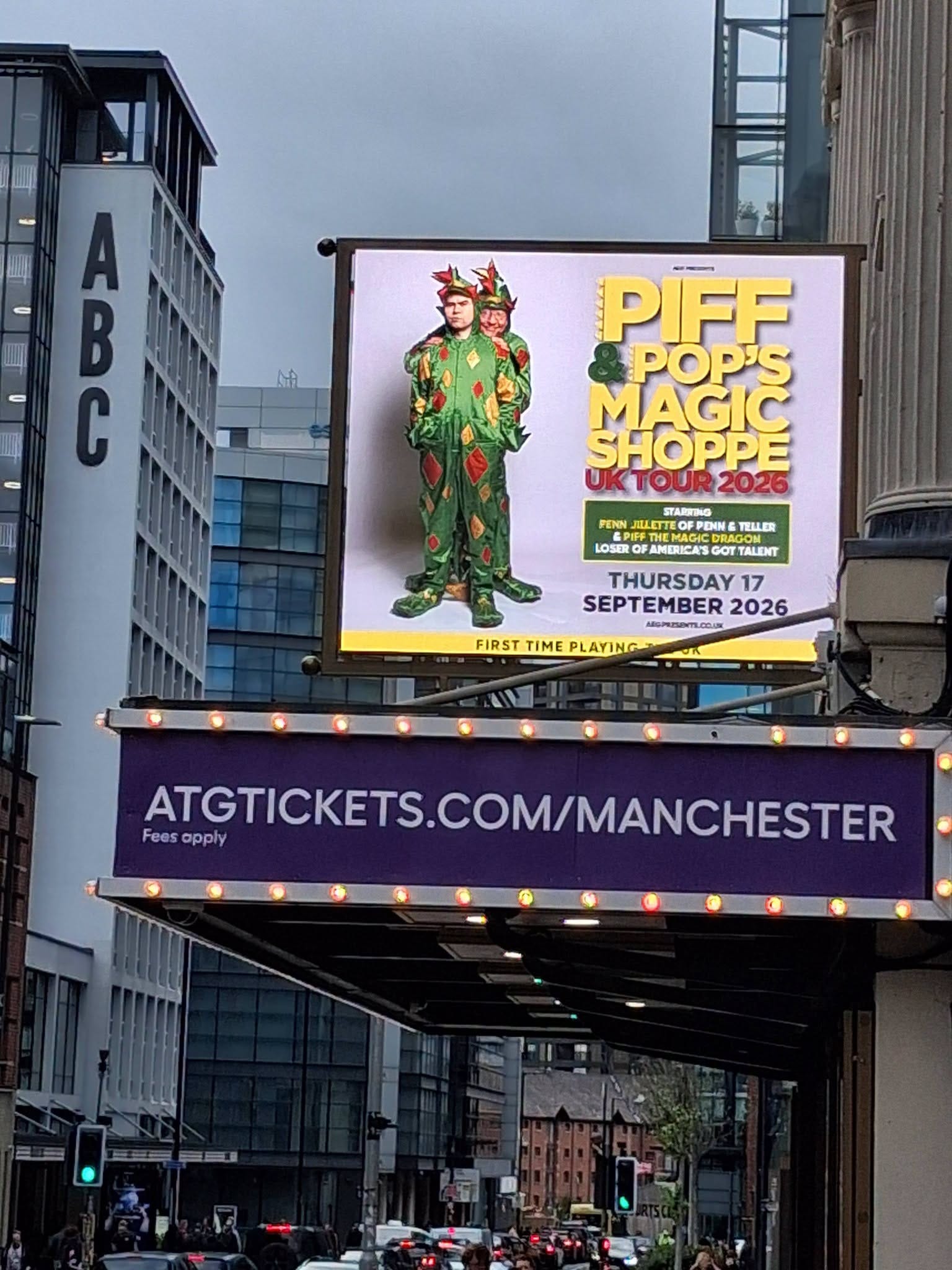
There is something undeniably appealing about the premise of Piff & Pop’s Magic Shoppe.
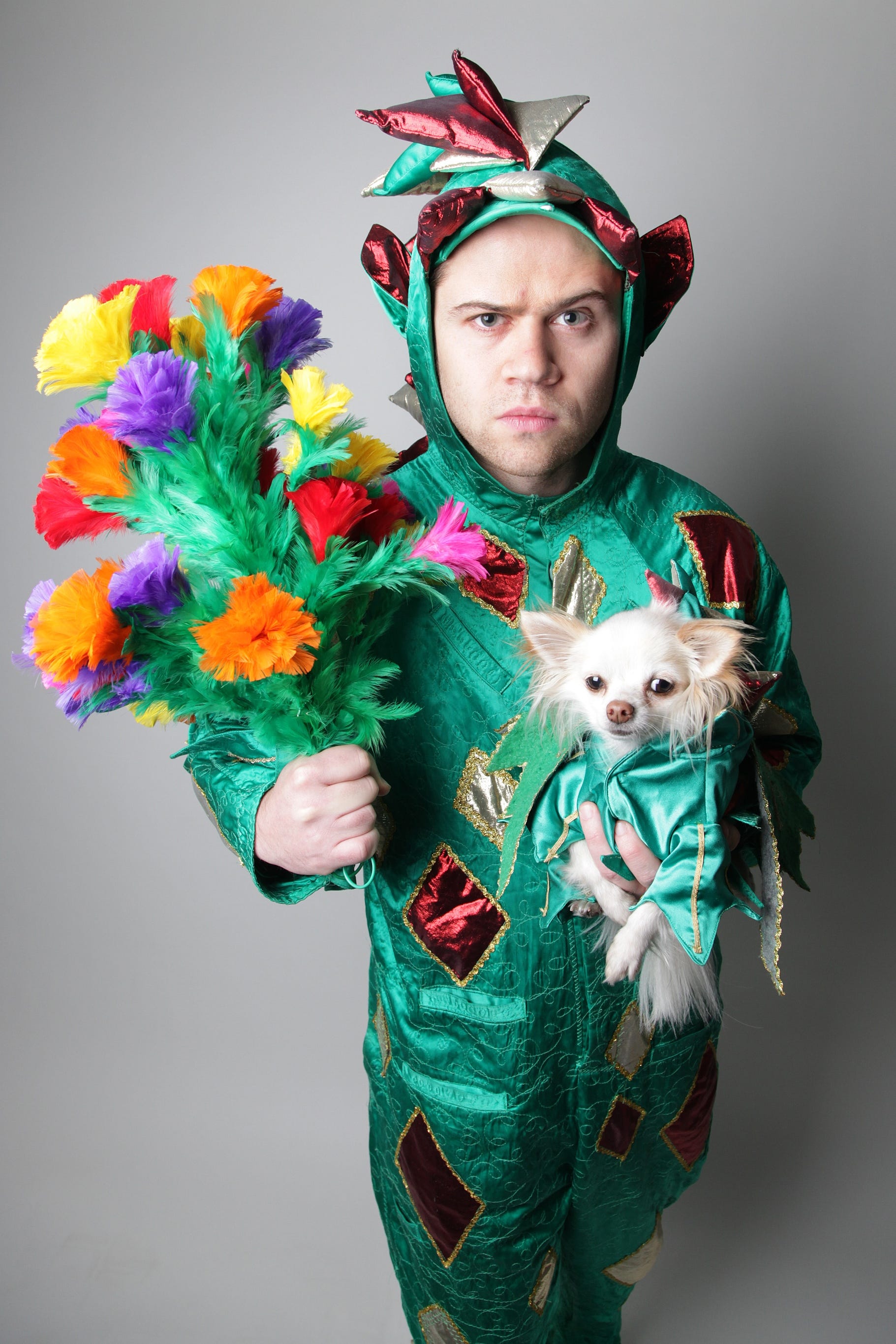
Take Piff the Magic Dragon — the deadpan, disgruntled alter ego of magician John van der Put — add Penn Jillette of Penn & Teller fame, put both of them in dragon costumes, throw in a magic-performing Chihuahua, a glamorous assistant, an enormous video screen, plenty of audience participation and a sizeable helping of deliberate stupidity, and you have the ingredients for what ought to be an unforgettable evening.
On paper, it sounds almost impossible to get wrong.
And to be fair, there was a great deal to enjoy when the show arrived at Manchester’s Opera House on Thursday 17th September 2026.
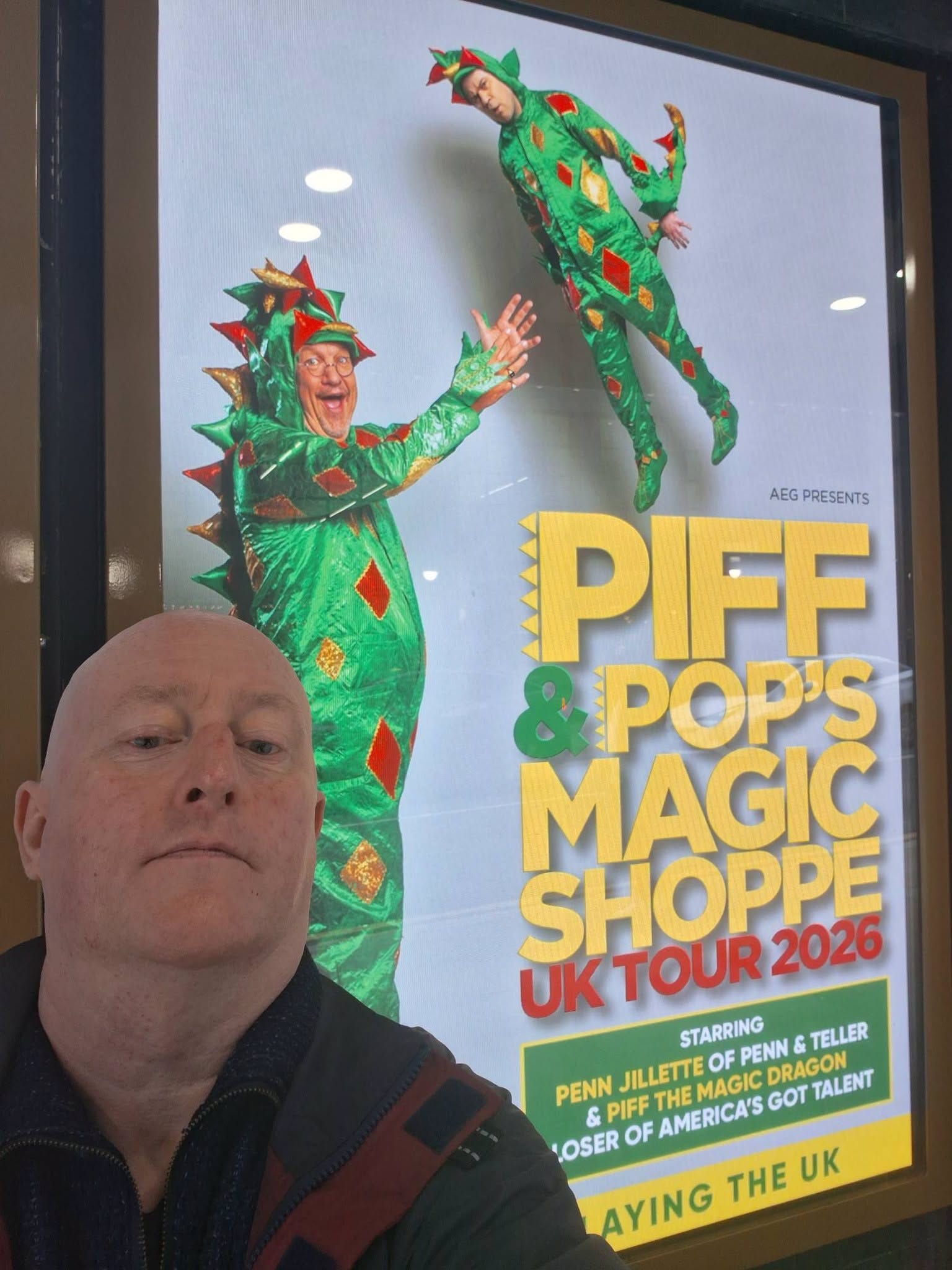
The evening began at around 7.30pm and, following an interval, finally came to an end at approximately 10.30pm.
Three hours is a substantial amount of time to spend in the company of two magicians — particularly when the second half sometimes feels considerably longer than the first even though it was’nt!
But before getting into my reservations, let’s be absolutely clear about one thing: both Piff and Penn are superb performers, consummate showmen and exceptionally skilled magicians. There are moments in this production when the magic is genuinely astonishing.
The question for me was not whether the talent was there.
It unquestionably was.
The question was whether the finished show consistently reached the extraordinary standard I had hoped for.
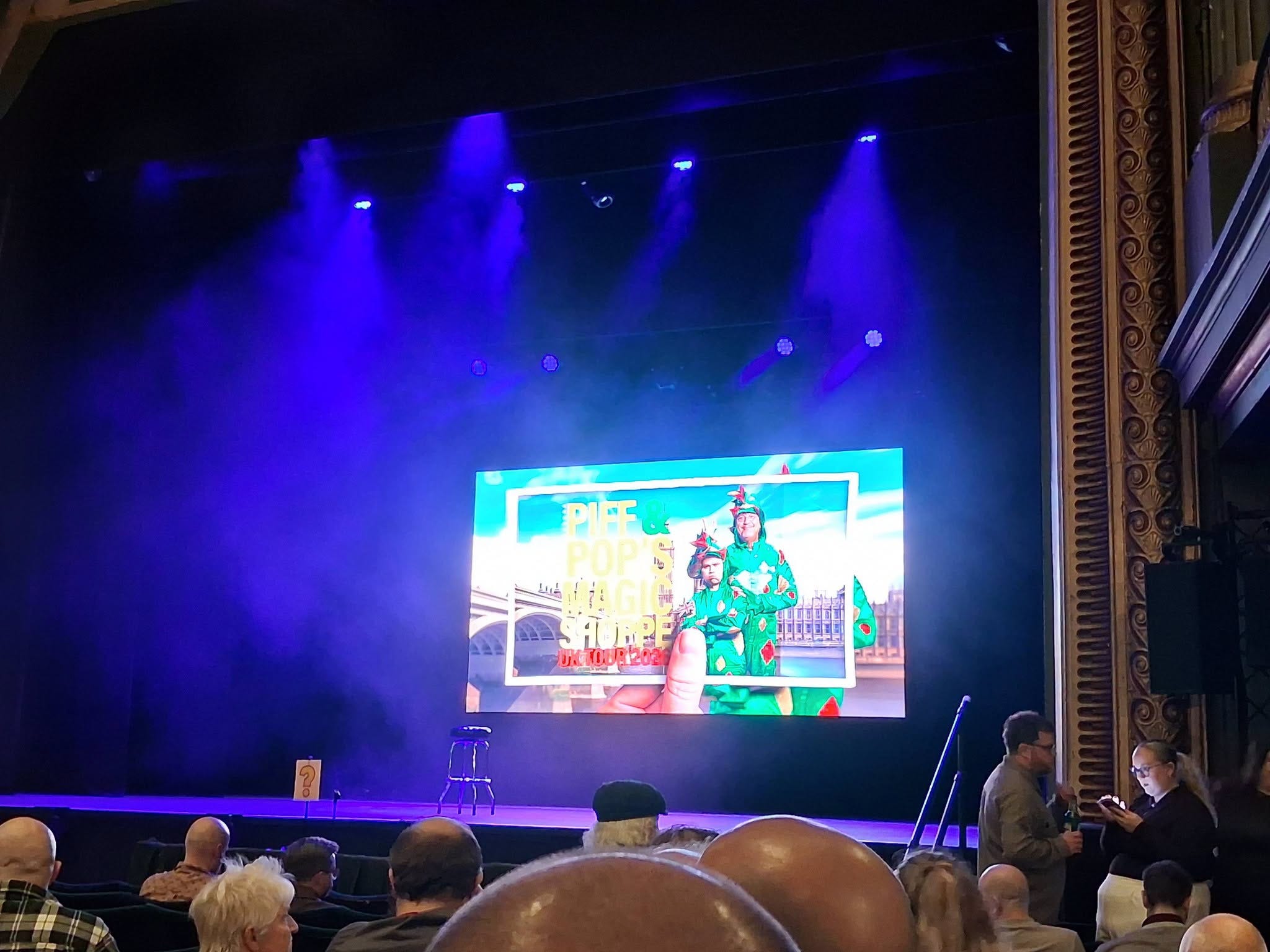
Enter the dragons
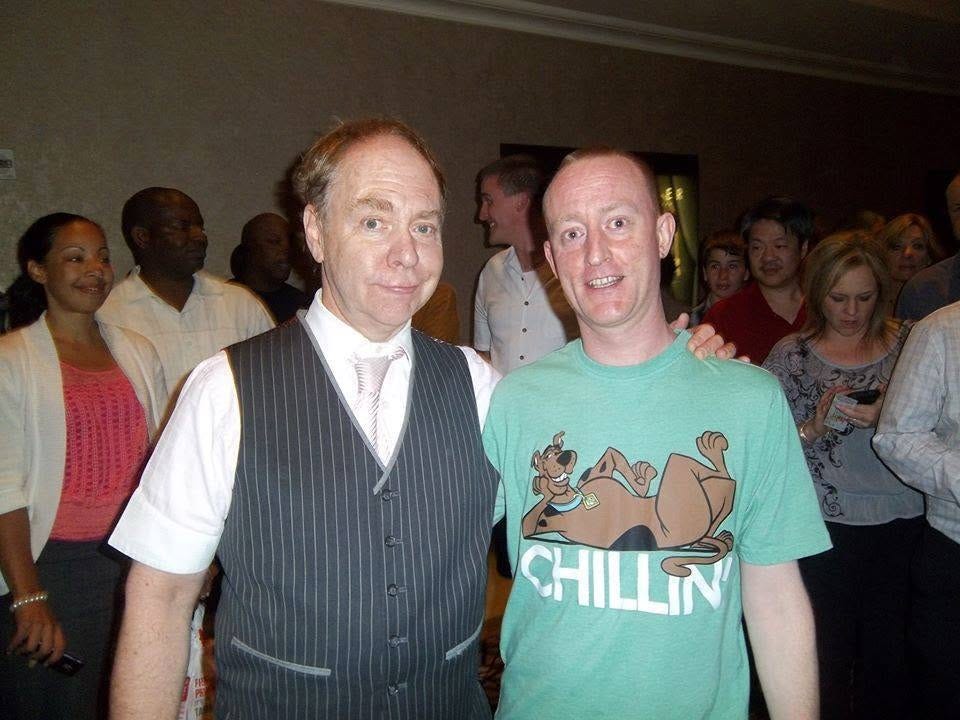
When you see Penn Gillette perform the absence of Teller is, of course, impossible to ignore.
For the first time in their extraordinary 50-year partnership, Penn is touring without his usual partner, with Teller’s presence instead introduced through a video message at the beginning of the show.
And, in what will surely go down as one of the more unusual theatrical moments of the year, the famously silent Teller actually speaks.
His appearance sets up the central conceit: Penn has effectively become Piff’s long-lost father, or “Pop”, and the two are reunited for an evening in the Magic Shoppe.
It is a wonderfully silly premise.
There is also something rather touching about Teller’s involvement, given the circumstances, and the production makes sure that although he isn’t physically on stage, he is never entirely absent from proceedings.
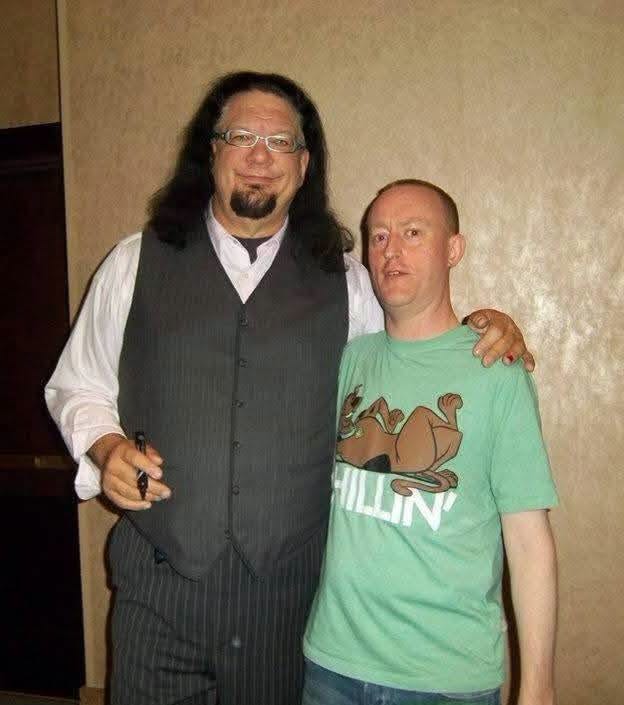
Penn initially appears in more familiar territory, performing material much closer to the Penn & Teller style that many of us know and love.
His routines involving misdirection, audience participation and a nail gun demonstrate precisely why he has remained such a formidable performer for so many decades.
I noticed several people I know to be Magician’s smiling throughout Penn’s Tony Slydini inspired “Paper Balls over the head” inspired repeat cut and restored rope routine and particularly enjoyed it myself.
One of the great pleasures of watching Penn is his ability to explain a routine while simultaneously making you realise that the explanation is almost certainly designed to send your brain in completely the wrong direction.
Then comes Piff.
And when Piff arrives, the evening really does become a different proposition.
I first encountered Piff through America’s Got Talent, where the combination of magic, misery and magnificent deadpan delivery made him instantly memorable.
His character is brilliantly constructed: a magician dressed as a dragon who seems perpetually irritated that anybody has had the audacity to ask him to perform magic for them.
I still remember one of his classic introductions:
“Hi, I’m Piff the Magic Dragon. You’ve probably heard of my brother... Steve!”
Sadly, that particular line did not make an appearance in Manchester.
Perhaps it is now considered too familiar to his established audience, but personally I think some jokes are rather like a band’s greatest hits.
If they are good enough, people want to hear them again.
And for anyone discovering Piff for the first time, a line such as that remains an excellent introduction to exactly what makes his character work.
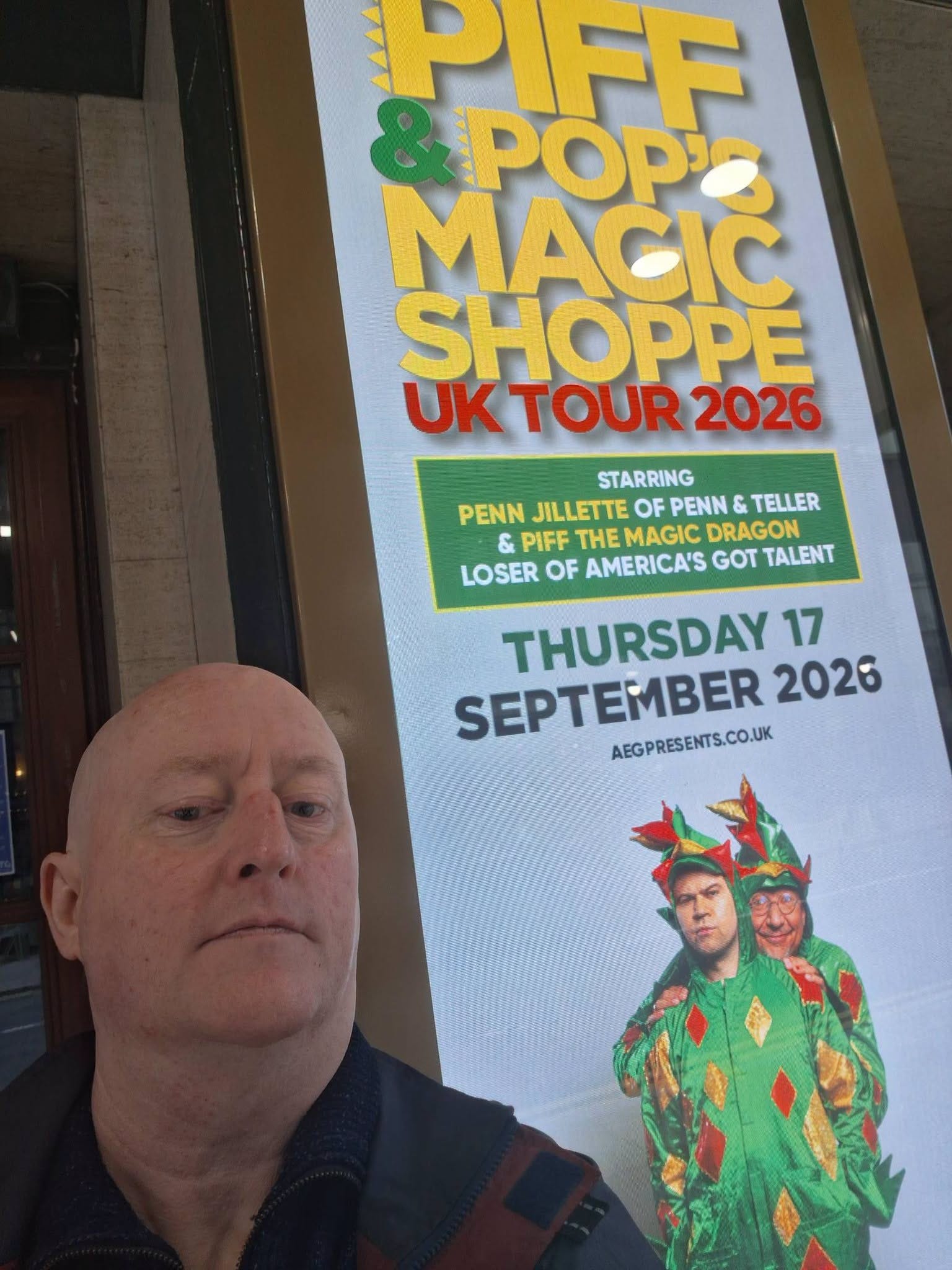
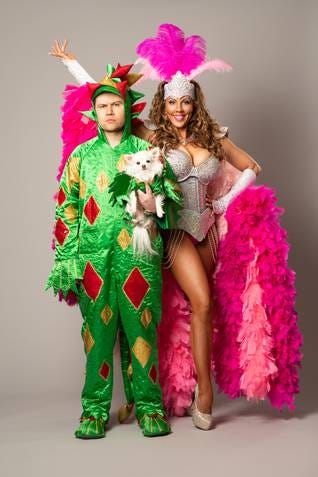
Piff, Jade and Mr Piffles II
Piff’s solo section contains many of the ingredients that have made him such a successful performer.
There is the magnificent Jade Simone, part glamorous assistant, part showgirl, part comic foil and part human whirlwind. She brings a wonderfully exaggerated Las Vegas sensibility to the proceedings and helps maintain the deliberately ridiculous atmosphere.
Then there is, of course, Mr Piffles II.
The story of the original Mr Piffles and the subsequent attempts to replace him is itself an extended comic routine, culminating in the arrival of the Chihuahua clone that reportedly cost Piff $60,000.
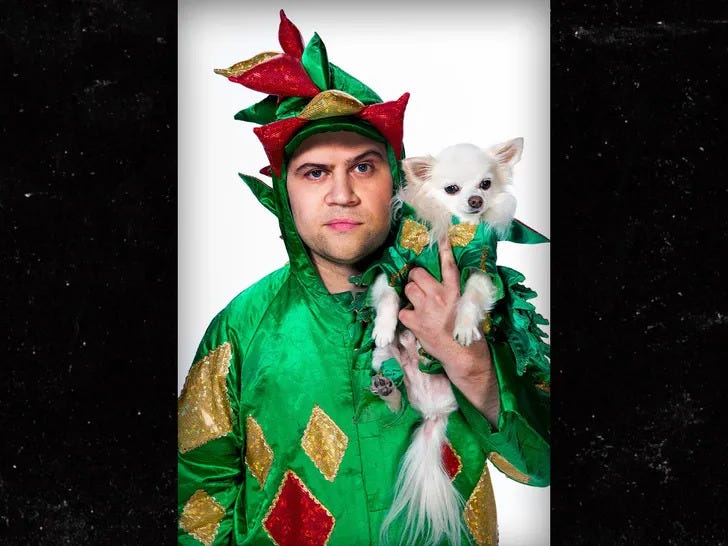
Mr Piffles II is undeniably adorable and his appearances are among the more heart-warming moments of the production.
There are also some clever magical sequences involving the dog.
However, this is where I found myself encountering one of the central differences between Piff & Pop’s Magic Shoppe and the very best magic performances.
When Mr Piffles apparently identifies something, writes something on a slate or performs some impossible feat with a prop, we all know that the dog hasn’t suddenly become a fully trained mentalist capable of independently reading minds and operating magical apparatus.
That’s part of the joke, of course.
But it also means that, for me, these moments tend to sit more comfortably in the category of “How on earth did they do that?” rather than “I genuinely don’t know what I just witnessed.”

A routine involving an audience member’s ring provided a rather different experience.
The premise that the dog had accidentally eaten something it shouldn’t have, followed by the increasingly ridiculous attempts to retrieve it, creates a situation which feels considerably more believable within the fantasy of the show.
The eventual appearance of the ring inside an egg is a beautifully constructed piece of theatrical magic.
And, naturally, it comes with the sort of unpleasant imagery that Piff seems particularly fond of.
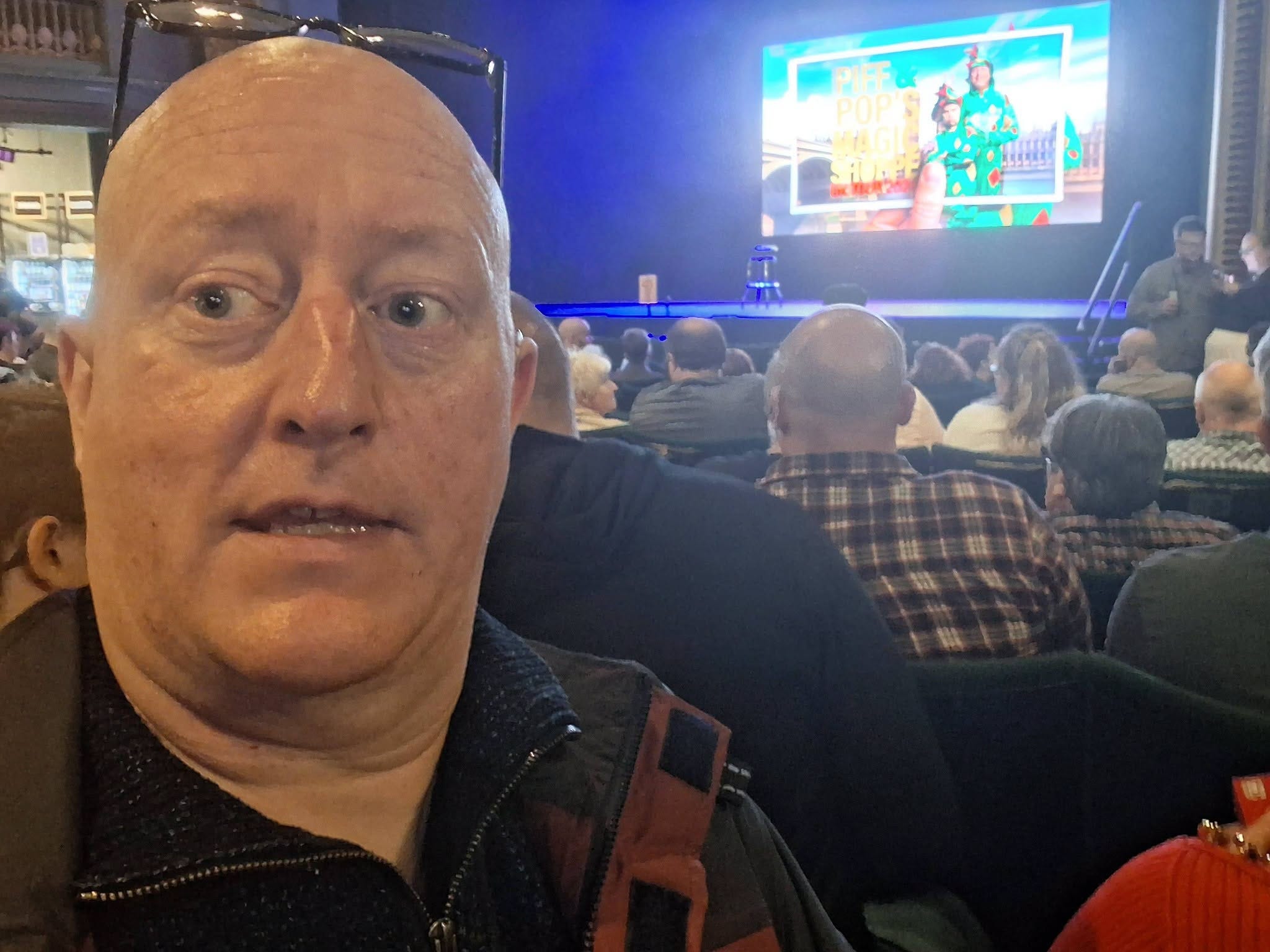
Magic that makes you laugh — and magic that makes you think
There are some excellent pieces throughout the evening.
Piff’s ability to make objects appear in impossible locations is astonishing, and several of his larger illusions are genuinely jaw-dropping.
There is also an impressive routine involving an audience member, a card, a child volunteer and an increasingly convoluted sequence of events which eventually comes together with remarkable precision.
The production frequently uses video to bring the audience closer to the action, allowing spectators further back in the theatre to see details that would otherwise be lost.
In principle, this is an excellent idea.
Unfortunately, in Manchester the camera work was sometimes less successful than the concept.
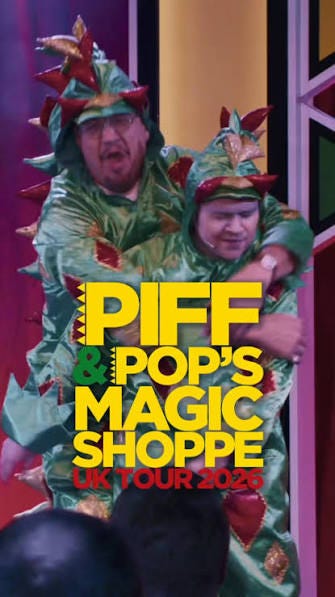
The camera operator frequently moved around the stage trying to capture the action, but on occasions missed precisely the moment we actually needed to see. At other times the picture was moving sufficiently that it became more distracting than helpful.
For a magic show where the audience is specifically being invited to look closely at something, that can be frustrating.
And this is particularly noticeable because Penn & Teller have set such a high standard for theatrical precision.

I was fortunate enough to see Penn & Teller live in Las Vegas in 2013. That remains one of the greatest live magic experiences I have ever witnessed.
It was slick.
It was fast.
It was polished.
The magic was astonishing, the comedy landed consistently and the whole production felt as though every second had been engineered to perfection.
That memory inevitably became my yardstick for Piff & Pop’s Magic Shoppe.
And against that yardstick, this production felt considerably rougher around the edges.
Deliberately chaotic — or simply not quite finished?
Perhaps that is the point.
One of the show’s recurring jokes is that Penn didn’t turn up for rehearsals. The production frequently embraces the idea that these two dragons have been thrown together and are making it up as they go along.
There were moments when I wondered whether the apparent chaos was entirely intentional.
And there were other moments when I wondered whether the joke was simply closer to the truth than the production would have us believe.
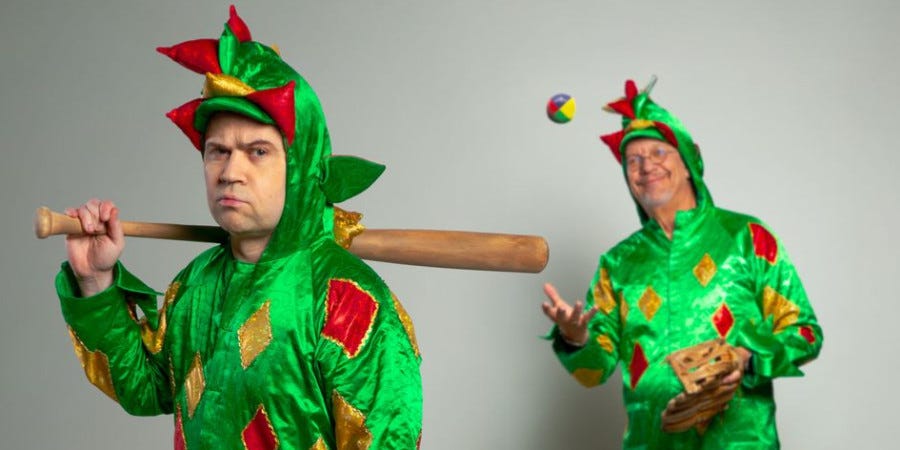
Piff and Penn sometimes talk over one another. Some routines take a long time to get moving. There are extended exchanges that could, in my opinion, have been considerably tighter.
The second half in particular suffers from this.
The idea of Penn appearing in a motorised chair is funny initially, and the chair itself becomes part of several amusing moments, but the conceit doesn’t always help the pace of the show.
There are certainly wonderful moments between the two men. Their friendship and mutual affection are evident, and when their contrasting styles click, it is tremendous fun.
But the chemistry does not always translate into the sort of slick double-act performance I had hoped for.
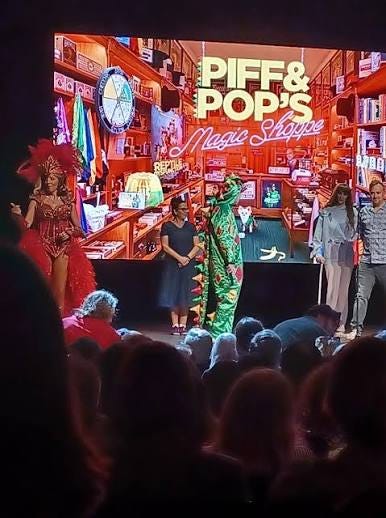
The sandwich that nearly stole the show
For me, one of the strongest routines of the entire evening involved a sandwich.
Yes, a sandwich.
A routine based around the infamous story of Neil Patrick Harris taking Piff’s sandwich during America’s Got Talent builds into a hugely complicated piece of audience participation.
Bread.
Meat.
Vegetables.
Cheese.
Condiment.
Audience members.
Names.
Predictions.
A receipt.
A bag.
And eventually a seemingly impossible prediction involving an electronic safe.
It is precisely the sort of routine where the sheer number of apparently independent elements makes the eventual conclusion so satisfying.
For me, this was the point where I began thinking that perhaps this should have been the finale.
The routine has scale. It has audience involvement. It has comedy. It has a wonderfully impossible revelation. And, crucially, it feels like the kind of sequence that can leave an audience thinking, “How the hell did they do that?”
With a little restructuring, I believe it could have made a tremendous final image.
Instead, the show continued.
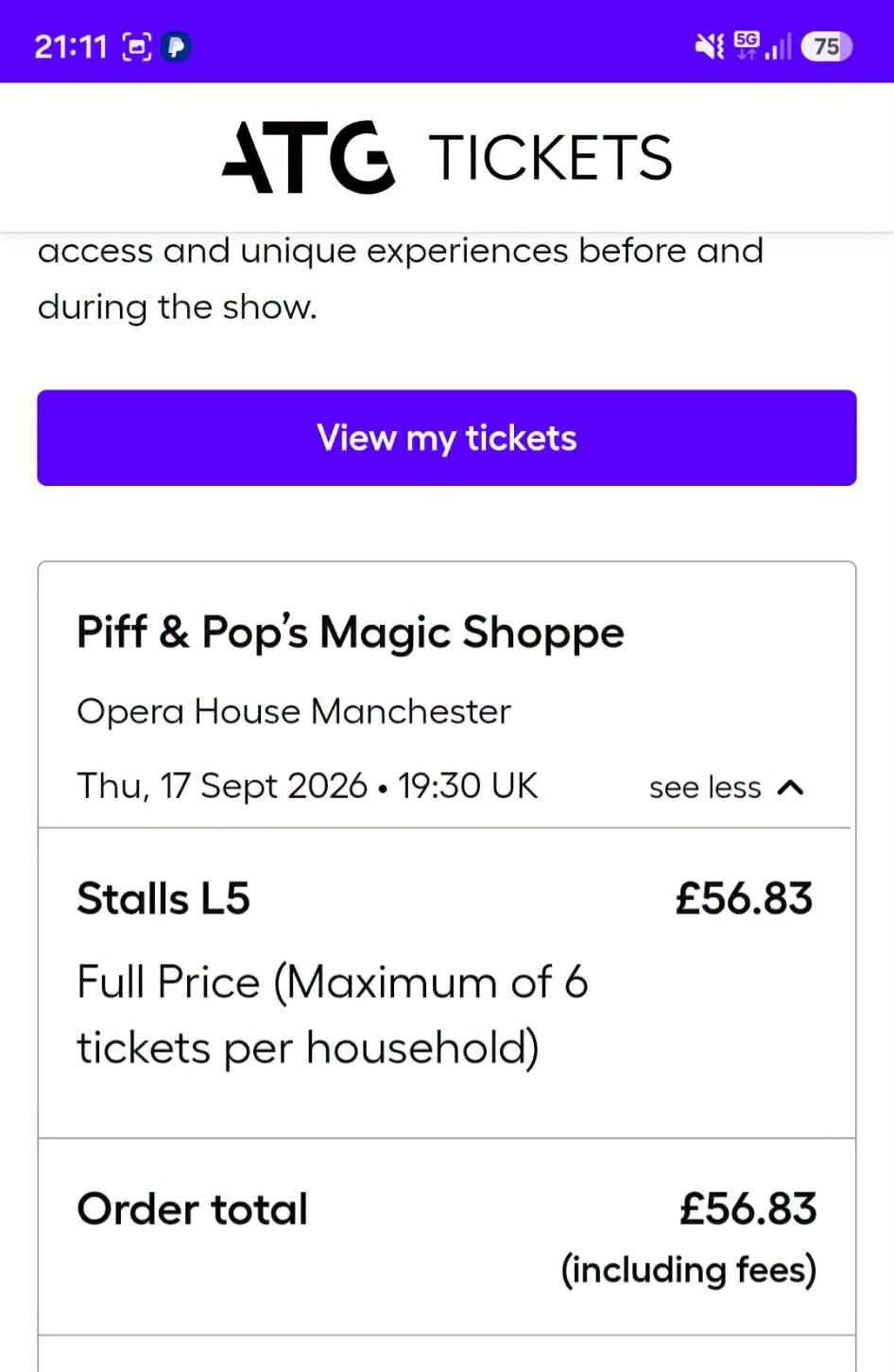
The final flourish
The eventual finale returns to the show’s deliberately disgusting sense of humour, involving an audience member, a bottle and a trip to the toilet.
I have to admit that the routine involving an audience member providing a urine sample was hilarious.
It was also impressively constructed and, importantly, tied back to something Teller had said during his opening video message, giving the routine a satisfying callback.
Yet, for me, it still didn’t quite feel like the finale a show of this scale deserved.
The trick itself was clever.
The comedy worked.
The call-back was good.
But as the final moment of a three-hour production, I found myself thinking: is that it?
That is why I kept returning to the sandwich routine in my mind.
The sandwich sequence had the ingredients of a spectacular finale, whereas the eventual ending felt more like one final joke after the show had already reached its natural conclusion.
And that matters.
A great magic show isn’t simply a collection of excellent tricks. It is a piece of theatre. The order, rhythm, escalation and final image all contribute to what the audience takes away with them.
One uncomfortable moment
There was one part of the show that I found more difficult to watch.
A routine involving a young audience volunteer was framed around the idea of a homeless child having their dreams come true. The routine itself was clearly intended to be funny and magical, and the performer was placed at the centre of a substantial piece of theatre.
However, from where I was sitting, the child appeared uncomfortable at various points.
I may have misread the situation entirely. I wasn’t standing beside the child and obviously cannot know what they were actually feeling.
But watching their body language — including repeatedly touching their arms and hair — made me feel uneasy at times.
Audience participation is an important part of Piff’s act, and much of the evening demonstrates just how brilliantly he can work with members of the public.
Nevertheless, whenever children are involved, I personally think there is an especially fine line between playful theatrical discomfort and genuine discomfort.
That moment didn’t sit entirely comfortably with me.
So, was it magical?
Yes.
But perhaps not quite magical enough.
And that is an incredibly difficult thing to say about a show featuring Penn Jillette and Piff the Magic Dragon.
The evening was highly entertaining. There were plenty of laughs, some extraordinary magic, some fantastic audience participation and several moments I will remember for a long time.
But I also found myself comparing it with other experiences.
My 2013 Penn & Teller experience in Las Vegas remains, for me, a benchmark of live magic at its most polished and spectacular.
And earlier this year I saw Clarissa Hendrix’s Lucy Darling in Manchester, and found myself laughing considerably more frequently and consistently throughout that performance.
Lucy Darling – Simply Darling at the Albert Halls, Manchester (16 April 2026)

Lucy Darling – Simply Darling at the Albert Halls, Manchester (16 April 2026)
If I were forced to put numbers on it purely as a personal exercise, I’d give Piff & Pop’s Magic Shoppe around 7/10 for comedy and 8/10 for magic.
For comparison, my personal experience of Lucy Darling would be around 10/10 or higher for comedy, while Penn & Teller in Las Vegas would receive 10/10 or higher for magic and overall polish.
Those numbers are not intended as some objective measurement of the performers’ abilities — they are simply a way of explaining where the show landed for me personally.
And there is an important distinction.
Piff and Penn are absolutely capable of producing 10/10 magic.
I’ve seen Penn do it.
I’ve seen Piff demonstrate extraordinary magic before.
What I felt was missing in Manchester was not talent.
It was focus.
The Magic Shoppe needs a little more magic
There is a wonderful show buried inside Piff & Pop’s Magic Shoppe.
Indeed, much of it is already there.
The production values are impressive. The concept is gloriously stupid. Jade is tremendous. Mr Piffles II is impossible not to like.
Piff’s character remains superb. Penn’s presence adds enormous theatrical weight, and when the magic really hits, it hits hard.
But I couldn’t escape the feeling that the production is still finding its final shape.
Perhaps the apparent looseness is deliberate.
Perhaps it is part of the aesthetic.
Perhaps the UK tour is exactly where the production is supposed to discover what works, what doesn’t and what can be tightened before it potentially develops further.
If so, Manchester has certainly provided plenty of material to work with.
Trim some of the longer exchanges.
Tighten the second half.
Improve the live camera operation.
Consider whether every routine needs to remain in the running order.
And, personally, I’d be very tempted to put that extraordinary sandwich routine much closer to — or actually at — the end.
Because when two magicians of this calibre have spent nearly three hours entertaining you, the final moments should ideally leave you sitting there thinking:
“How did they possibly do that?”
rather than:
“Was that the finale?”
Indeed ideally the final moments should prompt you to rise from your seat to give the performers a well deserved standing ovation.
I rose to my feet for Penn & Teller, I rose to my feet for Lucy Darling..
Sadly I did not rise to my feet at the end of this show and neither did anyone else until such times as they were getting up to leave the venue.

Nevertheless, Piff & Pop’s Magic Shoppe is an entertaining, ambitious and frequently hilarious evening of comedy magic.
It isn’t the Penn & Teller show.
It isn’t really supposed to be.
It is something rather stranger: Penn Jillette and Piff the Magic Dragon attempting to build a new magical family business while dressed as dragons, accompanied by a glamorous assistant and a Chihuahua who has somehow become one of the stars of the evening.
And, despite my reservations, there is something wonderfully ridiculous about that.
Would I recommend seeing it?
If you enjoy comedy magic, audience participation and the gloriously absurd world of Piff the Magic Dragon, there is certainly plenty here to enjoy.
Just don’t expect another Penn & Teller in Las Vegas.
Instead, expect a slightly chaotic, occasionally outrageous, sometimes astonishing and frequently silly evening in the company of two extraordinarily talented magicians who may just need to tighten the bolts on their Magic Shoppe before they put the “Under New Management” sign in the window.
Piff & Pop’s Magic Shoppe is touring the UK until 21 September 2026.
Reviewed by JONATHAN ROYLE - www.magicalguru.co.uk
PS: On a side note the music played at the end of the show was “I’m a Believer” as used in the movie Shrek so I was even more disappointed they did not get a standing ovation as every time I have used that music over the years at the end of my act or show it has always helped me secure a Standing Ovation just as it did at The City Varieties theatre in Leeds as per this video:
PPS: As a final point, for anyone who may see this review and think to themselves what does he know about Magic he is mainly a Hypnotist?
Well for those people who are unaware of my decades also performing Magic & Mentalism & Comedy around the world I’d suggest you check out my Career Resume as my honest observations in the review on this page come from fast approaching 50 years extensive & highly varied experience & success in Showbusiness!
RESUME FOR MIND MAGICIAN ALEX SMITH aka CELEBRITY HYPNOTIST JONATHAN ROYLE – UPDATED 22nd APRIL 2026

RESUME FOR MIND MAGICIAN ALEX SMITH aka CELEBRITY HYPNOTIST JONATHAN ROYLE – UPDATED 22nd APRIL 2026
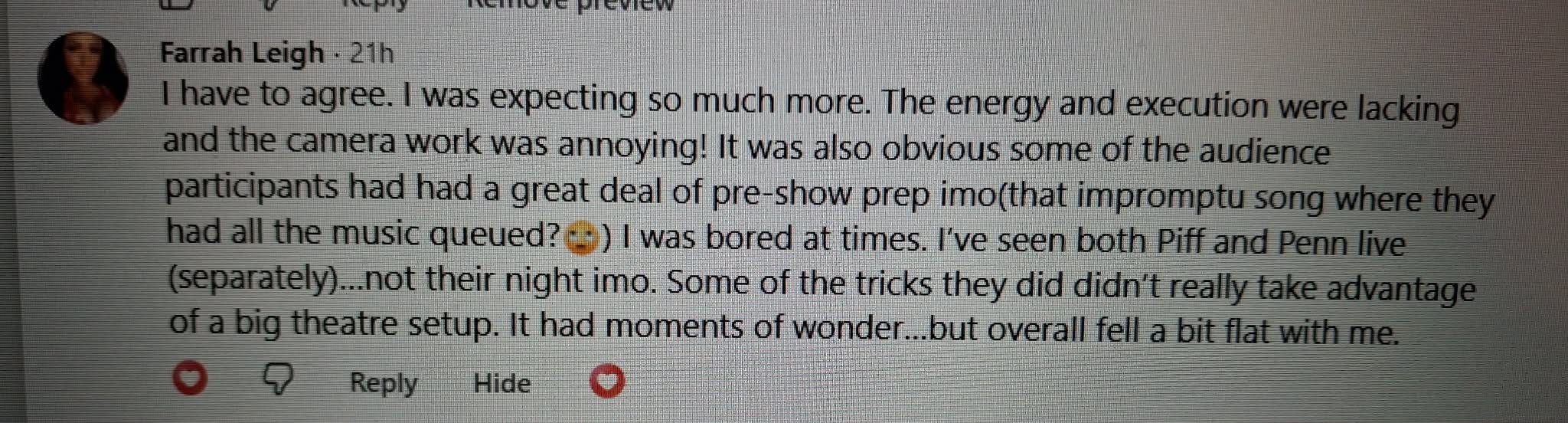
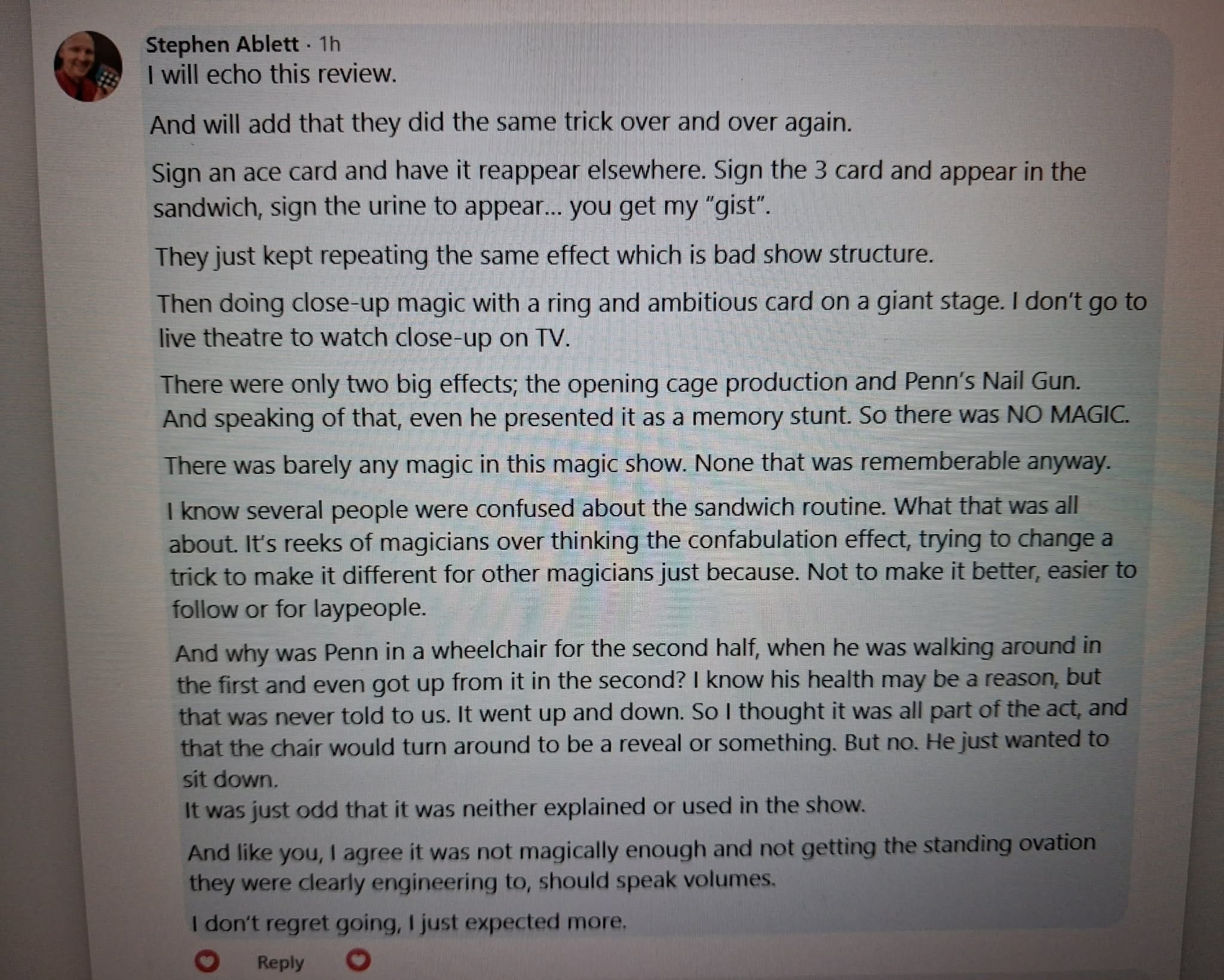
And another very good point is raised in this next comment which was made on a post about my review of the show on Facebook. Its is indeed true that they did what is essentially the same Magic Trick multiple times during the same show…
On Saturday 19th September a link to this page was included in the “News” section on Magic-Week as per: