EFT and Thought Field Therapy: Do Meridian Tapping Techniques Work, or Are They Elaborate Placebo Rituals?
What the scientific evidence actually tells us
Introduction
Emotional Freedom Techniques (EFT) and Thought Field Therapy (TFT) are forms of so-called energy psychology. They involve focusing on a distressing memory, emotion, fear or physical sensation while tapping particular points on the body, often points traditionally associated with acupuncture meridians.
Practitioners may claim that this procedure reduces emotional distress by correcting disruptions in the body’s energy system. Some also claim that tapping can produce unusually rapid relief from anxiety, trauma, phobias and other psychological problems.
These claims raise two important scientific questions:
Can people experience genuine improvements after using tapping techniques?
Is there credible evidence that tapping specific meridian points produces those improvements through the proposed energy mechanism?
The first question is not the same as the second. A person can experience genuine relief from a treatment even when its proposed explanation is incorrect.
The central criticism of EFT and TFT is not necessarily that nobody benefits from them. It is that evidence of improvement does not, by itself, demonstrate the existence of meridian energy or establish that tapping specific acupuncture points is responsible for the benefit.
The distinction matters because psychological interventions can work through attention, expectation, emotional exposure, learning, relaxation and the therapeutic relationship without requiring an unverified energy system.
1. What are EFT and TFT?
EFT typically combines three elements:
Exposure: The person deliberately focuses on a distressing memory, thought, emotion or bodily sensation.
Cognitive reframing: The person uses statements intended to acknowledge the problem and alter their relationship with it.
Tapping: The person repeatedly taps designated points on the face, upper body or hands.
TFT uses related tapping procedures, sometimes with prescribed sequences of points intended to correspond to particular psychological problems.
The first two elements have recognisable parallels with established psychological approaches. Exposure-based treatments deliberately bring distressing material into awareness, while cognitive approaches help people examine and change their responses to thoughts and experiences.
Tapping adds a physical action and a structured ritual to this process.
The critical question is whether the specific tapping locations have a unique therapeutic effect, or whether the overall procedure works through mechanisms that do not depend on traditional meridian theory.
2. The placebo effect is not the same as imagining an improvement
The word placebo is sometimes used to imply that a person is pretending to feel better. That is not what it means in scientific research.
Placebo-related effects can include changes associated with expectation, conditioning, the treatment setting, attention, reassurance and the meaning attached to a procedure. These influences can affect a person’s experience of pain, anxiety and other symptoms.
A ritual can therefore have real psychological consequences without its explanation being correct.
For example, a person might believe that tapping a particular point releases trapped emotional energy. The procedure gives them something concrete to do, focuses their attention on a specific problem, encourages them to confront it in a structured way and provides a clear sequence of actions to follow.
Several ordinary psychological processes could contribute to improvement:
Expectancy: The person anticipates relief and interprets the experience in that context.
Attention: The ritual concentrates attention on a specific emotion rather than allowing thoughts to wander.
Exposure: Repeatedly recalling a fear or memory may change the person’s response to it.
Conditioning: A repeated sequence can become associated with feeling calmer or safer.
Pattern interruption: A new physical action may interrupt habitual thinking or rumination.
Relaxation and sensory input: Repetitive movement, touch and controlled attention may influence arousal.
Regression to the mean: People often seek help when symptoms are unusually bad, after which symptoms may improve naturally.
These are plausible explanations, not proof that every benefit of EFT comes from placebo effects. The point is that an improvement following tapping does not identify which component caused it.
A well-designed experiment must separate the effects of the complete ritual from the effects specifically attributable to tapping designated acupuncture points.
3. What does the research say about EFT?
One of the most relevant scientific reviews is a 2015 meta-analysis by Gilomen and Lee, which examined 18 randomised controlled trials involving 921 participants.
The researchers found an overall improvement in psychological distress among people receiving EFT. However, the studies had substantial methodological limitations, and the researchers concluded that they could not determine whether the results were caused by acupoint stimulation or by elements EFT shares with other psychological interventions.
Read the study: The efficacy of acupoint stimulation in the treatment of psychological distress — Journal of Behavior Therapy and Experimental Psychiatry (2015)
This is an important distinction. A treatment can outperform a waiting list without outperforming a credible alternative that offers the same amount of attention, emotional engagement, expectation and structured activity.
For example, if participants receiving EFT improve more than people who receive no treatment, that finding cannot tell us whether the effective ingredient was tapping, cognitive reframing, exposure, practitioner attention or the expectation of improvement.
To establish a specific tapping effect, researchers need comparisons that hold the other components reasonably constant.
Why comparison groups matter
Imagine three groups of people experiencing similar anxiety:
Group A receives the full EFT procedure, including the prescribed tapping points.
Group B follows the same instructions and focuses on the same distressing memories but taps on alternative locations.
Group C follows the same instructions but uses another repetitive action, such as a matched hand movement.
If Group A consistently improves more than both comparison groups, that would support a specific effect of tapping the prescribed points.
If all three groups improve by similar amounts, the evidence would instead suggest that the specific locations are unnecessary, although all three procedures might still be useful.
Even then, researchers would need further experiments to distinguish ordinary sensory effects from any proposed meridian mechanism.
That is the kind of evidence needed to move beyond testimonials and before-and-after measurements.
4. What happens when researchers test whether the tapping points themselves matter?
A particularly relevant paper is the 2020 critical analysis by Spielmans, Rosen and Spence-Sing.
It examined a meta-analysis that had claimed to show that tapping on designated acupuncture points was an active ingredient in EFT.
The critics identified several problems with the original analysis, including studies that did not adequately isolate the effect of acupoint tapping, weaknesses in comparison conditions, potential researcher allegiance effects and statistical problems. Their reanalysis did not find a statistically significant advantage for tapping the designated points over the comparison conditions.
Read the critical analysis: Tapping Away at a Misleading Meta-analysis: No Evidence for Specificity of Acupoint Tapping (2020)
This paper is directly relevant to the argument that EFT’s prescribed tapping points have not been convincingly demonstrated to possess unique therapeutic properties.
There is, however, an important qualification: the original authors subsequently published a correction and reanalysis supporting their original conclusion that tapping contributes to outcomes.
Read the correction: Corrigendum to the EFT acupoint-tapping meta-analysis (2020)
The two publications illustrate a genuine scientific dispute about a small and methodologically contested body of component studies. They do not justify claiming that science has definitively proved tapping to be inert.
The more defensible conclusion is that the specificity of the tapping locations remains a question that requires robust, independent replication using well-matched controls.
5. EFT research has methodological limitations
Another systematic review, published in 2022, assessed EFT as a treatment for psychological and physiological conditions.
Read the review: Clinical EFT as an evidence-based practice for the treatment of psychological and physiological conditions: A systematic review
Reviews of EFT report positive findings across a range of outcomes. Nevertheless, the quantity of published studies is not the same as the quality of the evidence.
When evaluating such research, several questions matter:
Were participants randomly assigned to the treatment groups?
Were the comparison treatments credible and equally engaging?
Were outcomes measured independently of participants’ expectations?
Were sample sizes sufficient to detect meaningful differences?
Were improvements compared with established psychological treatments?
Were the results independently replicated?
Were the analyses and outcome measures specified in advance?
Did the researchers have financial, professional or theoretical commitments to the intervention?
These questions are not unique to EFT. They are basic standards for evaluating any treatment.
A particularly important problem is the difference between a treatment’s overall effectiveness and its proposed mechanism. Even if EFT reliably reduces anxiety, that finding does not automatically validate the claim that emotional distress is caused by disturbances in a meridian energy field.
The mechanism requires its own evidence.
6. What about Thought Field Therapy?
TFT makes particularly clear claims about the significance of tapping sequences and the body’s supposed energy system.
A randomised controlled trial published in 2012 examined TFT in 45 patients with anxiety disorders. Twenty-three patients initially received TFT, while 22 were assigned to a waiting-list control group.
The researchers reported improvements in anxiety and functioning among those receiving TFT, with improvements maintained at follow-up.
Read the trial: Thought Field Therapy (TFT) as a Treatment for Anxiety Symptoms: A Randomized Controlled Trial
This result should not be ignored. It is evidence that the treatment package may have helped the participants studied.
But the trial compared TFT with a waiting list, not with a matched procedure using alternative tapping locations, a credible sham ritual or an established psychological treatment. Consequently, it could not determine whether any improvement depended on the prescribed tapping sequence or the proposed bioenergy field.
The study’s authors described TFT as aiming to influence the body’s bioenergy field. Describing that proposed mechanism is not the same as demonstrating that such a field exists.
The trial therefore provides limited evidence about the specific claim at issue: whether meridian-based tapping has a unique effect beyond the other psychological and contextual components of treatment.
A small trial with a waiting-list control cannot settle that question.
7. Are acupuncture meridians scientifically established?
The underlying meridian hypothesis also needs scrutiny.
Traditional acupuncture describes a network of meridians and points through which an invisible or otherwise specially defined form of vital energy is said to flow. Modern research can investigate the physical properties of skin, nerves, connective tissue and electrical conductivity, but these measurable structures are not automatically equivalent to the traditional meridian system.
A systematic review by Ahn and colleagues examined studies investigating whether acupuncture points and meridians had distinctive electrical properties.
The review identified 18 studies. Some reported differences in electrical resistance or impedance, but the studies generally suffered from small samples, methodological weaknesses and potential confounding factors.
The authors concluded that the available evidence did not conclusively establish that acupuncture points or meridians were electrically distinguishable from appropriate control areas.
Read the review: Electrical Properties of Acupuncture Points and Meridians: A Systematic Review (2008)
This does not prove that no anatomical or physiological effects can occur when particular areas of the body are stimulated. It does mean that claims about a distinct meridian network cannot simply be treated as established anatomy or physiology.
A practitioner who claims that tapping a particular point corrects an energy imbalance must demonstrate the proposed mechanism rather than rely on the traditional description of that point.
8. Does acupuncture itself prove that meridians exist?
No. Evidence that acupuncture sometimes improves a symptom would not, on its own, demonstrate that traditional meridians exist.
The US National Center for Complementary and Integrative Health explains that acupuncture may affect the nervous system and other tissues, while nonspecific effects also contribute to outcomes. It notes that benefits are often greater when acupuncture is compared with no treatment than when it is compared with sham procedures.
Read the evidence summary: NCCIH — Acupuncture: Effectiveness and Safety
A systematic review of acupuncture trials examining whether particular acupoints were specific to particular diseases reached a related conclusion. Among the six lower-risk-of-bias trials it identified, five found no statistically significant difference between genuine and sham acupuncture.
Read the study: Are Acupoints Specific for Diseases? A Systematic Review of Randomised Controlled Trials with Sham Acupuncture Controls
These findings challenge the claim that the traditional choice of precise acupuncture points is always the decisive factor in treatment.
However, sham acupuncture is not necessarily biologically inert: even superficial needling or skin stimulation can activate sensory pathways. Therefore, finding little difference between genuine and sham acupuncture does not establish that every effect of acupuncture is purely psychological.
The narrower and more defensible point is that the effects of a physical intervention do not validate the traditional energy explanation attached to it.
That distinction applies equally to EFT and TFT. Touching or stimulating the skin may have ordinary sensory or physiological effects without the existence of meridian energy.
9. The ritual itself may be psychologically important
EFT and TFT share a feature with many other structured self-help practices: they give a person a sequence of actions to follow while attending to a problem.
A ritual can provide a sense of control, create a predictable routine and help organise attention. These effects need not be supernatural or dependent on an invisible energy system.
Consider what happens during an EFT session. The person identifies a troubling emotion, repeatedly brings it to mind, says words acknowledging the experience and performs a repetitive physical action. They then reassess how distressed they feel.
Several components have changed simultaneously.
The person has engaged with the emotion rather than avoided it. They have concentrated their attention. They have followed a structured procedure. They may expect to feel better. They have also received reassurance or guidance from a practitioner.
If their distress decreases, it is not possible to identify tapping on a particular meridian as the cause without suitable controlled experiments.
Nor should a person’s subjective report of improvement be dismissed as imaginary. The person may genuinely feel less distressed. The scientific question is what produced that improvement.
This is why a convincing study needs to compare tapping with an alternative procedure that matches the experience as closely as possible while varying the component under investigation.
10. What evidence would demonstrate that meridian tapping is more than a placebo-like ritual?
The strongest evidence would come from preregistered, independently conducted trials with adequate sample sizes and credible control procedures.
Ideally, researchers would compare:
Full EFT, including the prescribed tapping points.
The same EFT protocol with tapping at alternative locations.
The same protocol with a matched repetitive movement.
A credible psychological treatment or another appropriate active control.
Participants should receive comparable time, attention, instructions and therapeutic engagement. Outcomes should include validated symptom measures, follow-up assessments and, where appropriate, independently assessed behavioural or physiological outcomes.
Researchers should also test whether the claimed energy mechanism makes predictions that can be independently verified.
For example, if particular points are said to be uniquely effective, then tapping those points should reliably outperform tapping matched alternative points. If a specific sequence is essential, changing that sequence should measurably reduce the benefit. If an energy field is proposed as the causal mechanism, there should be a clear, testable account of that field and evidence distinguishing it from known sensory and psychological processes.
Without this sort of evidence, a claim that the procedure works by correcting meridian energy remains an explanation in search of convincing confirmation.
Conclusion: benefit is not proof of the proposed mechanism
The evidence supports a more nuanced conclusion than the claim that EFT and TFT have been conclusively proved to be nothing but placebos.
Some studies report reductions in distress after these interventions, and researchers continue to investigate whether tapping adds something beyond the psychological elements of the treatment. At the same time, systematic reviews have identified important methodological limitations, and the specificity of the prescribed tapping points remains contested.
The evidence for traditional meridian energy as the explanation is a separate issue. Research has not conclusively established that acupuncture meridians constitute a distinctive physiological network, and clinical improvement following acupuncture or tapping does not demonstrate that such a network exists.
EFT and TFT combine attention, expectation, structured behaviour, emotional engagement and physical stimulation. Those elements provide plausible routes through which a person might experience relief, even if the proposed energy explanation is incorrect.
The appropriate scientific position is therefore not that improvement is impossible, nor that everyone who reports benefit is experiencing an illusion. It is that a treatment’s apparent benefit must be separated from its explanation, and claims about meridian energy require evidence beyond testimonials and improvements following treatment.
Until well-designed, independently replicated experiments establish a specific and reliable advantage for the prescribed meridian points—and validate the proposed mechanism—there is insufficient justification for presenting the traditional energy explanation as established science.
One final qualification: a 2026 network meta-analysis of EFT trials also reported reductions in psychological stress, while noting that most included studies had some concerns or a high risk of bias. Read the findings on PubMed. That evidence should not be ignored, but it also does not establish the existence of meridian energy.
Church et al. (2020) — Corrected analysis supporting an acupressure contribution
Ahn et al. (2008) — Electrical properties of acupuncture points and meridians
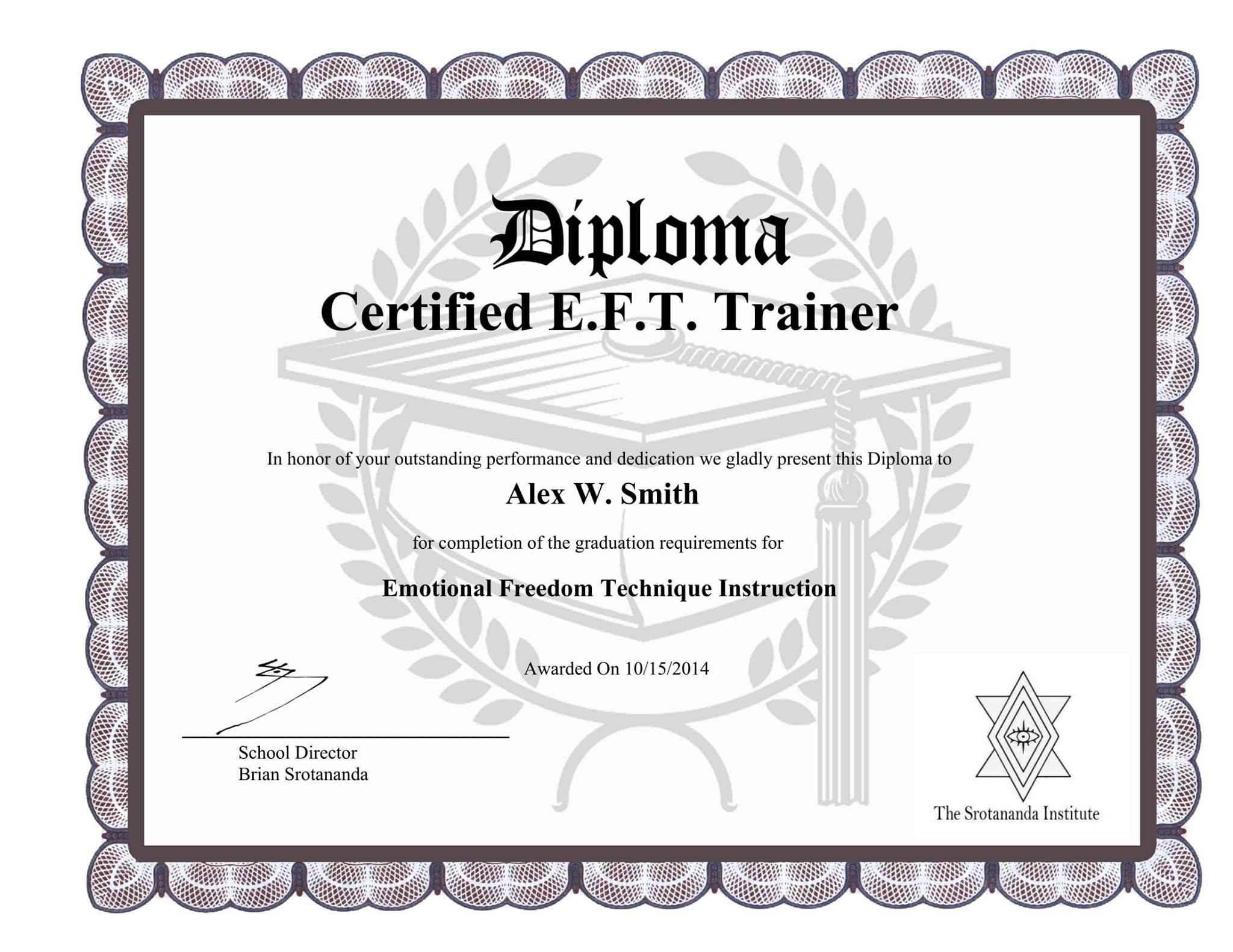
The Diploma Images on this page are just a few from the many Hypnosis, NLP & Mind Therapy related diplomas & qualifications that I have been awarded over the decades which together most likely mean I am arguably the World’s Most Qualified Hypnotist as illustrated at this link:
https://www.facebook.com/media/set/?set=a.10157286044922806&type=3
With all that said of all the Meridian Tapping Systems I have ever examined, other than my own Complete Mind Tapping (CMT) as taught within my “Elite Hypnotherapy, Stage Hypnotism & NLP Hypnosis Bootcamp” I have found Freeway-CER to be far the most effective - https://jonathanroyle.sellfy.store/p/z0ih/
NOTE = Use discount code TRANCER at checkout to get 80 percent off the price!
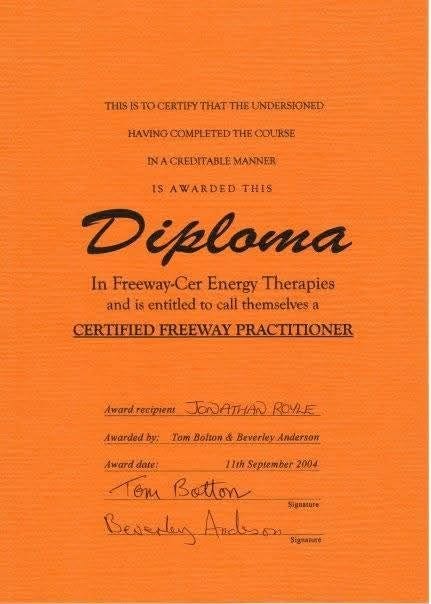
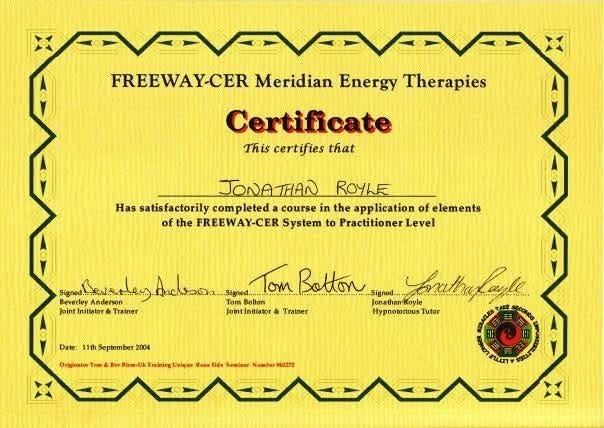
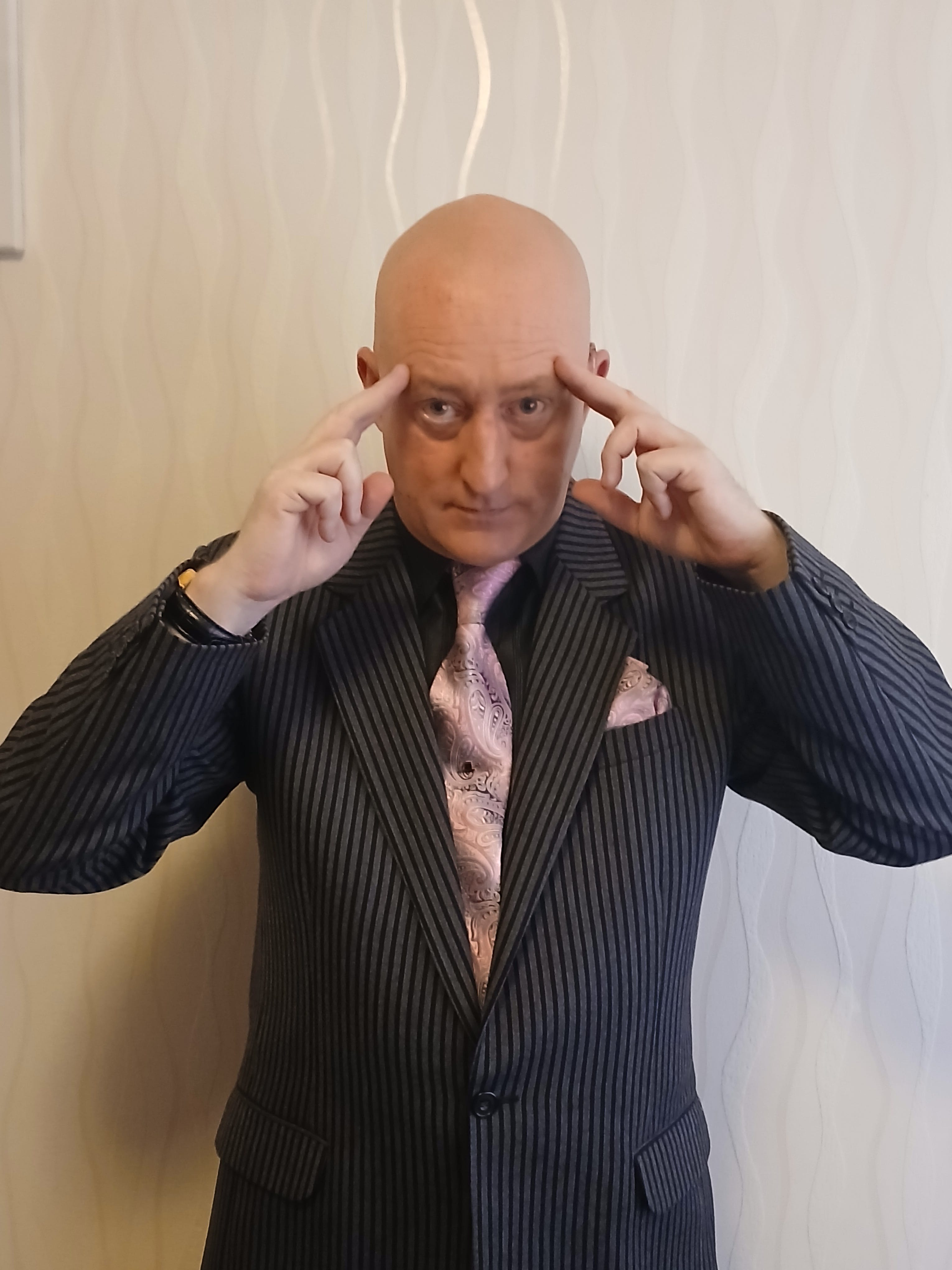
There is more detailed training on Emotional Freedom Techniques (EFT) and other Meridian Energy Tapping Therapies within the “Elite Hypnotherapy, Stage Hypnosis & NLP Hypnotism” Bootcamp members area.
NOTE = You can get 50% off Lifetime Membership to the Bootcamp where you will also gain access to another 30+ Professional Qualifications along with business building & profit producing tools galore by entering the discount voucher code of WIZARD when using the checkout to secure your membership here
https://www.magicalguru.com/elite-hypnotherapy-nlp-hypnosis-stage-hypnotism-bootcamp/


EXPOSED: What Did The Late Stage Hypnotists & Hypnotherapists Ormond McGill, Gil Boyne, Tom Silver & Peter Casson all Admit to Jonathan Royle?

EXPOSED: What Did The Late Stage Hypnotists & Hypnotherapists Ormond McGill, Tom Silver, Gil Boyne & Peter Casson all Admit to Jonathan Royle?
EXPOSED: Why Real World Experience & Success combined with Practical Skills and Results Matter Far More Than Hypnotherapy Certificates & Accreditations by Glorified Boys Clubs

After years of hearing & seeing comments from people who frankly should have known better trying to criticise my Hypnosis Courses because they were not and are not accredited by The General Hypnotherapy Standards Council (GHSC) or the General Hypnotherapy Register